

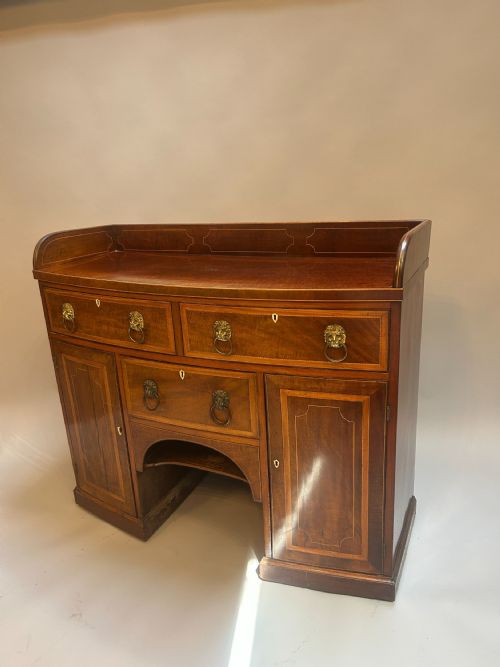
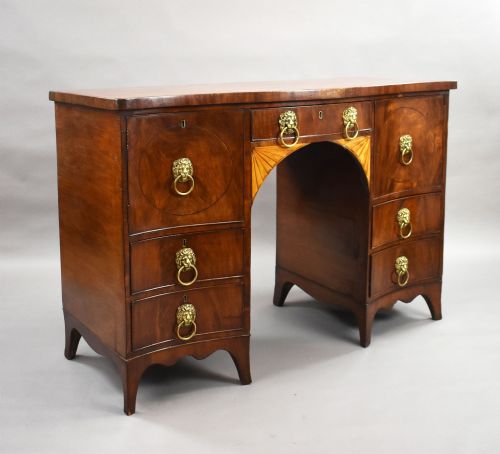


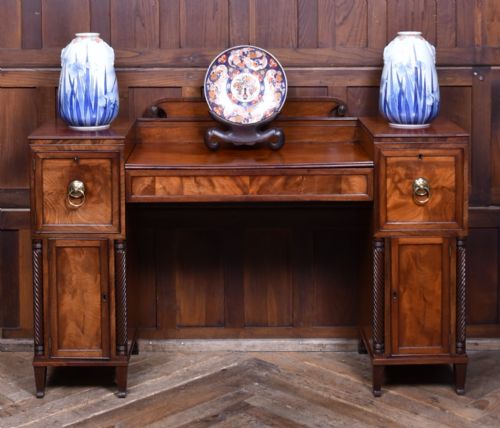

Regency Mahogany Pedestal Server
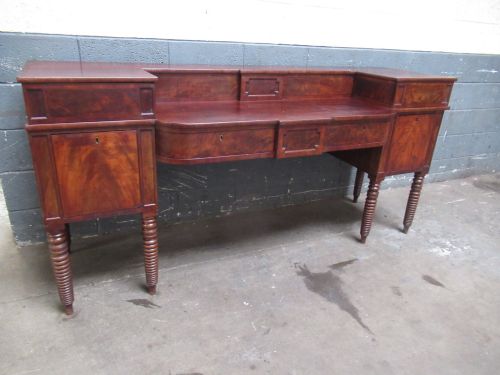
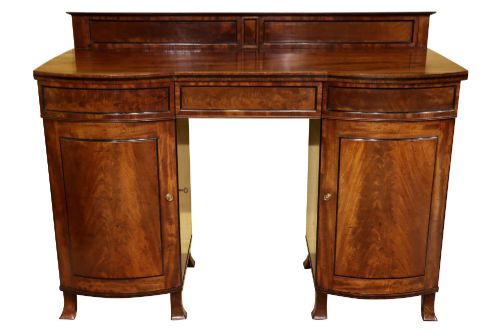
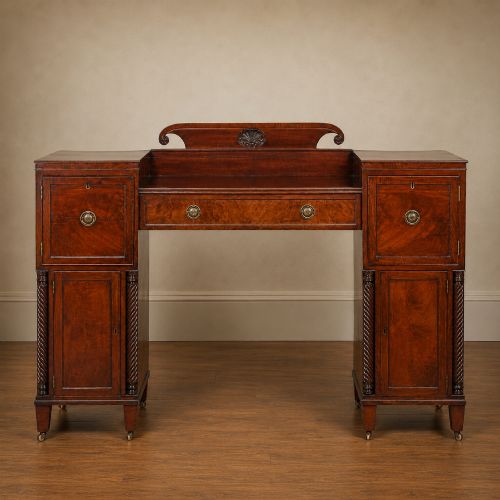
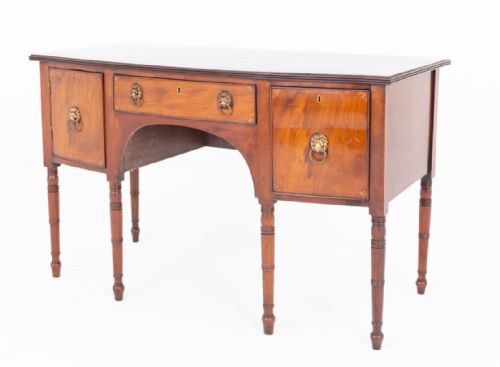
These regency mahogany pedestal server pieces are substantial dining room furniture built to anchor a large interior with timber of deep figure.
Regency Mahogany Pedestal Server
A regency mahogany pedestal server is a heavy dining room sideboard comprising central storage flanked by pedestal cupboards, often featuring flame veneers or figured mahogany. You will most frequently encounter large nineteenth century examples from the Regency, Georgian, and William IV periods, designed to hold plate and wine during formal meals.
The form developed to serve large dining rooms, occasionally incorporating brass galleries, stage-backs, or drop wells to accommodate serving dishes. Scottish regional variations and pieces attributed to makers such as Gillows or James Mein of Kelso appear among the listings alongside standard English workshop production.
How they were made
Cabinet makers utilised solid timber and veneers of mahogany, selecting flame mahogany and fiddleback figure for prominent drawer fronts and pedestal doors. Secondary timbers such as boxwood and satinwood appear in stringing and inlay work, while brass mounts and galleries provide structural and decorative detail.
Construction relies on deep carcases built to support heavy weight, with pedestal bases joined to central serving sections. Carved mahogany details on William IV pieces and turned legs demonstrate the joinery standards of nineteenth century workshops.
Some pedestal cupboards concealed built-in cellarette drawers lined with lead to keep wine bottles cool with melting ice.
What varies in quality
Quality rests in the selection of the timber grain, where matched flame mahogany veneer across multiple doors and drawers lifts a piece above standard workshop output. The crispness of carved mouldings and the substantial weight of brass galleries indicate the original investment in the commission.
Proportion and scale distinguish monumental country house examples from more modest sideboard forms. Well-executed pedestals and balanced breakfront designs demonstrate superior cabinet making skill compared to plainer regional variations.
Gillows·James Mein of Kelso·H Mower & Stephenson
The Regency Mahogany Pedestal Server Glossary
- Pedestal sideboard
- A dining room storage piece with two distinct end cupboards supporting the main surface. This layout provides deep interior space for bottles and linen.
- Flame mahogany
- A veneer cut from the fork of the mahogany tree to produce a flickering, fiery pattern. Cabinet makers placed these veneers symmetrically on drawer fronts.
- Brass gallery
- A metal rail fitted to the rear or top of a sideboard to prevent serving dishes from sliding off. These fixtures range from simple rods to elaborate cast brass frets.
- Drop well
- A lowered central section in the top surface of a sideboard designed to hold large joints of meat or heavy serving trays. This feature is characteristic of specific Regency and William IV forms.
- Fiddleback
- A type of mahogany figure showing tight, horizontal ripples resembling the wood used for violin backs. It results from undulating grain growth.
Regency Mahogany Pedestal Server: Frequently Asked Questions
How do I spot a genuine Regency piece?
Examine the timber selection and construction methods underneath and behind the piece, looking for solid secondary woods and period joinery. Regency examples display specific carcase proportions and veneer thicknesses typical of early nineteenth century workshops.
Compare the carving styles and hardware against known examples from the period. Regional pieces often exhibit subtle variations in construction while maintaining the heavy pedestal form.
Where were these servers used?
These servers stood in the dining rooms of large country houses and urban townhouses to support formal meals. Servants placed dishes, wine bottles, and tableware on the top surface and stored silver inside the pedestals.
The substantial scale required large rooms to accommodate the width of the twin pedestals. They functioned as both practical utility furniture and displays of household wealth.
How do I care for mahogany timber?
Keep the wood away from direct heat sources and strong sunlight to prevent the mahogany veneer from drying out or fading. Apply traditional beeswax polish sparingly to maintain the natural lustre of the surface.
Avoid placing damp items directly onto the polished timber top. Use coasters and mats to protect the antique polish from water rings.
What is a stage-back sideboard?
A stage-back sideboard incorporates a raised tiered structure at the rear for displaying plate and serving ceramics. This Scottish regional variation adds vertical presence to the standard pedestal server layout.
The stepped shelves allowed households to exhibit fine porcelain and silver during dinner parties. Such pieces reflect specific dining fashions of the Georgian and Regency eras.