
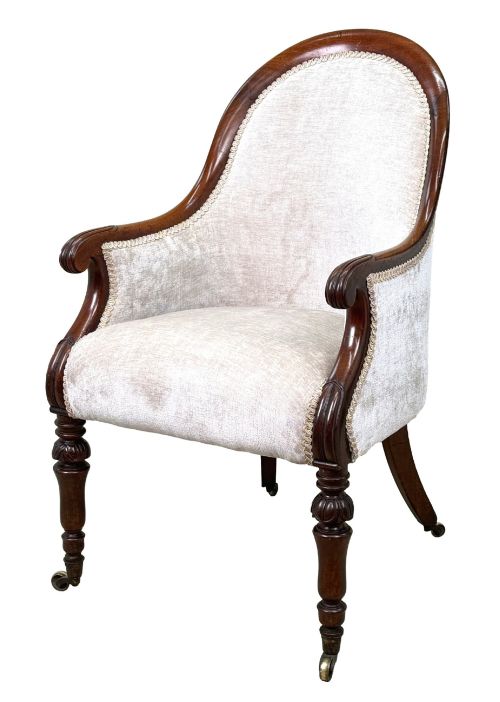
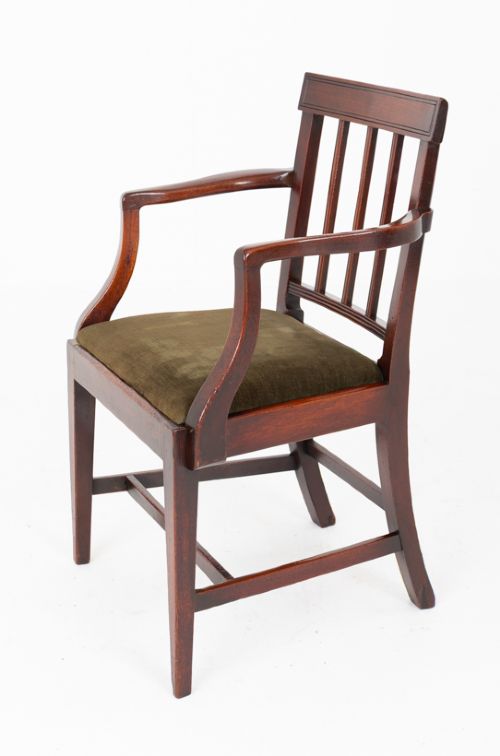
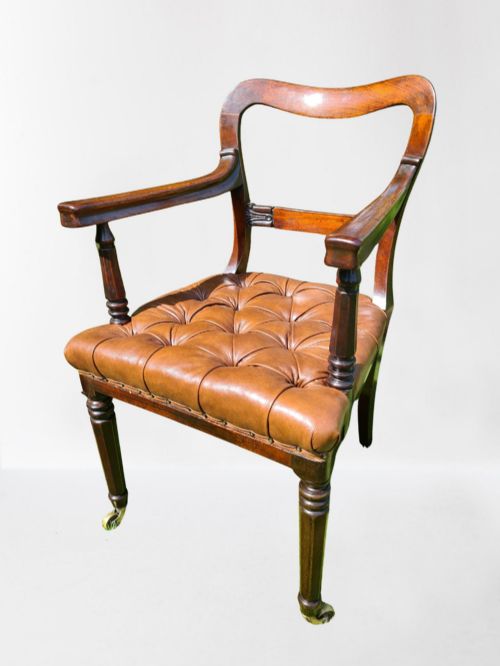
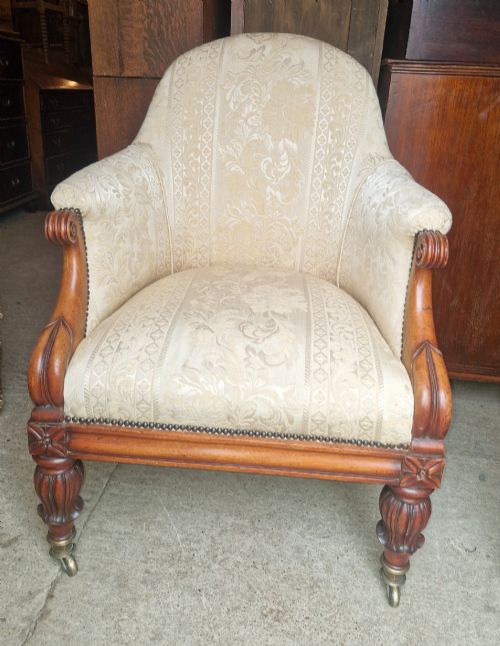
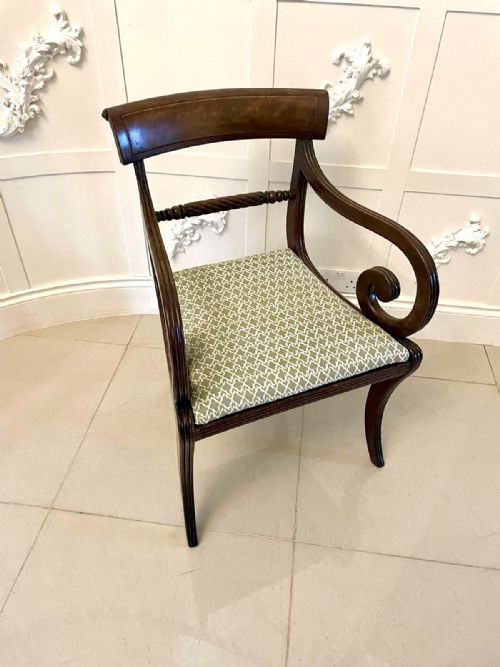
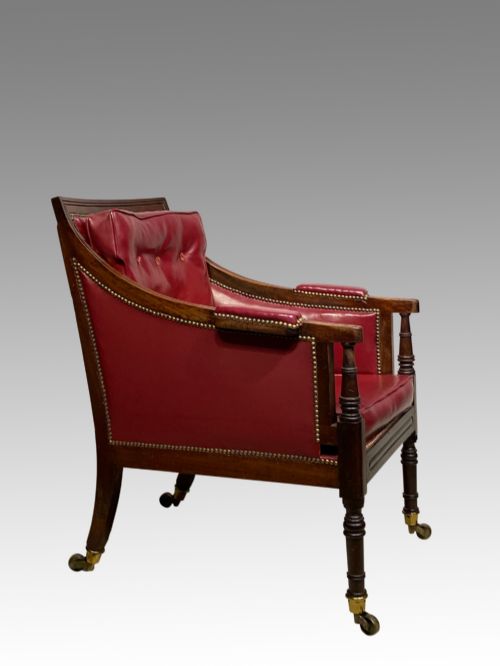

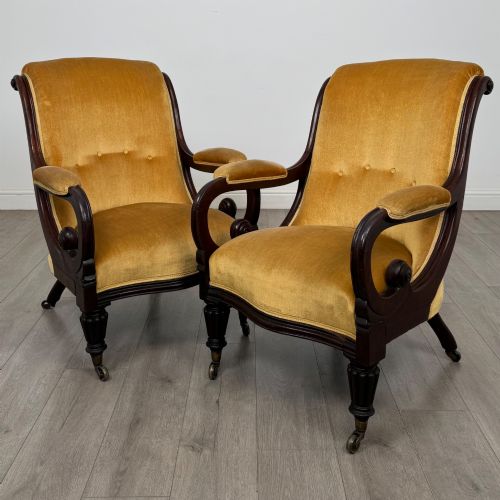
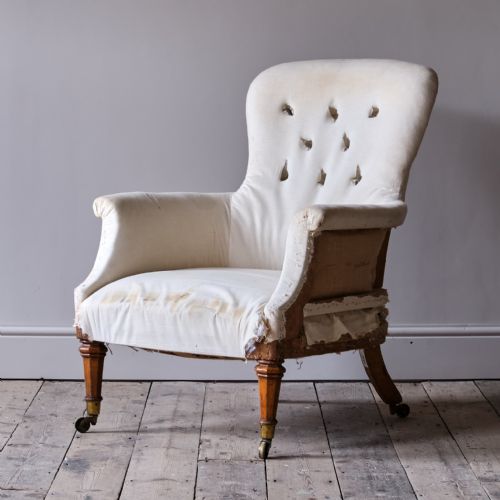
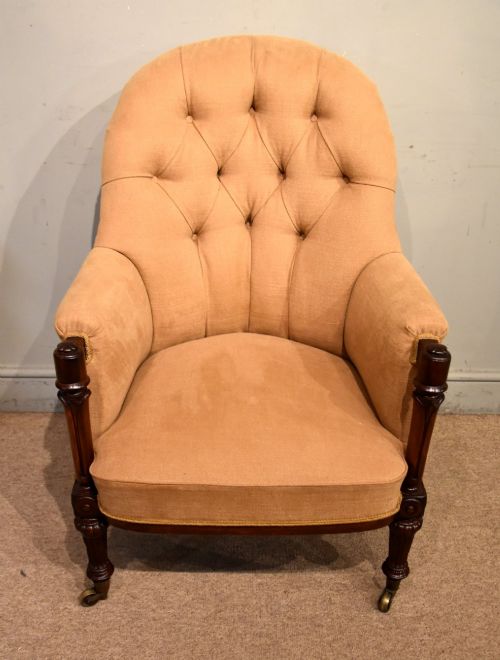


Regency Mahogany Library Armchair
A regency mahogany library armchair brings formal British comfort and architectural timber to the reading room.
Regency Mahogany Library Armchair
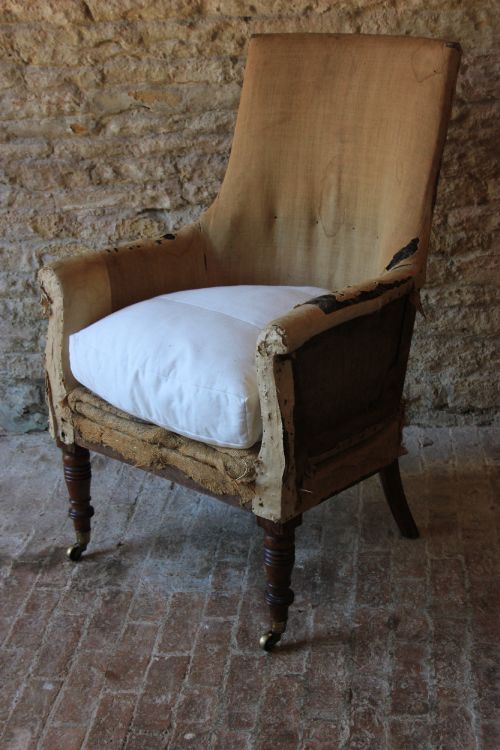
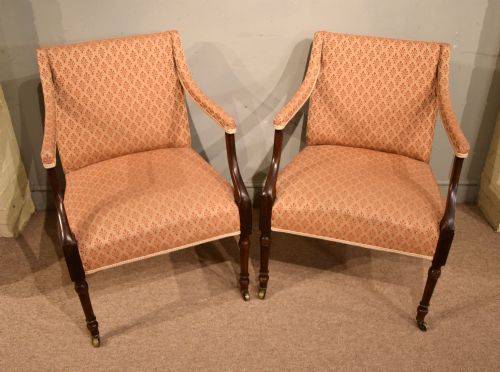
A regency mahogany library armchair combines sturdy tropical timber with deep seating designed for long hours of study or repose. The entries show these pieces spanning the Regency, Georgian, and William IV eras, along with later revivals into the twentieth century.
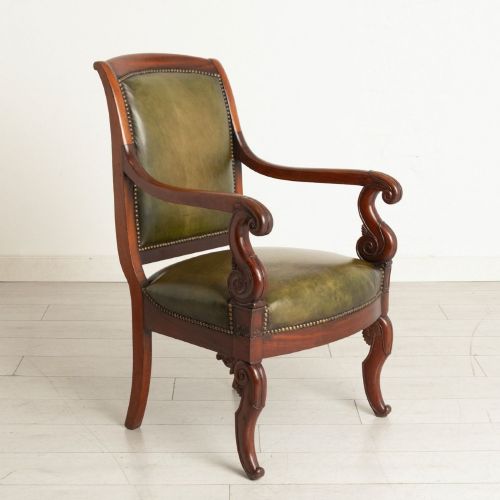
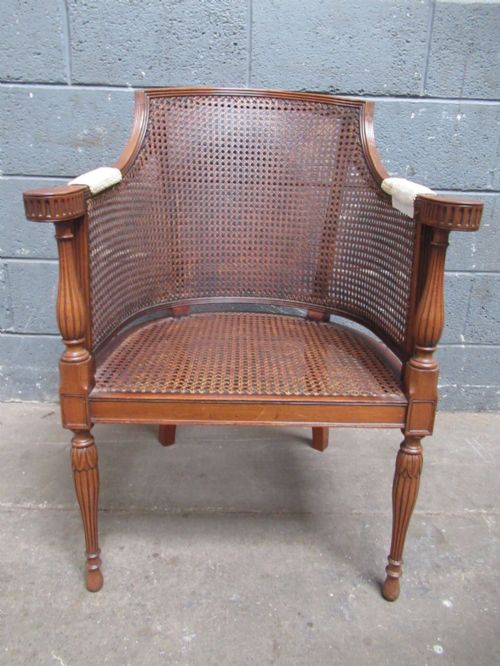
The primary forms on this page include tub chairs, bergères with caned panels, desk chairs, and reclining variants. Many examples incorporate leather upholstery, brass inlays, and carved scroll arms suited to formal libraries and studies.
Materials and construction
Cabinetmakers built these frames in solid mahogany, often utilising brass inlay or reeded carving to articulate the structural members. Caned panels appear frequently in bergère models, providing a flexible backing alongside wooden frames.
Upholstered versions rely on leather, fabric, velvet, hessian, and calico over internal stuffing. Specialised pieces like patent reclining chairs integrate mechanical adjustments within the timber frame.
One listed armchair even folds out into a set of library steps, hiding domestic utility inside a reading seat.
Distinctions in quality
Quality rests upon the crispness of the timber carving, the depth of the mahogany figure, and the integrity of the joinery. Superior examples demonstrate refined proportions in the scroll arms and balanced integration of brass details.
The refinement of secondary materials, such as finely woven cane panels or supple leather upholstery, elevates an individual piece above standard utility seating.
Gillows
The Regency Mahogany Library Armchair Glossary
- Bergère
- An enclosed armchair with stuffed upholstery or cane panels filling the sides beneath the armrests. This form gained popularity during the Regency period.
- Tub chair
- A seating form featuring a continuous curved back and armrest rail enclosing the sitter. They provide compact support in study spaces.
- Reeded
- A decorative moulding formed of parallel convex strips carved directly into the timber. It is characteristic of early nineteenth-century furniture design.
- Caning
- A woven lattice of split rattan used to form flexible backings and seat panels. It lightens the visual weight of heavy timber frames.
Regency Mahogany Library Armchair: Frequently Asked Questions
What is a regency mahogany library armchair?
It is a heavy timber seating form produced during the early nineteenth century for studies and reading rooms. These chairs often feature leather pads or cane panels.
They combine structural mahogany frames with ergonomic slant backs designed for extended periods of sitting.
How do you identify a bergere armchair?
A bergère is distinguished by its fully enclosed sides, which are typically lined with cane work or upholstered padding. This design originated to shield sitters from drafts.
In library settings, these chairs usually include loose leather seat cushions resting over a cane or webbed base.
Were these chairs used at desks?
Many examples function interchangeably as desk chairs, library armchairs, or occasional seating. Their proportions allowed writers to sit comfortably while accessing heavy volumes.
Some variants incorporate revolving actions or lower profiles specifically tailored for writing tables.
How do William IV pieces differ?
William IV furniture tends to display heavier proportions and bolder classical revival motifs compared to earlier Regency designs. The timber framing is often more robust.
Scroll work and carved details on these later chairs emphasise structural solidity rather than delicate linear grace.