
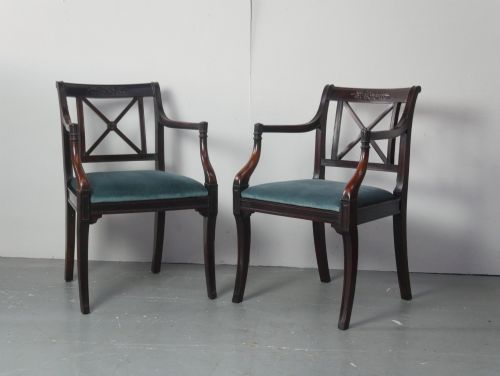
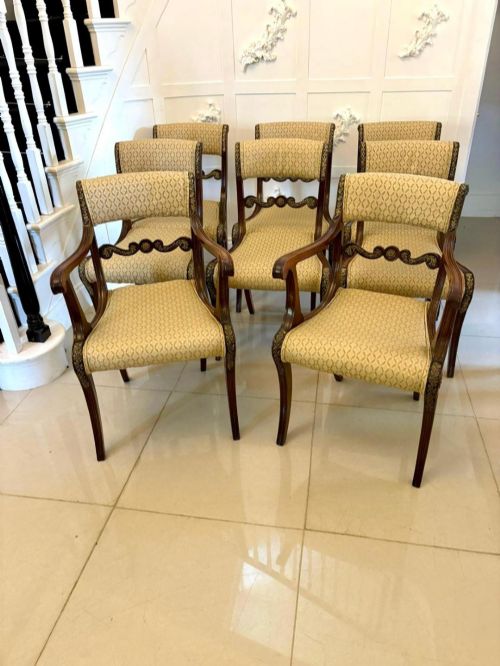
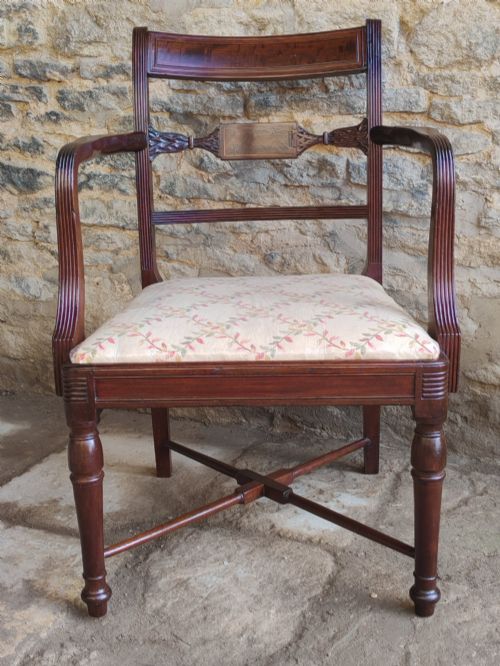

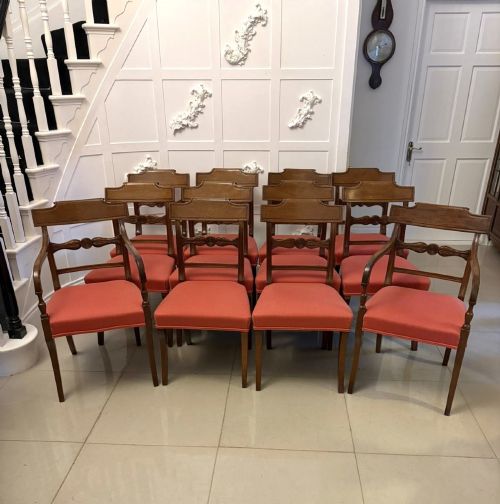
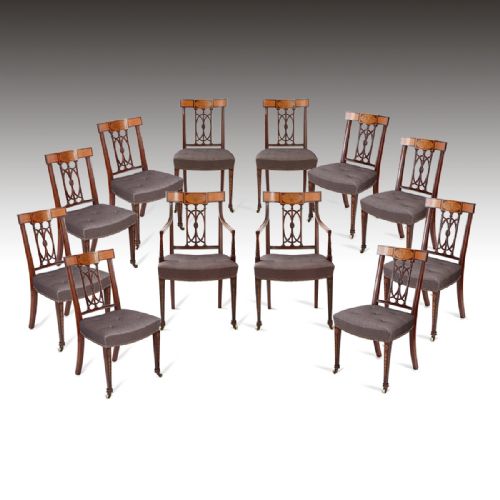
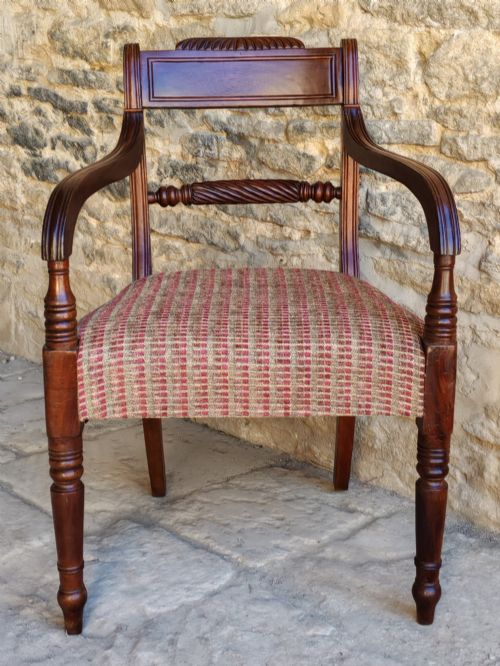
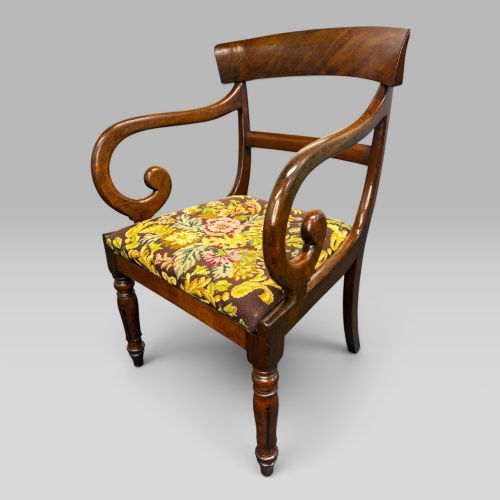
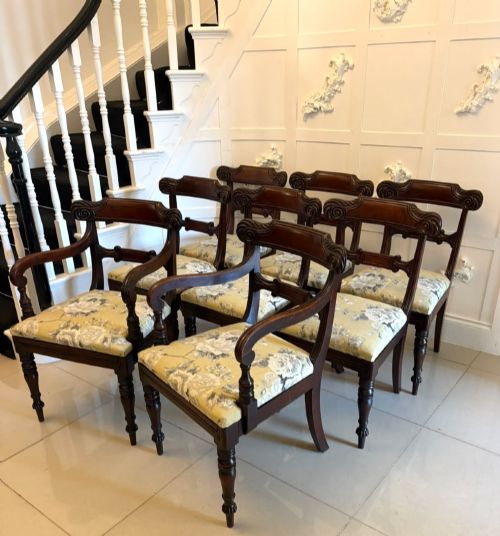
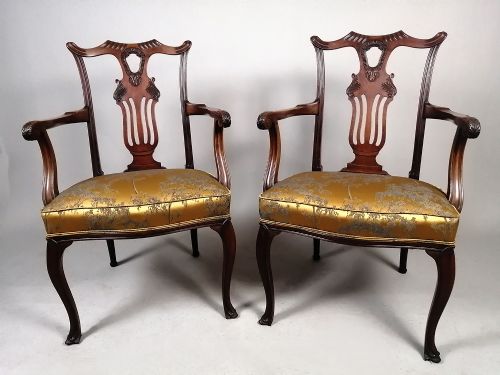
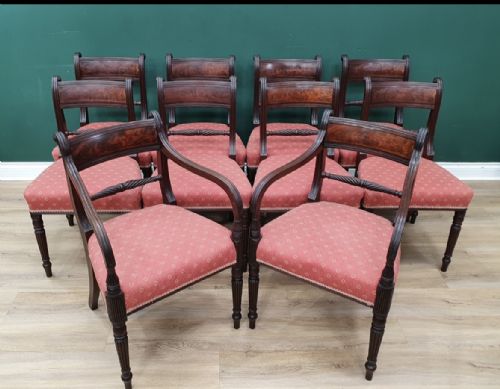
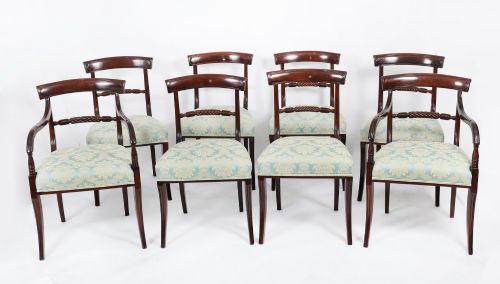
Regency Mahogany Carver Chairs
Regency mahogany carver chairs bring architectural grace and sturdy seating to a dining table.
Regency Mahogany Carver Chairs
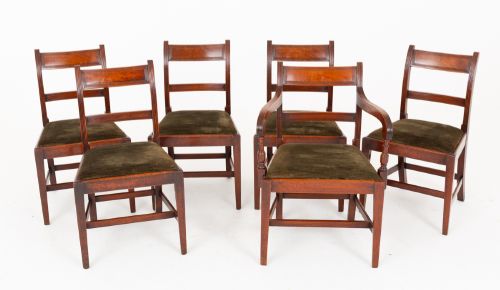
When searching for regency mahogany carver chairs, buyers look at armchairs designed to sit at the head and foot of a dining table alongside matching side chairs. These seating pieces originate primarily from the Georgian, Regency, and William IV periods, supplemented by later revival editions.
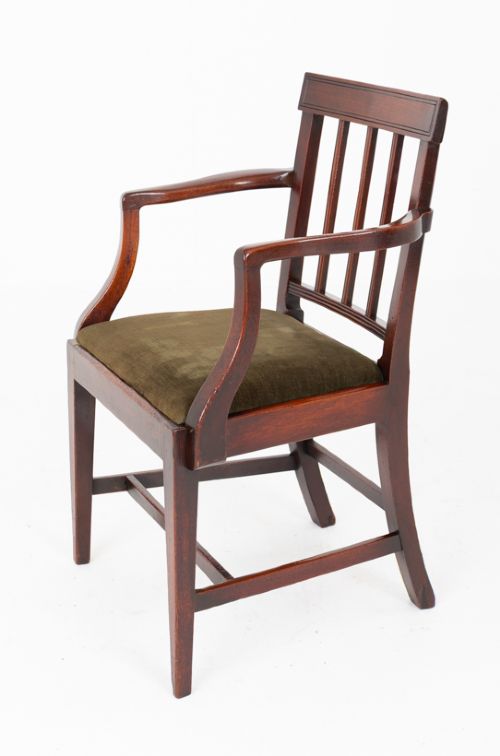
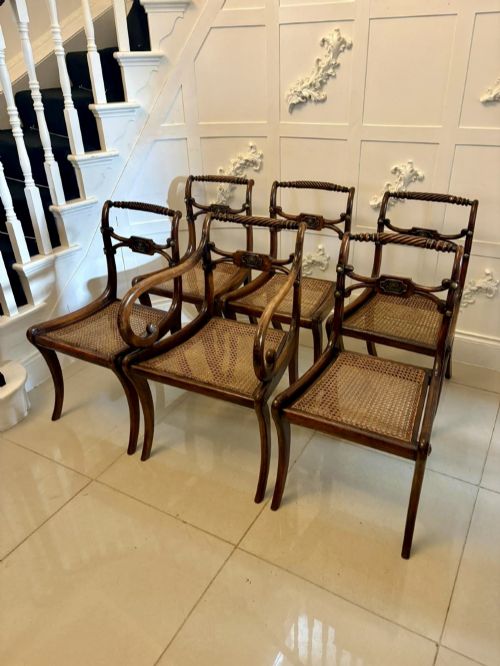
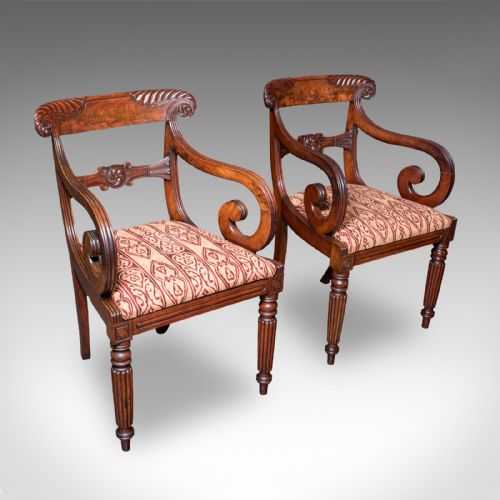
Makers utilised resilient timber varieties, shaping them into bar backs, rope backs, and lyre motifs. Buyers frequently encounter pieces displaying scroll arms, cane seats, or drop-in pads upholstered in velvet and fabric.
Materials and Construction
Cabinetmakers worked predominantly with dense mahogany, occasionally selecting Cuban or figured stock to highlight rich grain patterns. Timber sections were steam-bent to form sweeping top rails and curved back supports.
Joinery relied on traditional mortise and tenon methods to secure the frame under daily weight. Seat platforms were woven from cane or constructed as drop-in frames padded with textile or velvet upholstery.
Brass accents and decorative turnings provided subtle contrast against the dark wood surfaces. Frames were finished with hand-rubbed polishes that emphasised the natural figure of the timber.
Listings feature mahogany dining chairs spanning the Georgian, Regency, and Victorian eras, alongside 20th-century revival editions.
Evaluating Quality
The standard of a carver chair rests upon the crispness of its carved details and the weight of the timber. Finer examples display deeply carved rope twists, bold scroll arms, and well-proportioned sabre legs.
Originality of components dictates the standing of a piece within the range. Chairs retaining their initial timber surface and structurally sound joints command greater appreciation among collectors.
Subtle refinements, such as elegantly tapered backrests and integrated structural bracing, distinguish superior workshop production from standard commercial output.
Thomas Clarkson and Sons·Gillows
The Regency Mahogany Carver Chairs Glossary
- Carver chair
- An armchair designed specifically for use at a dining table, usually matching a set of single side chairs. These seating options feature lower armrests to tuck underneath tabletops.
- Bar back
- A horizontal wooden splat across the chair back resembling a rounded bar. This design gained popularity during the Regency period.
- Sabre leg
- A concave, outwardly curved chair leg tapering towards the foot. This classical form borrows from ancient Greek furniture designs.
- Drop-in seat
- A removable wooden frame upholstered with fabric and dropped into a recess in the chair seat rails. This construction allowed for straightforward reupholstery over time.
- Rope back
- A chair back featuring carved rope-twist rails. Cabinetmakers achieved this textured effect through meticulous hand-carving.
Regency Mahogany Carver Chairs: Frequently Asked Questions
How do I use carver chairs at a dining table?
Carver chairs traditionally sit at the head and foot of a dining table to mark positions of importance. Their arms offer added comfort during long meals.
Ensure the height of the armrests clears the underside of your table top before placing them permanently in a dining room.
Are these chairs comfortable for daily seating?
Most antique carver chairs feature supportive wooden backrests and firm upholstered or cane seats. They were built for upright posture during formal dining.
Adding a removable cushion can adjust the seat height and soften the surface for extended sitting.
How can I distinguish Regency from William IV chairs?
Regency chairs typically exhibit slender proportions, restrained classical motifs, and delicate sabre legs. The aesthetic focuses on lightness and geometric clarity.
William IV pieces generally appear heavier and sturdier, featuring bolder scrollwork, broader splats, and thicker turned supports.
Can I mix carver chairs with different dining sets?
Matching a pair of carver chairs with single chairs of a similar timber tone creates a traditional assembled dining arrangement. Look for comparable period styles to maintain visual harmony.
Common wood colours like dark mahogany tie disparate seating pieces together around a central table.