

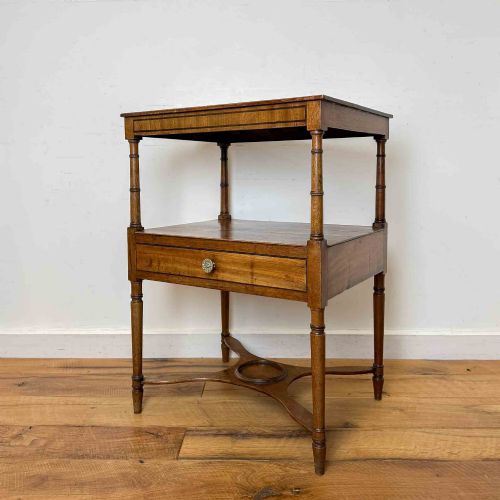
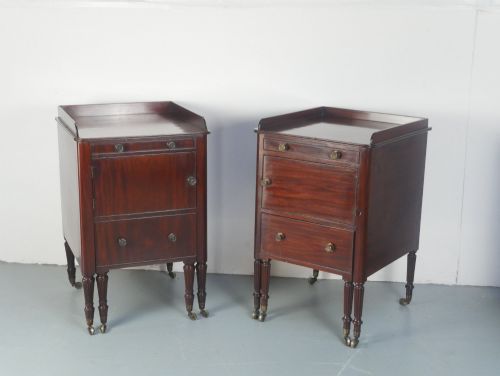

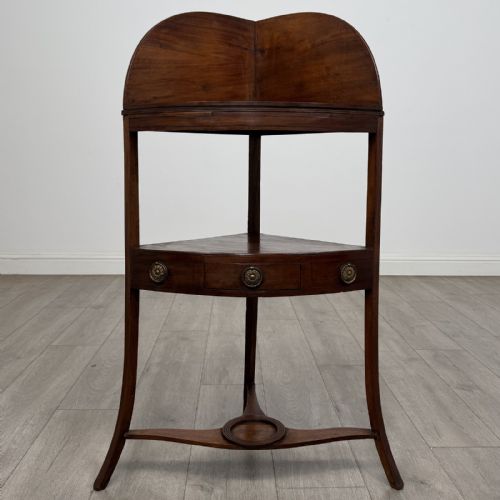
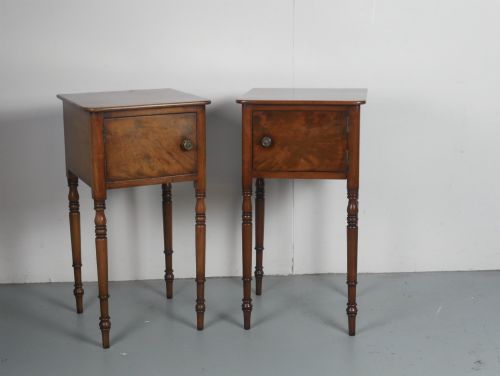
Regency Mahogany Bedside Table
A regency mahogany bedside table brings compact utility and rich timber grain to a bedroom, combining functional storage with period elegance.
Regency Mahogany Bedside Table
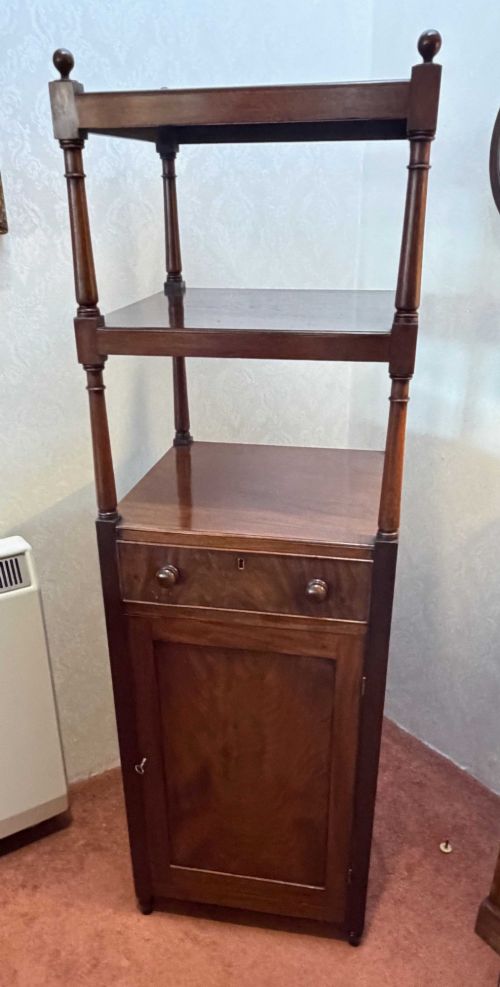
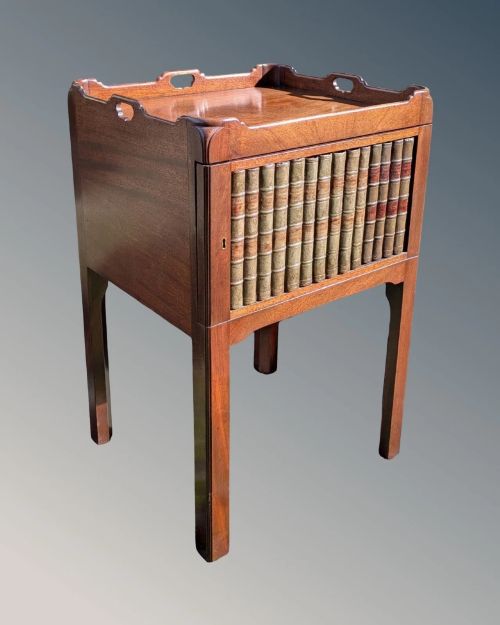
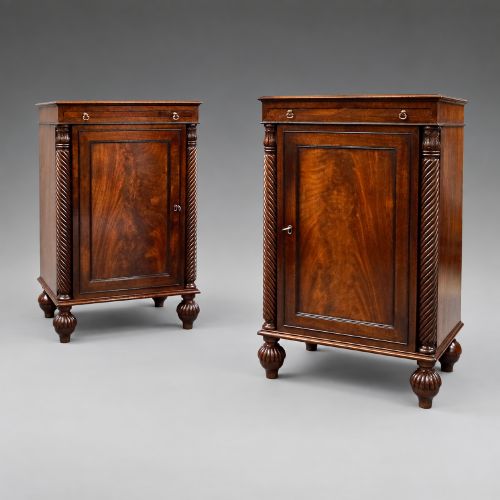
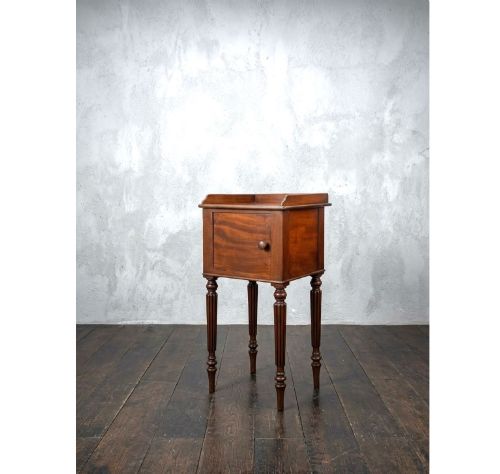
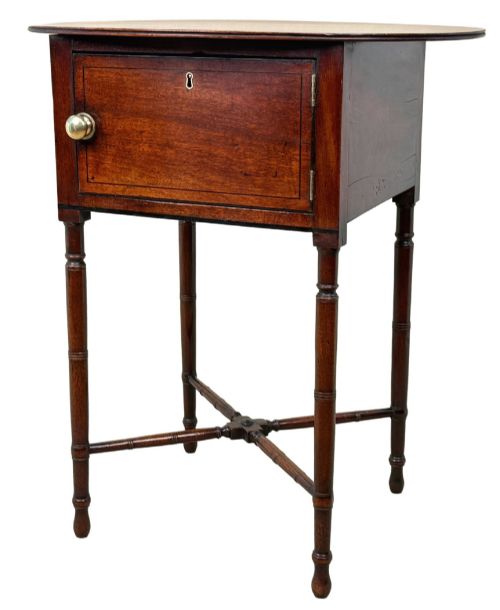
A regency mahogany bedside table is defined by compact proportions and functional adaptability, serving historic roles as night stands, commodes, or pot cupboards. These pieces emerge primarily from the Regency, Georgian, and William IV periods, alongside later 19th-century interpretations.
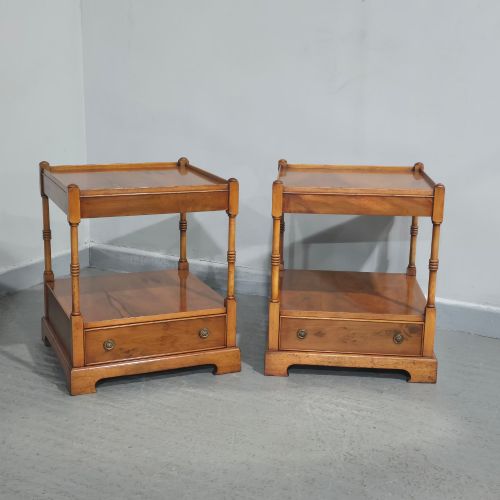
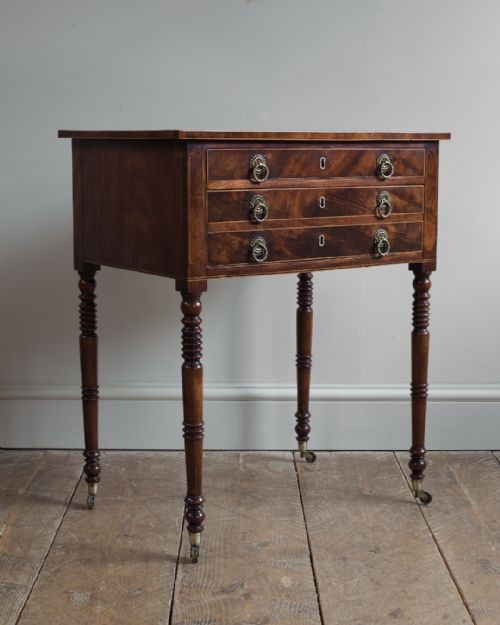
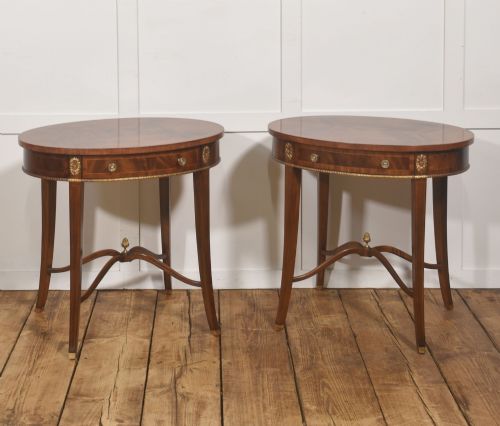
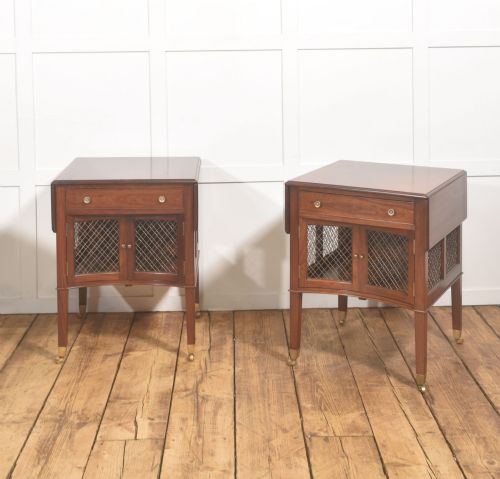
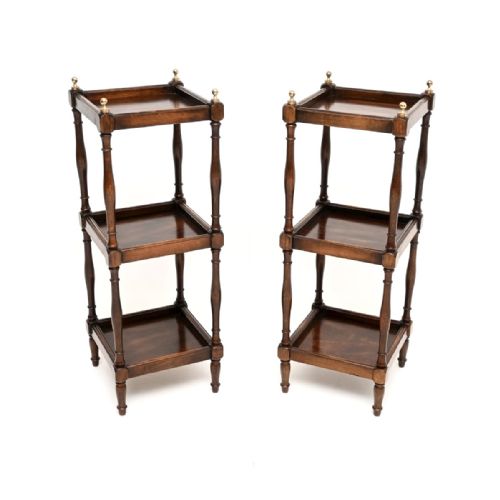
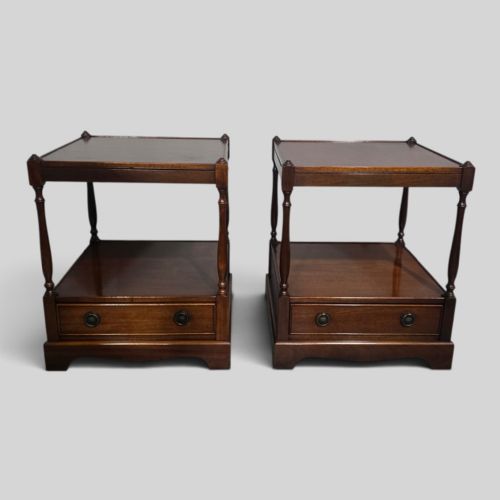
The format ranges from cylindrical cupboards and tray-top cabinets to small lamp tables and drop-leaf work tables. On this page, a buyer encounters everything from single pedestals to matched pairs designed to stand beside a bed.
Origins stretch across English workshops, with occasional Irish pieces appearing in the selection. The forms rely on rectangular, circular, or bow-front profiles suited to smaller spaces.
Materials and Construction
Cabinetmakers utilised solid mahogany and flame mahogany veneer to achieve depth and movement across the timber surfaces. Secondary woods provide structural stability inside drawers and carcases.
Details such as brass handles, leather inserts, boxwood stringing, and ceramic fittings appear across various forms. Joinery methods reflect period cabinet-making standards, employing pegged joints and dovetailed drawer construction.
Regency Mahogany Bedside Table Retail Price Guide 2026
Typical asking prices for regency mahogany bedside table among the pieces listed under this phrase on Sellingantiques today, from the lower quarter to the upper quarter. They describe what is for sale here now, not the wider market.
Some nineteenth-century readers tables arrive with drop leaves ready to hold a heavy volume before bedtime.
Evaluating the Pieces
Quality rests in the selection of the mahogany veneer, where lively flame figures and book-matched grain elevate the visual impact of a cabinet. The crispness of turned legs, reeded columns, and inlaid stringing indicates the hand of a skilled maker.
Proportion and structural integrity separate standard utility pieces from finer commissions. Well-executed pieces retain original brass hardware, sound drawer runners, and balanced proportions that maintain stability on uneven floors.
Gillows·Holland & Sons
The Regency Mahogany Bedside Table Glossary
- Flame mahogany
- A veneer cut from the fork of the mahogany tree to create a dramatic, flickering flame-like pattern across the wood surface.
- Pot cupboard
- A small bedside cabinet originally designed to house a chamber pot behind a single door or cupboard enclosure.
- Reeded legs
- Cylindrical table legs carved with parallel, convex vertical grooves that add textural detail in the Regency style.
- Pembroke table
- A small occasional table with hinged drop leaves on two opposing sides supported by pivoting brackets.
- Commode
- A low piece of bedroom furniture featuring doors or drawers, often adapted for bedside use in the Georgian and Regency eras.
Regency Mahogany Bedside Table: Frequently Asked Questions
What is the difference between a bedside table and a pot cupboard?
A bedside table typically provides open surface space or a single drawer for night-time essentials.
A pot cupboard is an enclosed cabinet specifically built with a door to conceal a chamber pot.
How do I identify a Regency period piece?
Regency furniture displays clean architectural lines, classical proportions, and specific motifs such as reeded legs or brass stringing.
Porter and cabinet-maker practices from around 1800 to 1830 dictate these restrained yet decorative characteristics.
Are these tables suitable for modern bedrooms?
Their compact footprints make them well-suited for smaller contemporary spaces beside modern bed heights.
The enclosed cupboards and drawers offer practical bedside storage while introducing period timber character.
What wood types should I expect to find?
Mahogany is the primary timber, appearing as both solid boards and figured flame mahogany veneers.
Accent woods like boxwood appear alongside brass fittings and leather top surfaces.