
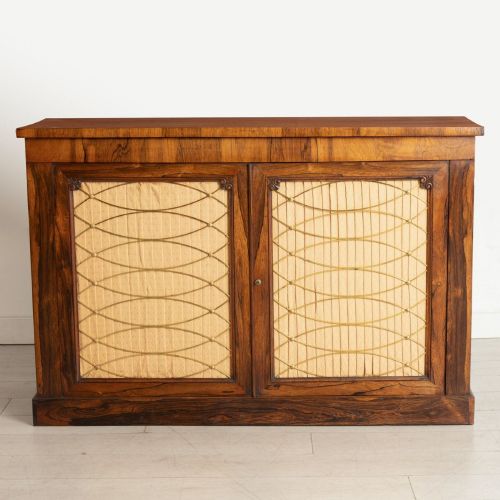
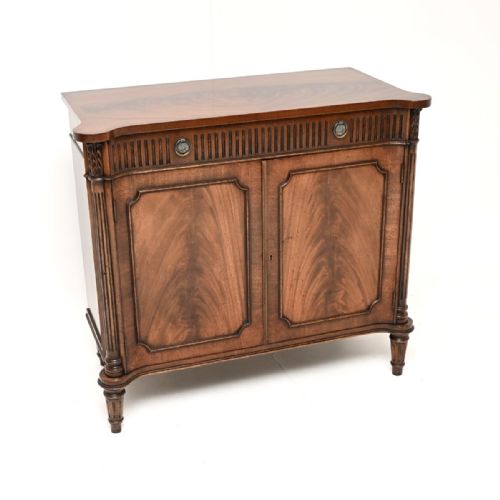
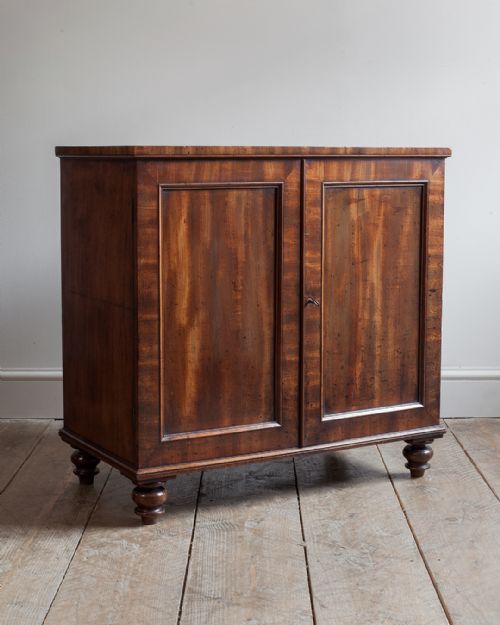
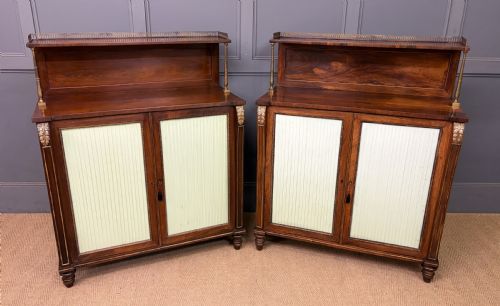

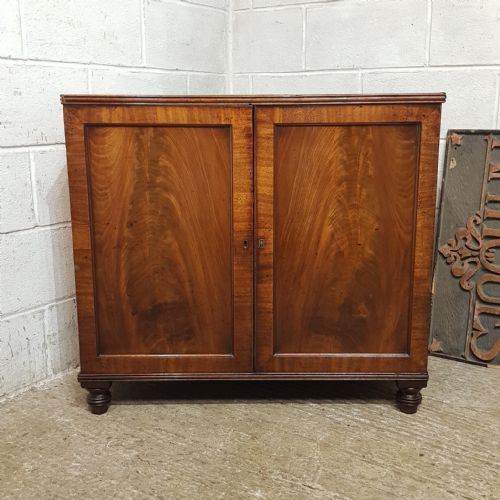
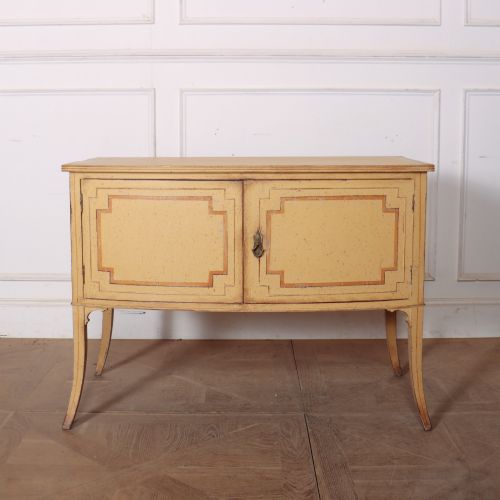
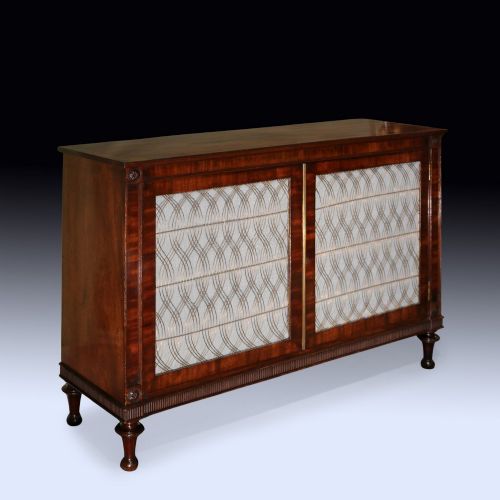


Regency Low Storage Cabinet
A regency low storage cabinet offers neat proportions and refined timberwork, designed to anchor a room without dominating the wall space.
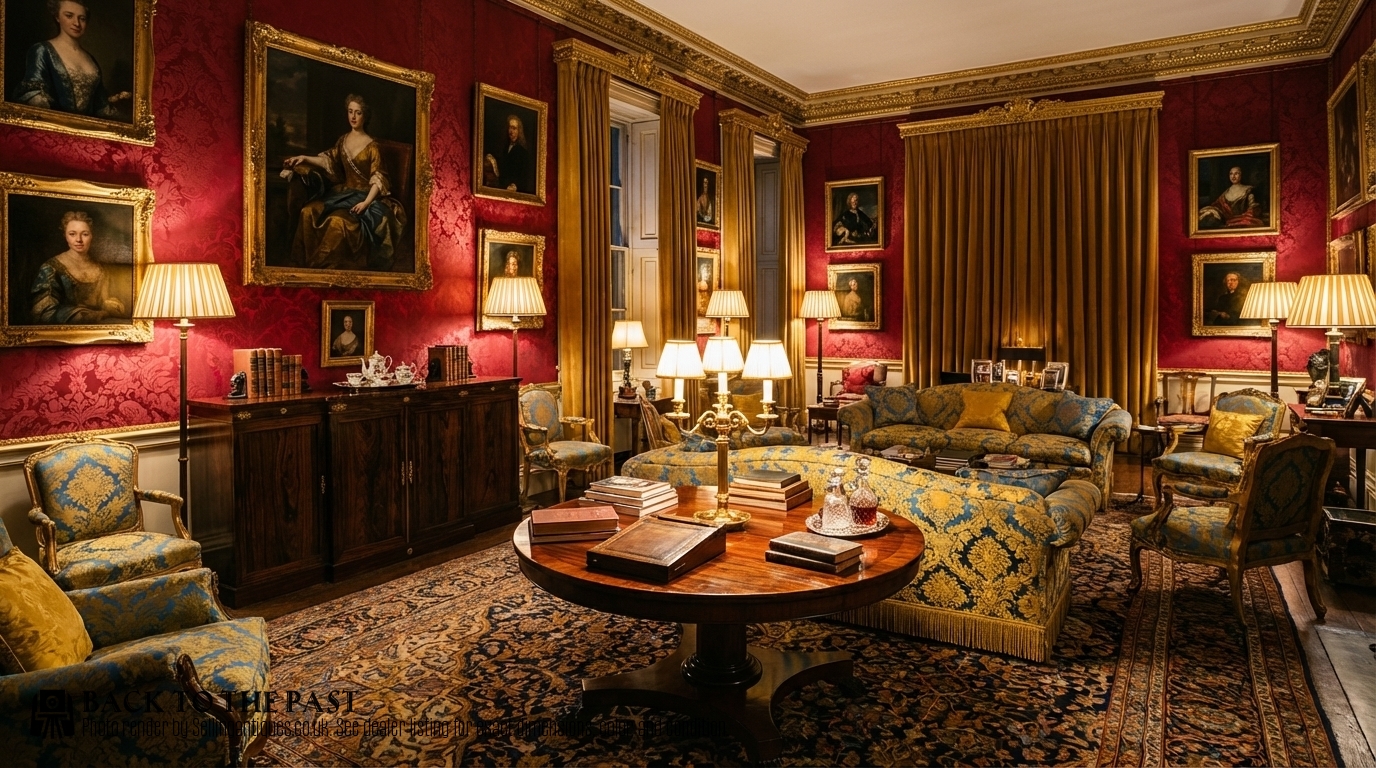
Regency Low Storage Cabinet
A regency low storage cabinet is a compact, low-profile piece designed for domestic utility and architectural balance, typically presenting doors rather than open shelves. These pieces serve as side cabinets, chiffoniers, or dwarf linen cupboards, keeping everyday items tucked away beneath a surface suitable for lamps or ornaments.
The pieces on this page span the Regency period itself alongside later 19th century interpretations and occasional 20th century revivals. Mahogany and rosewood dominate the forms, frequently enriched with brass grilles, pleated fabric panels, or distinct veneers like plum pudding mahogany and flame mahogany.
Makers and cabinetmakers of the period deployed these low formats to fit beneath parlour windows or along panelled walls where taller bookcases would block the light. Their compact scale makes them particularly adaptable for modern rooms that require period character without heavy proportions.
How they were made
Cabinetmakers constructed these pieces using solid foundational timbers like mahogany, rosewood, and goncalo alves, often faced with carefully selected veneers to create striking figure patterns. Flame mahogany veneer and plum pudding mahogany show how craftsmen exploited the natural grain of the wood for visual impact.
Fine detailing relied on contrasting materials, integrating brass for grilles, inlay, or parcel gilt highlights, alongside boxwood stringing. Silk and fabric panels, such as pleated chiffon, were fitted behind wirework doors to soften the aesthetic and conceal contents.
Joinery techniques prioritised stability in low, wide formats, ensuring doors hung true and drawers moved smoothly within carcases built to withstand daily use over centuries.
Some cabinets feature leather dummy books on their shelves, designed to disguise storage compartments as a gentleman's library.
What varies in quality
The grade of timber selection and the precision of the veneer matching dictate the initial visual standing of a piece. Finer examples display continuous, book-matched grain across multiple doors or drawers, whereas standard pieces rely on more uniform or simpler boards.
Proportion and execution of detail mark the distinction between a workshop producing standard utility furniture and one crafting bespoke items for elite interiors. Subtle reeded columns, crisp parcel gilding, and well-executed turnings elevate the presence of the piece.
The Regency Low Storage Cabinet Glossary
- Chiffonier
- A low cabinet or sideboard, typically featuring a raised shelf or gallery back, popular during the Regency and Victorian periods. They often incorporated fabric-backed doors to conceal sensitive items.
- Goncalo Alves
- A dense, highly figured exotic hardwood derived from South American trees, valued for its contrasting dark brown and golden streaks. Cabinetmakers utilised it for high-status Regency furniture.
- Parcel gilt
- Partially gilded timber surfaces where gold leaf is applied strictly to specific carved details, mouldings, or mounts to create contrast against the dark wood. It highlights architectural elements on Regency pieces.
- Breakfront
- A cabinet design where the central section projects forward from the flanking sections, creating depth and rhythm across the front elevation.
Regency Low Storage Cabinet: Frequently Asked Questions
How do I tell a Regency piece from a later copy?
Original Regency pieces display construction methods appropriate to the early 19th century, such as hand-cut dovetails, native secondary timbers like oak or pine, and genuine hand-polished timber patination. The timber selection usually exhibits distinct natural figuring without modern stains.
Later Victorian revivals or 20th century Regency style pieces often use different internal woods, machine-cut joints, or heavier, uniform finishes that lack the depth of older surfaces.
What is the difference between a chiffonier and a side cabinet?
A chiffonier typically includes a raised superstructure or low shelf supported by small columns at the back of the top surface. They frequently feature doors lined with pleated silk or fabric.
A standard side cabinet presents a flat top surface without a superstructure, focusing purely on the enclosed storage space below.
How do I care for rosewood and mahogany surfaces?
Keep these timbers away from direct sunlight and strong heat sources to prevent the wood from drying out or the veneer from lifting. Maintaining a stable indoor temperature preserves the finish.
Dust regularly with a soft, dry cloth and apply a traditional beeswax polish sparingly when the wood appears dry, buffing gently to maintain the natural sheen.