
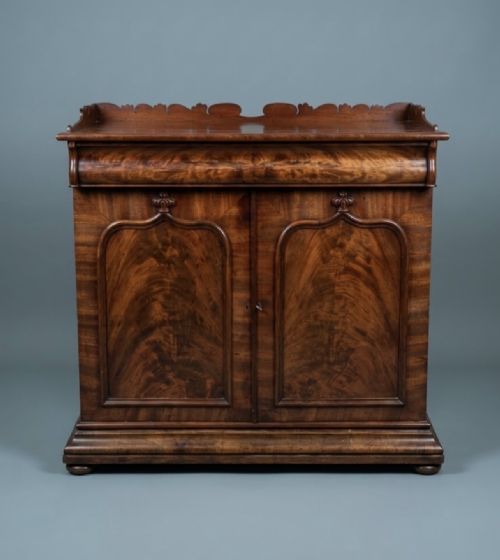
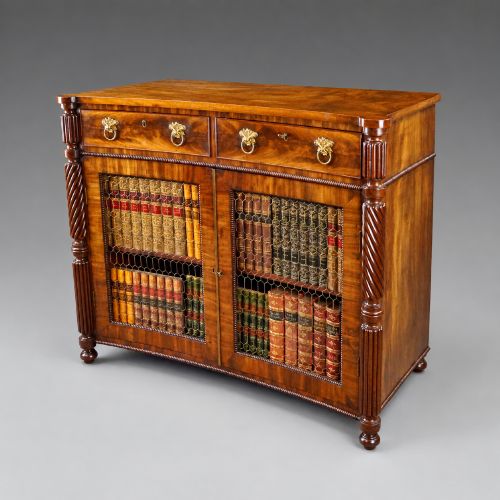
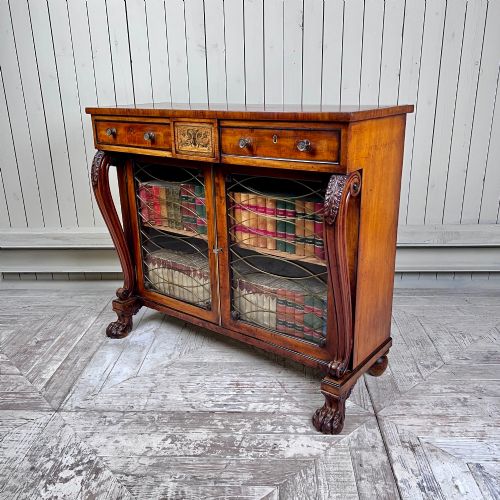
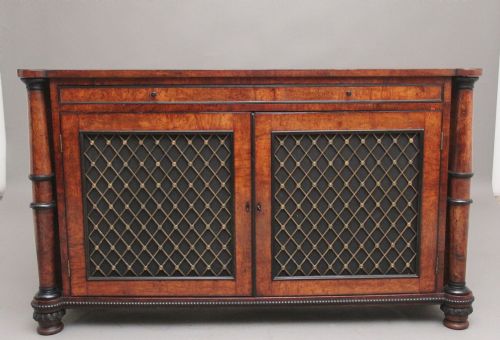

Regency Low Sideboard
These regency low sideboard pieces combine compact utility and refined timber figures, offering understated elegance for modern dining and living spaces.
Regency Low Sideboard
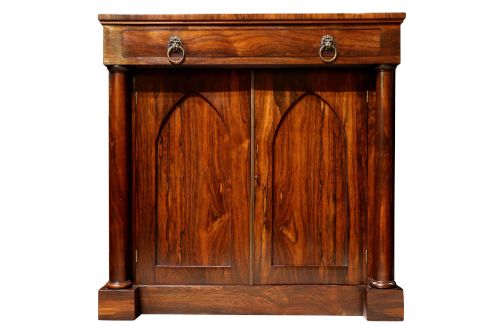
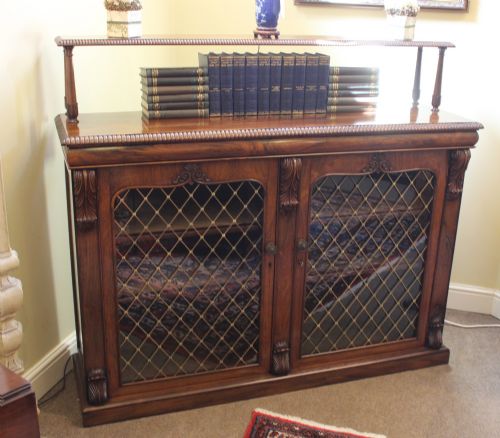
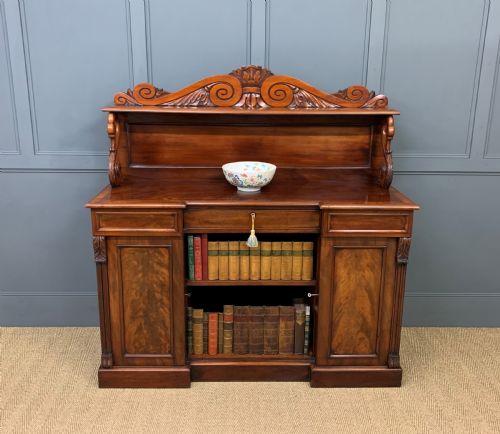
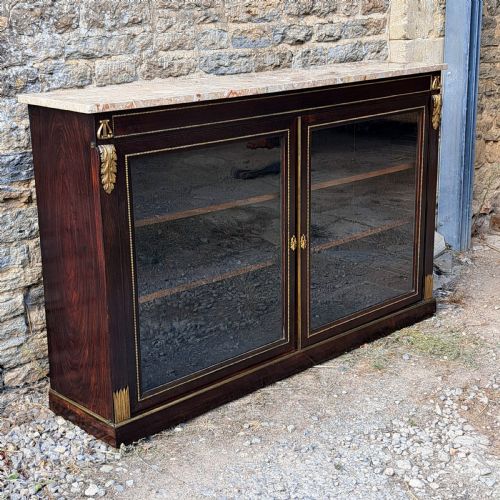
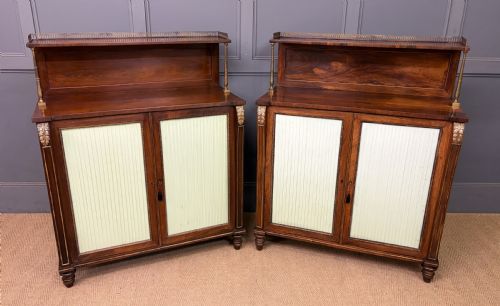
When searching for a regency low sideboard, buyers encounter a variety of compact storage forms including side cabinets, chiffoniers, and dwarf bookcases. These pieces date predominantly from the Regency and William IV periods, alongside later 19th-century revivals.
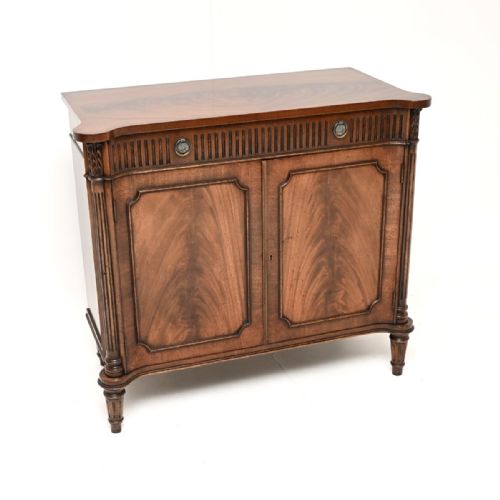
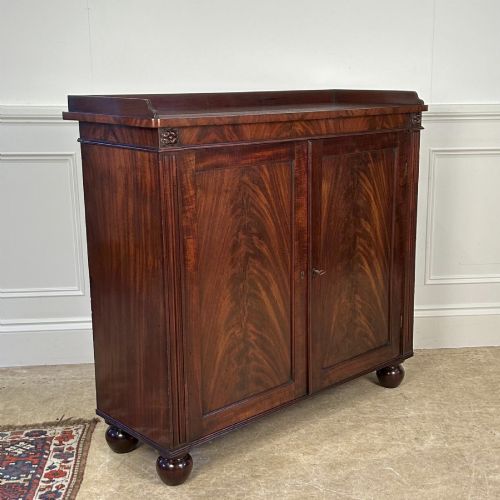
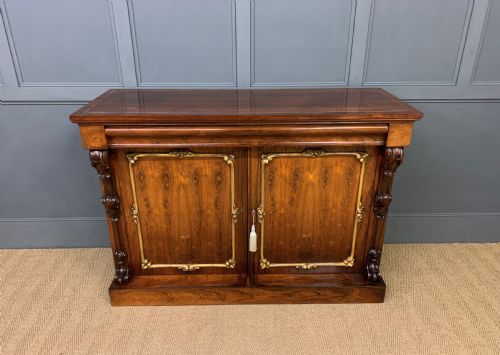
The selection on this page relies heavily on rich timbers such as rosewood and mahogany, often structured with low profiles designed to sit beneath dining room windows or against drawing room walls without overwhelming the floor plan.
How they were made
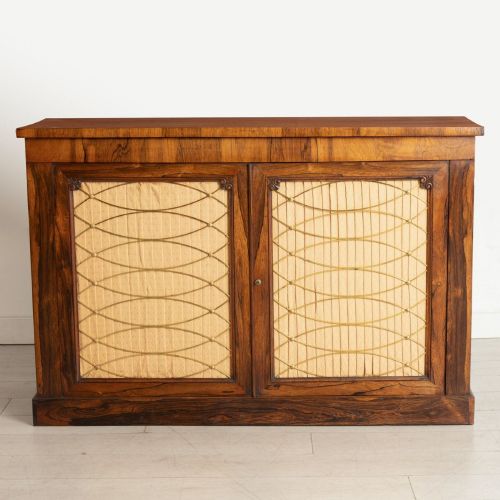
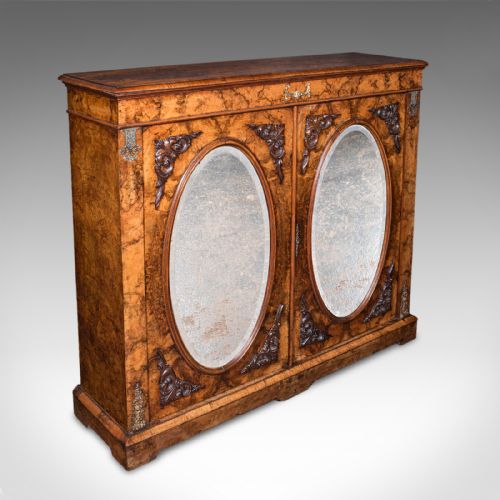
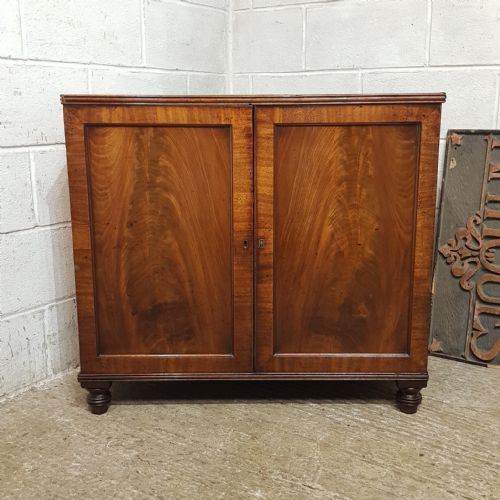
Cabinetmakers utilised dense native and exotic hardwoods, frequently applying flame mahogany veneer or rosewood to create striking grain patterns across the main bodies. Finer examples incorporate contrasting brass inlay, delicate brass grilles, and ormolu mounts to highlight architectural divisions.
Structural integrity relied on seasoned oak and mahogany framing, while specialist workshops integrated pleated chiffon panels, glazed doors, and hidden secret drawers into the compact carcases.
Listings feature rosewood, mahogany, and flame mahogany veneer alongside brass and marble.
What varies in quality
The distinction between standard production and top-tier pieces rests upon the choice of timber and the precision of cabinetmaking. Superior examples display carefully matched veneer grains across multiple doors and drawer fronts, rather than random cuts of wood.
Hardware and secondary details further separate the grades, where crisp brass casting, original ebony stringing, and well-executed joinery demonstrate the maker's hand long before any attribution is confirmed.
Gillows·Waring and Gillow
The Regency Low Sideboard Glossary
- Chiffonier
- A compact sideboard cabinet featuring a raised shelf or bookcase superstructure on top. This form became popular during the Regency period for holding books and decorative objects in principal rooms.
- Flame mahogany veneer
- A thin slice of timber cut from the fork of a mahogany tree to produce a flickering, flame-like pattern. Craftsmen laid these veneers symmetrically across cabinet doors for visual impact.
- Ormolu
- Gilt bronze mounts applied to the corners and panels of fine furniture. These decorative elements provided a bright metallic contrast against dark rosewood and mahogany surfaces.
- Goncalo Alves
- A dense tropical hardwood with distinctive dark brown and golden-brown markings. Cabinetmakers utilised this durable timber for decorative banding and solid furniture components during the early 19th century.
Regency Low Sideboard: Frequently Asked Questions
Where should I place a low sideboard?
These compact cabinets suit entrance halls, drawing rooms, and dining spaces where standard height sideboards prove too tall or heavy for the wall proportions.
Their low profile allows art to be hung comfortably above them while still providing essential surface space and enclosed shelving.
How do I identify Regency period pieces?
Examine the timber selection, hardware, and structural framing for traits consistent with early 19th-century workshop practices. Genuine examples often feature rosewood or flame mahogany, brass inlay, and secondary pine or oak linings.
Later Victorian revivals tend to use heavier timber scantlings and different interior construction methods.
What is the difference between a chiffonier and a sideboard?
A chiffonier typically includes a raised superstructure with shelves or a mirror attached to the top of a low cabinet base. Sideboards generally consist of a long, low carcase designed purely for serving food and storing dining linen.
Both forms appear frequently within Regency and William IV furniture groups.
How do I care for antique rosewood surfaces?
Maintain the polished finish by dusting regularly with a soft, dry cloth and avoiding direct sunlight that can fade exotic timber grains. Apply occasional coats of appropriate furniture wax to nourish the wood without building up a sticky residue.