

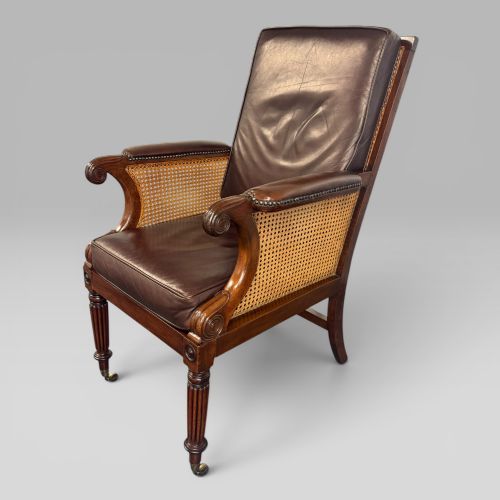
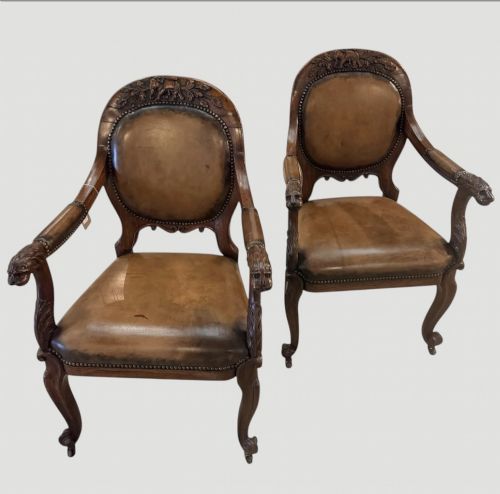


Regency Leather Seating
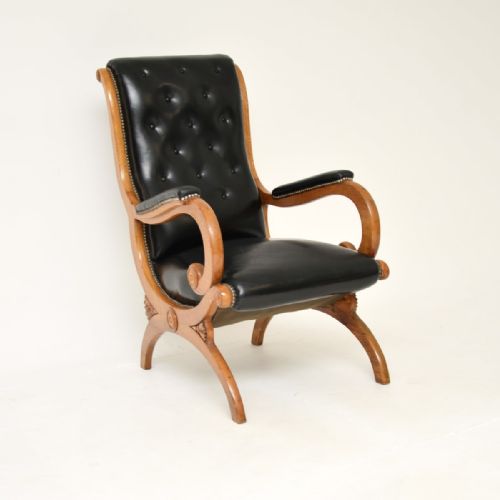
Regency leather seating brings together solid mahogany and supple hides, offering substantial armchairs, dining chairs and library seats that anchor a traditional room.
Regency Leather Seating
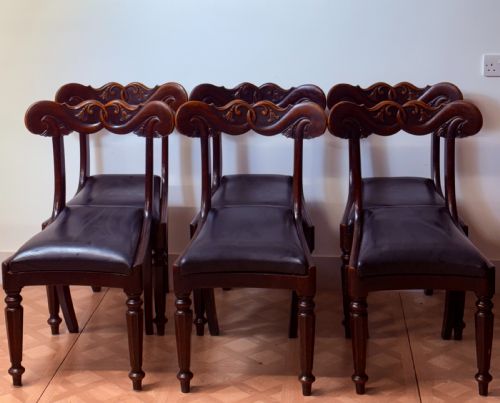
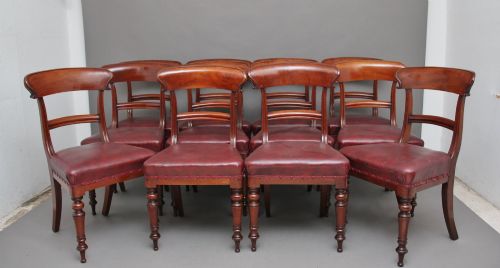
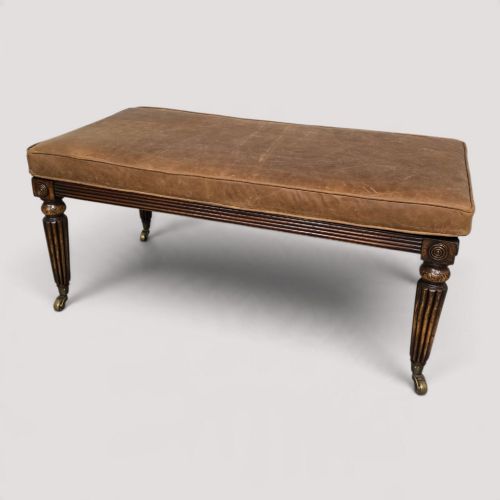
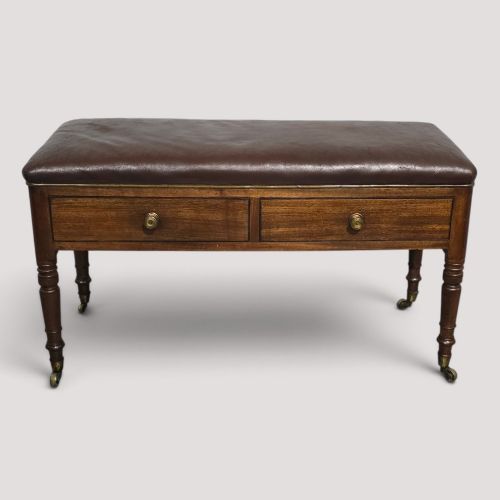
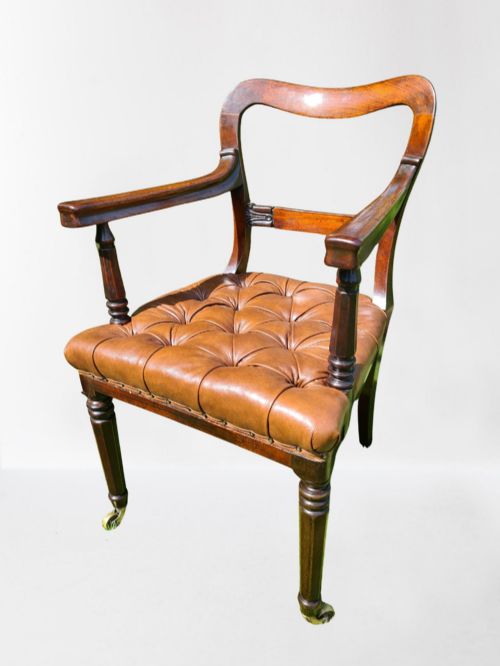
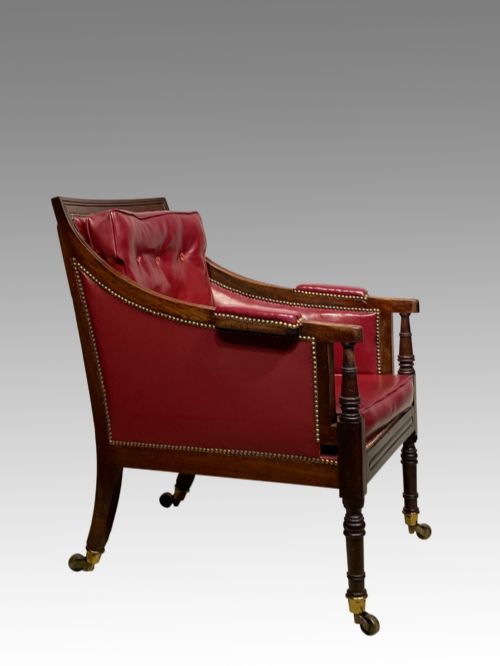
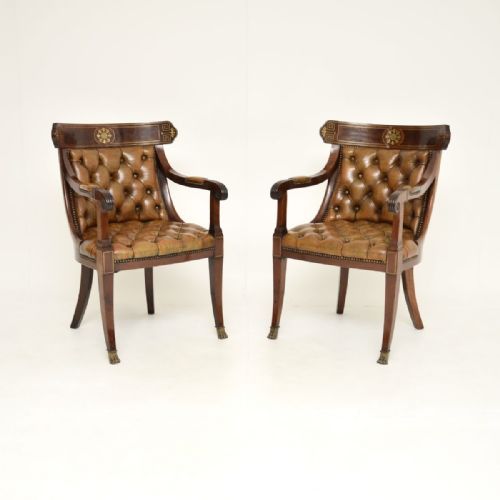
When buyers search for regency leather seating, they encounter practical library armchairs, desk chairs, dining chairs and long benches designed for formal rooms.
The pieces appearing on this page span the 19th Century, Regency, Georgian and William IV periods, constructed in mahogany, rosewood and pollard oak.
Forms range from swivel desk chairs and bergères to sets of dining chairs and duet window stools intended for domestic comfort.
Materials and construction
Joiners built these frames primarily in dense mahogany and rosewood, frequently incorporating brass inlay, cane panels and polished leather upholstery.
Frames rely on turned or fluted wooden legs, sometimes featuring sabre legs or brass castors to support heavy seating structures.
Hide and leather covers were hand-stretched and secured with studded brass tacks over supportive internal webbing and stuffing.
Regency Leather Seating Retail Price Guide 2026
Typical asking prices for regency leather seating among the pieces listed under this phrase on Sellingantiques today, from the lower quarter to the upper quarter. They describe what is for sale here now, not the wider market.
Several armchairs retain evidence of long hours spent reading by candlelight in historic libraries.
Assessing quality
Superior examples demonstrate tighter timber grain and crisper carved details on arms and back rails, showing the hand of a skilled cabinetmaker.
The weight and finish of the mahogany or rosewood frame distinguish everyday furniture from exhibition pieces built for grand libraries.
The grade of the leather upholstery and the integrity of the underlying frame construction dictate the longevity and presence of each seat.
Henry Maxwell·George Bullock·Daws
The Regency Leather Seating Glossary
- Bergère
- An enclosed armchair with upholstered back and sides, often featuring cane panels alongside leather elements. This French-inspired form became popular in English libraries during the early nineteenth century.
- Carver chair
- A term for an armchair, typically positioned at the head of a dining table or used as a desk seat. These chairs often match a larger set of single dining chairs.
- Pollard oak
- Timber taken from trees that were cut back to promote dense branching, creating a mottled, highly decorative grain. It appears on select dining and library furniture.
- Sabre leg
- A concave, outward-curving wooden leg that tapers toward the foot, characteristic of the Regency style. This design provides structural stability while maintaining a light silhouette.
- Window stool
- A long seat designed to fit into a bay window, sometimes built with raised ends or scroll arms. Pairs of these benches served formal reception rooms.
Regency Leather Seating: Frequently Asked Questions
How do I identify a true Regency chair?
Authentic pieces from this era typically display classical proportions, specific wood choices like mahogany and rosewood, and decorative elements such as brass inlay or sabre legs.
Examining the construction methods underneath reveals period joinery that differs significantly from later Victorian reproductions or 20th-century copies.
Can I use library chairs for daily dining?
Library armchairs and desk chairs are built for reading and writing, featuring lower seats and broader armrests designed for relaxed posture rather than upright dining.
Dining chairs on this page come in matched sets and offer a more vertical back support suited for table use.
What maintenance does antique leather need?
Historic leather requires gentle cleaning and periodic treatment with appropriate conditioning balms to keep the hide supple and prevent cracking over time.
Keeping these seats away from direct heat sources and strong sunlight preserves both the leather surface and the underlying wood.
Are these pieces English or imported?
The listings include domestic English cabinetwork alongside distinct Anglo-Indian rosewood furniture produced for export during the early 19th Century.
Regional differences appear in the carving styles and secondary timbers used within the frames.