


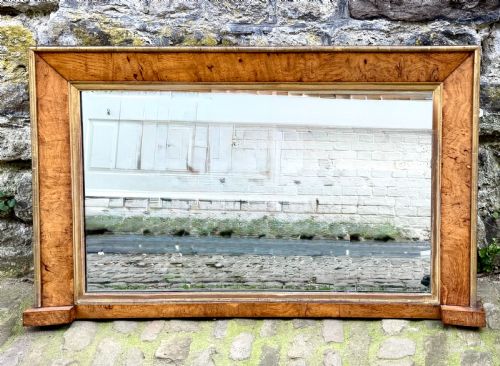


Regency Landscape Mirror
A regency landscape mirror brings weight and width to a room, offering broad proportions designed to hang above a fireplace or sideboard.
Regency Landscape Mirror
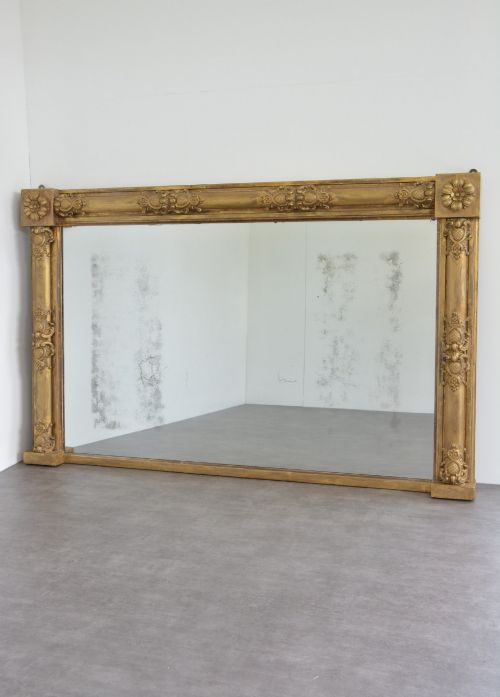
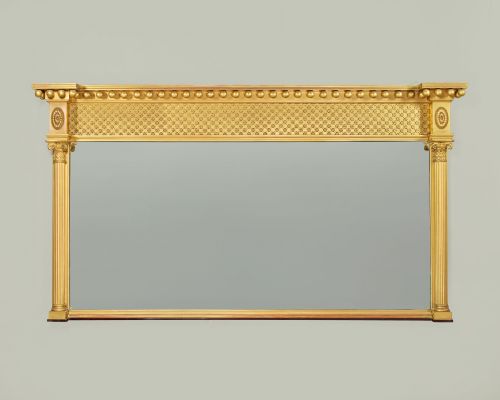
A regency landscape mirror usually takes the form of an overmantel or wall-hanging glass built on a horizontal axis. These pieces fill wide wall spaces above mantelpieces, drawing the eye across the room rather than up it.
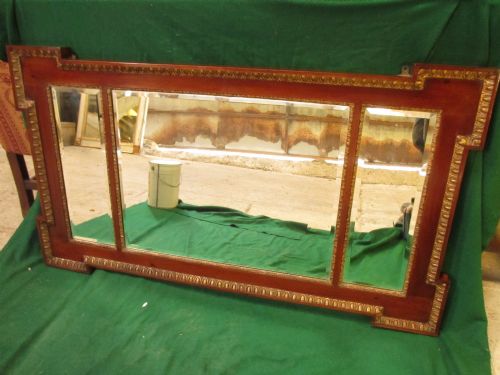
The version you meet most often on this page dates from the nineteenth century, finished with giltwood or gesso frames and frequently divided into triple plates. Such pieces combine architectural presence with the reflective utility required in period interiors.
Makers produced these mirrors in various styles including neoclassical, french empire, and later revival periods. They serve as central interior fixtures that anchor a room through sheer scale and bright surface reflection.
Materials and Construction Methods
Makers built the structural carcases using pine or mahogany, applying layers of gesso and composition ornament to form crisp neoclassical details like acanthus leaves or columns. Artisans then applied gold leaf or paint over the gesso base to achieve the characteristic metallic finish.
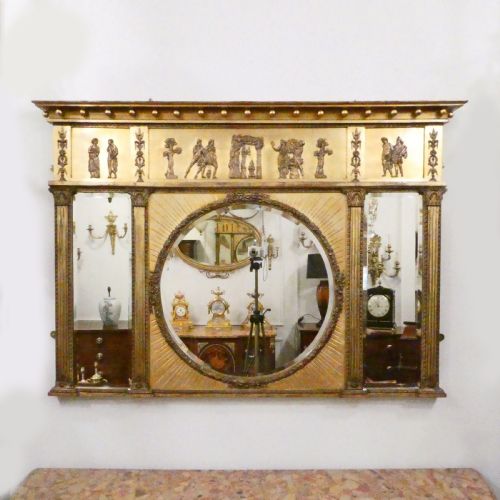
Mirrors relied on silvered mirror glass, occasionally divided into triptych sections or accompanied by eglomisé painted panels and classical friezes. The glass itself frequently displays foxing or ageing from long exposure to the atmosphere.
Materials recorded on this page include giltwood, ebonised wood, mahogany, birdseye maple, pine, gesso, and composition.
Distinctions in Quality and Execution
Quality rests in the crispness of the carved wood and gesso ornamentation, where hand-carved depth differs from uniform composition moulding. Finer examples display detailed friezes depicting figures or animals alongside well-proportioned columns and original mercury plates.
The integrity of the original gilding and the retention of secondary woods like mahogany or birdseye maple separate standard production from exceptional workshop output. Minor variations in plate division and the presence of makers' marks or specific regional touches also elevate an individual piece.
Ciceri and Co
The Regency Landscape Mirror Glossary
- Giltwood
- Wood carved and coated with gold leaf. This material provides the bright reflective borders typical of nineteenth-century frames.
- Gesso
- A plaster mixture applied to a wooden base to form a smooth surface for gilding or moulding. It allows intricate relief decoration.
- Overmantel mirror
- A wide looking glass designed to hang specifically above a fireplace mantel. These objects dominate the horizontal plane of a wall.
- Triptych mirror
- A glass divided into three distinct vertical sections within a single frame. This layout creates a wider panoramic reflection.
- Eglomisé
- A process of applying gold or silver leaf to glass along with cold painting. It produces decorative panels with a reflective backing.
- Trumeau
- A decorative wall mirror incorporating a painted or carved panel above the glass. Originating in French interiors, it functions as architectural wall furniture.
Regency Landscape Mirror: Frequently Asked Questions
Where should I hang a regency landscape mirror?
These mirrors work best mounted above a fireplace mantel or a low sideboard where their horizontal proportions can command the wall space. The wide frame balances the room by drawing the eye across the interior rather than toward the ceiling.
Ensure the wall fixings match the considerable weight of timber, gesso, and glass. Placing the glass opposite a window also maximises the natural light distributed through the room.
How do I identify a true regency period piece?
Examine the construction methods, the materials used in the carcase, and the decorative motifs such as neoclassical columns or laurel wreaths. Genuine examples often feature hand-applied gold leaf over gesso on pine or mahogany structures.
Look closely at the mirror glass itself for signs of age, such as light foxing or wavy distortions. These traits point to nineteenth-century manufacture rather than later twentieth-century reproduction.
What is a triptych mirror plate?
A triptych mirror plate divides the reflective surface into three distinct sections within one unified frame. This technique accommodates wide spaces without requiring a single impossibly large sheet of historical glass.
Makers often separated the plates using slender dividing moulding or decorated the upper sections with painted panels. This layout enhances the architectural rhythm of the piece.
How should I clean antique mirror glass?
Use a soft, dry microfibre cloth to gently remove dust from the glass and the gilded frame. Avoid commercial chemical sprays that might seep behind the plate and damage the historical silvering or foxed areas.
Take care around the gesso and gold leaf borders, as moisture can lift the delicate metallic surface. Regular dusting is sufficient to maintain the appearance of the piece.