

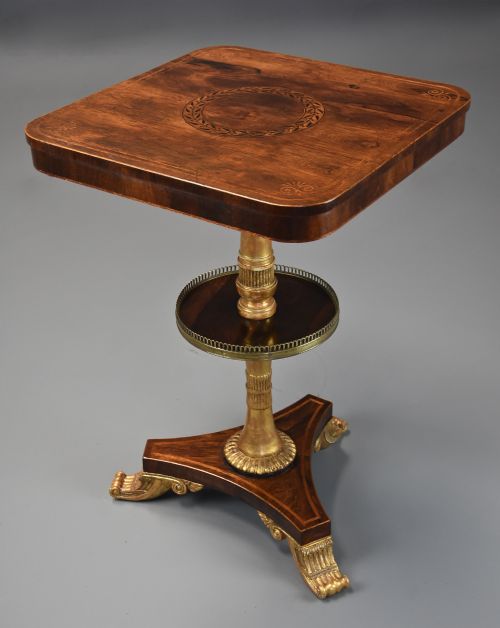



Regency Gilt Lamps
Regency gilt lamps bring classical theatre and rich metallic warmth into a room, offering striking illumination through time-honoured design.
Regency Gilt Lamps
Regency gilt lamps draw upon neoclassical and empire aesthetics, capturing the grand design vocabulary of the early nineteenth century alongside later revivals. When searching for regency gilt lamps, buyers encounter diverse forms shaped from bronze, brass, or carved wood, often finished with gold leaf or ormolu.
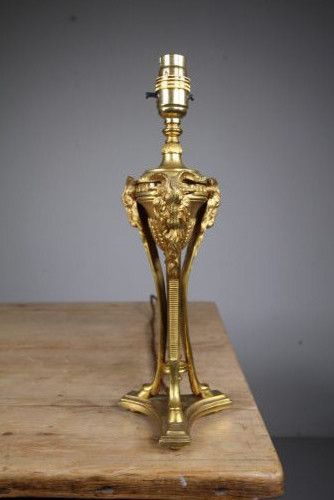
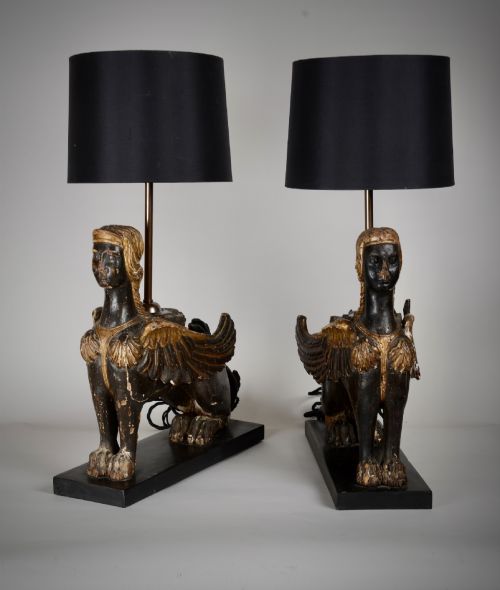
The pieces on offer span the nineteenth century as well as later twentieth-century interpretations, including floor standards, table lamps, and converted antique objects. Many utilise classical motifs such as rams' heads, sphinxes, or architectural columns to project formal authority.
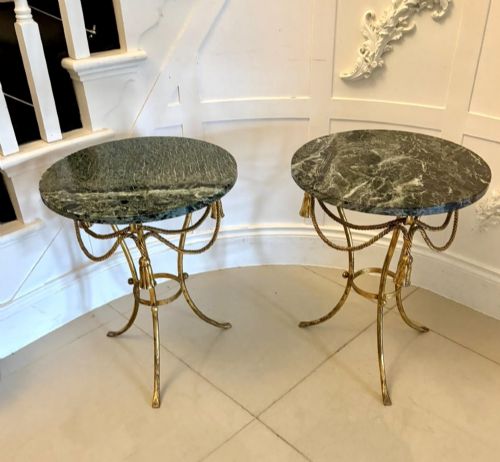
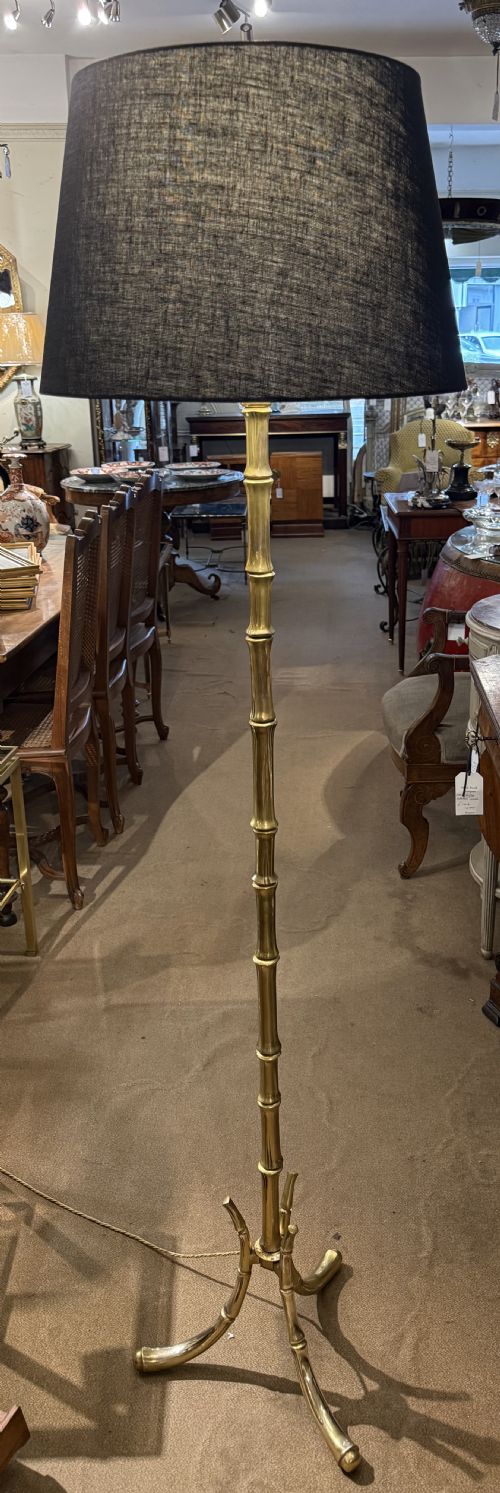
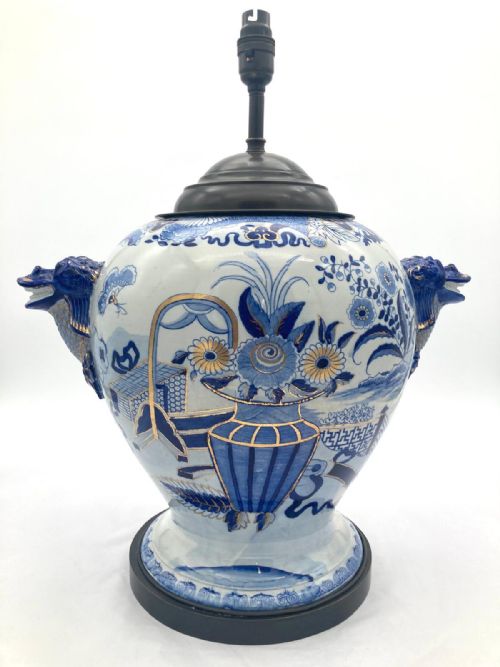
Beyond standard table lighting, the broader category encompasses floor lamps and decorative fixtures reflecting French influence or Chinoiserie tastes. These variations allow collectors to select lighting that suits both intimate side tables and expansive period interiors.
Materials and construction
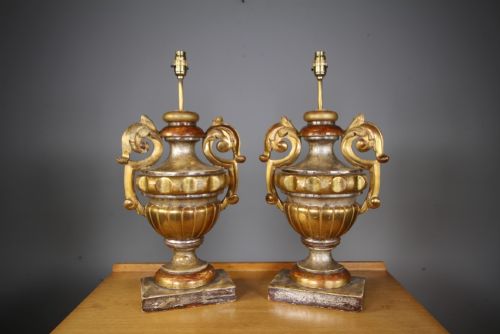
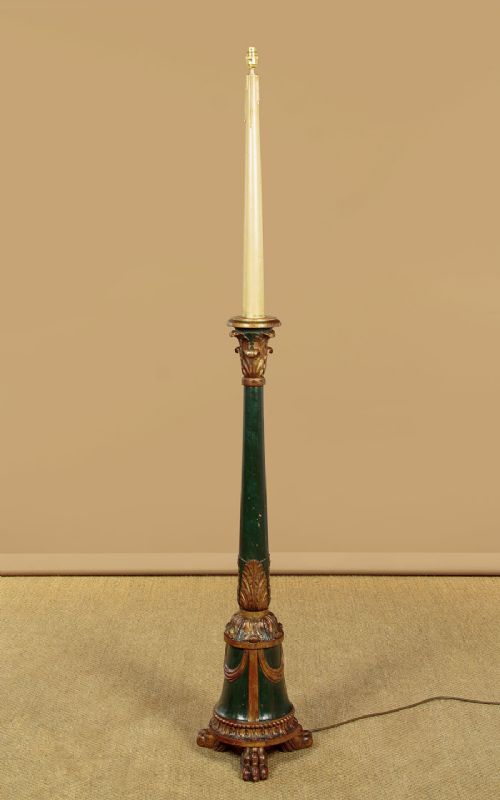
Construction relies heavily upon cast metals such as bronze and brass, frequently treated with fire gilding or ormolu to achieve a lasting metallic brilliance. Artisans also utilised carved pine and giltwood, applying thin layers of gold leaf over prepared wooden surfaces to create rich textural contrast.
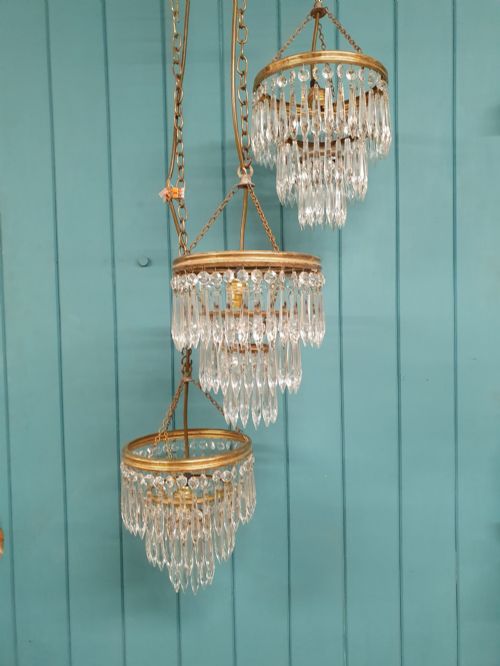
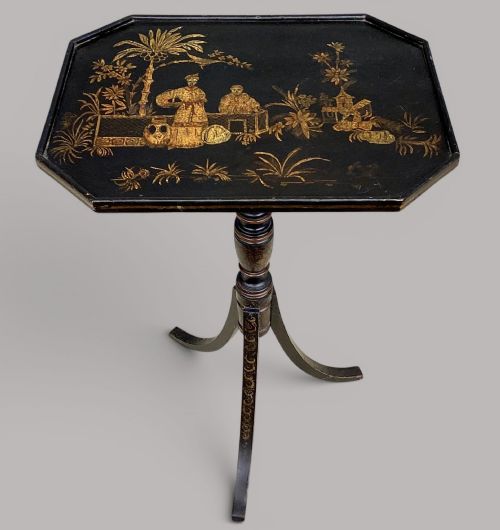
Many lighting pieces incorporate secondary elements like marble bases, faux lapis lazuli columns, or cut glass drops, demonstrating a high degree of mixed-media craftsmanship. Surface decoration on related lacquer pieces employs black, red, and gold pigments to execute intricate Chinoiserie scenes.
Atlas bears the weight of the room quite literally on these neoclassical bronze column lamps.
Evaluating quality and execution
Proportion and structural integrity further define the better examples, where heavy bronze or solid timber ensures stability despite the height of the standard or lamp. The application of gold leaf or ormolu on fine works shows even adherence without obscuring the underlying hand-tooled details.
George Bullock·Maison Bagues·Messenger
The Regency Gilt Lamps Glossary
- Ormolu
- Finely chased gilt bronze, widely employed in decorative arts for mounts and light fittings during the eighteenth and nineteenth centuries. The technique produces a rich, matte gold surface.
- Giltwood
- Timber, commonly pine, that has been coated in gold leaf or gold paint to simulate solid gold. It appears frequently on mirrors, frames, and large decorative floor lamps.
- Neoclassical
- Design movement reviving classical Roman and Greek forms, characterised by symmetry, restraint, and architectural motifs like columns and urns. This style forms the foundation of Regency aesthetics.
Regency Gilt Lamps: Frequently Asked Questions
What defines a true regency gilt lamp?
Authentic Regency lighting relies on neoclassical motifs, formal symmetry, and classical figures like Atlas or mythological beasts cast in bronze or brass.
These pieces often utilise fire gilding or ormolu to achieve a deep, enduring metallic lustre characteristic of the early nineteenth century.
How do I care for giltwood and ormolu?
Gilt surfaces require gentle dusting with a soft, dry brush to prevent damage to the delicate gold leaf or thin metallic layers.
Avoid liquid cleaners, abrasive cloths, and direct sunlight, which can tarnish the bronze or degrade the historical finish over time.
Where should I place a floor standard?
Floor standards suit dark corners or seating areas where their height can project light downward while adding architectural presence to the room.
Their heavy bases provide stability, allowing them to anchor a space effectively alongside side tables and period seating.
Are converted items considered authentic?
Many period lighting pieces began as candlesticks, vases, or architectural elements before receiving electrical wiring in later decades.
Conversions remain a standard practice in antiques, preserving historical craftsmanship while adapting the objects for modern domestic use.