



Regency Gilt Chairs
Regency gilt chairs combine classical proportion with surface brilliance, bringing architectural presence and refined seating to a formal interior.
Regency Gilt Chairs
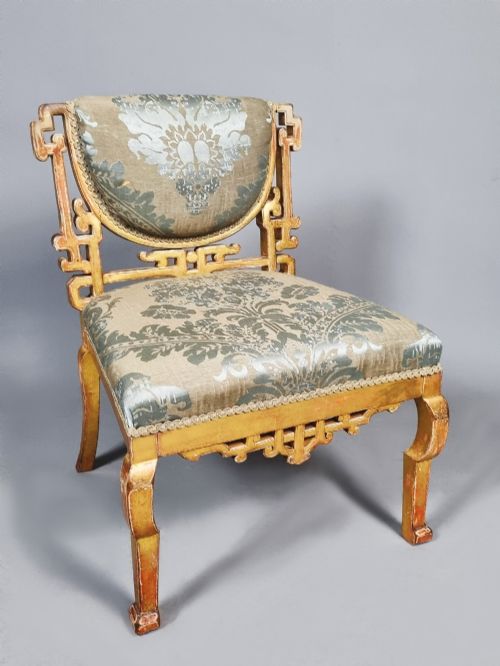
Regency gilt chairs encompass seating designed during the early nineteenth century alongside later revivals, reflecting classical antiquity through direct influence and subsequent twentieth-century interpretations. These pieces take various forms, from armchairs and library chairs to side chairs, dining chairs, hall chairs, and window seats.
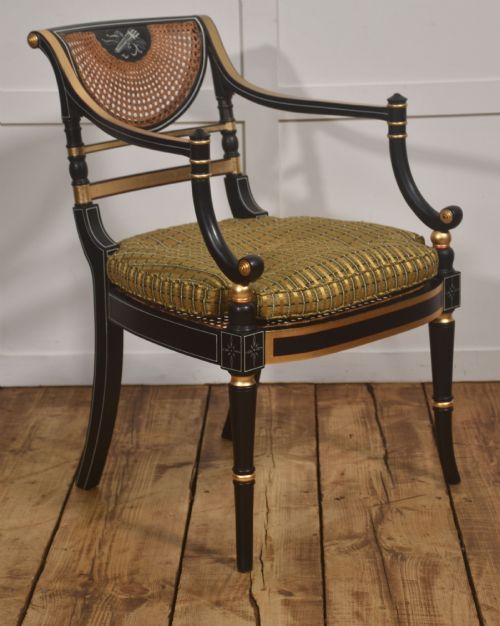
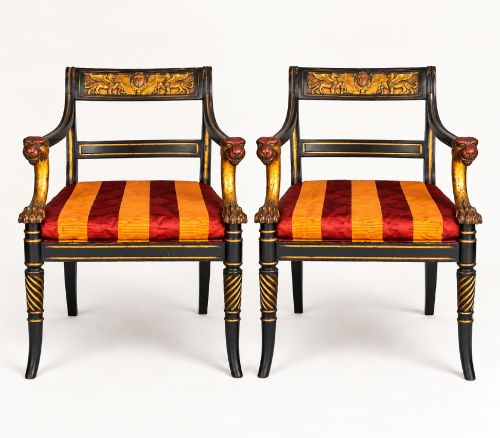
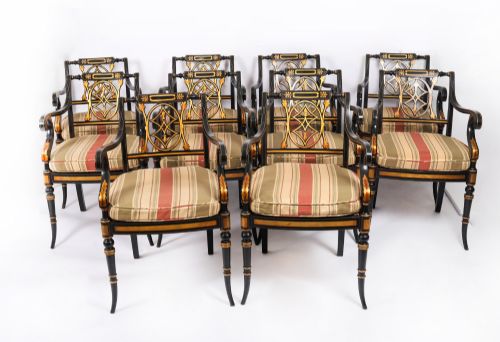
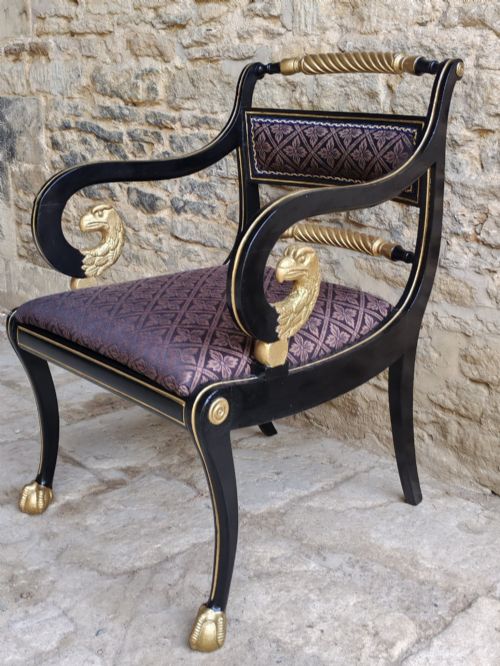
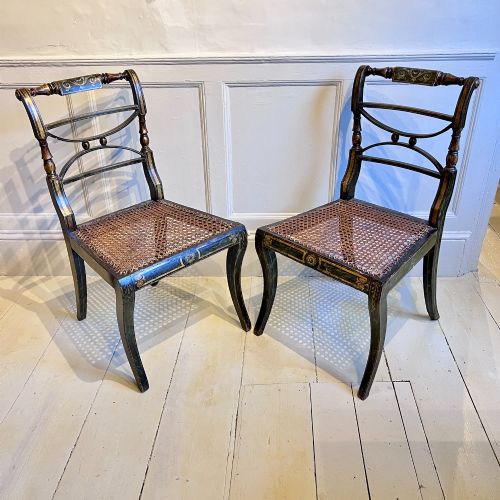
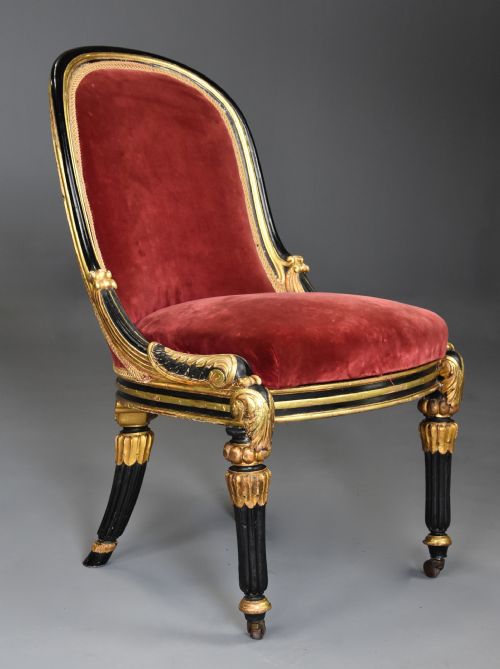
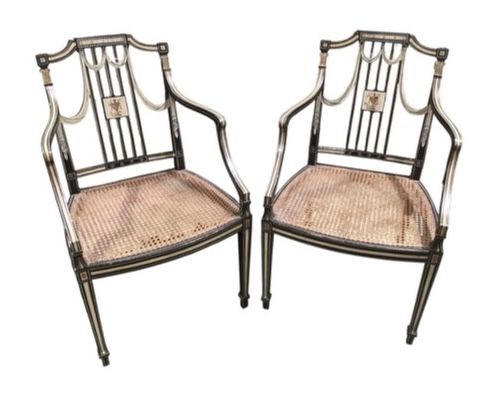
The version most commonly encountered on this page is the side chair or armchair finished in ebonized wood, painted surfaces, or giltwood, often carrying the characteristic decorative vocabulary of the period. Forms range from single accent pieces to matched sets intended for formal dining rooms or libraries.
Origins span authentic nineteenth-century English and French workshops to twentieth-century revival pieces produced in the styles of Regency, Chinese Chippendale, Rococo, and Neoclassical design. Each piece demonstrates the enduring appeal of gilded and painted woodwork within traditional interior schemes.
How They Were Made
Construction relies on timber framing shaped into specific structural forms, utilising woods such as walnut and ebonized or painted timber to create strong, clean lines. Artisans applied giltwood, parcel-gilt details, and paint directly onto the prepared wooden surfaces to achieve the desired metallic and contrasting finish.
Decorative elements frequently involve hand-carved motifs, pierced splats, and applied gilding that accentuate the architectural silhouettes of the frames. Seating elements often incorporate cane-work or upholstered pads covered in fabric to balance decorative impact with functional comfort.
Regency Gilt Chairs Retail Price Guide 2026
Typical asking prices for regency gilt chairs among the pieces listed under this phrase on Sellingantiques today, from the lower quarter to the upper quarter. They describe what is for sale here now, not the wider market.
Listings feature pieces spanning the early nineteenth-century Regency period through to twentieth-century revivals, utilising ebonized wood, giltwood, and painted finishes.
What Varies in Quality
Quality manifests in the crispness of the carved detail and the application of the gilt or painted finish, where skilled hand-work produces defined edges and rich surface texture. Superior pieces display harmonious proportions and robust joinery that maintain structural integrity over centuries of use.
The choice of primary timber and the execution of decorative elements, such as parcel-gilt highlights against ebonized grounds, distinguish finer examples from standard production. Authenticity of period materials and the preservation of original surface finishes significantly elevate the standing of individual chairs and sets.
Waugh & Son·George Smith
The Regency Gilt Chairs Glossary
- Giltwood
- Wood that has been coated with gold leaf or a metallic substitute. This finish provides a bright, reflective surface characteristic of formal seating.
- Parcel Gilt
- A technique where only specific carved details or raised portions of a wooden object are gilded, leaving the underlying paint or ebonized wood exposed. This creates a striking contrast between the dark ground and the bright metallic highlights.
- Ebonised Wood
- Timber treated with a dark stain or finish to imitate ebony. It serves as a dark, sophisticated backdrop for gilding and painted decoration.
- Curule Stool
- An ancient Roman form of folding seat with X-shaped legs adapted during the Regency period into rigid, luxurious stools and benches. These pieces often feature gilded frames and upholstered tops.
- Pierced Splat
- A vertical central strip of wood within a chair back that has been cut through to form an openwork decorative pattern. This technique lightens the visual weight of the backrest.
Regency Gilt Chairs: Frequently Asked Questions
How do I identify a true Regency chair?
Authentic pieces from the period typically display precise classical proportions, specific joinery methods, and aged patination on the giltwood or painted surfaces. Examining the timber beneath the finish and the style of carving helps confirm the period.
Later revival pieces from the twentieth century often replicate these forms but utilise different construction markers and cleaner, less weathered materials. Comparing specific decorative motifs against known nineteenth-century design sources assists in establishing the correct date.
Where should I place a gilt chair?
These chairs function well as focal points in reception rooms, libraries, or bedrooms where their reflective surfaces catch the light. Side chairs and armchairs complement existing antique furniture or serve as striking accent pieces against neutral walls.
Because gilded surfaces are sensitive to excessive handling and direct sunlight, positioning them away from heat sources and high-traffic friction points preserves the finish. Lighter pieces like window seats or stools fit easily into hallways and alcoves.
Are these chairs comfortable for daily use?
Seating from this era was built with formal posture in mind, meaning upright backs and firm proportions are standard. Library armchairs and upholstered models offer more substantial support compared to rigid hall or side chairs.
Many examples feature padded upholstery or cane seats designed to provide adequate comfort for dining or reading. Adding loose squab cushions can also adjust the seating experience without altering the historic frame.
What is the difference between giltwood and parcel gilt?
Giltwood describes an entire wooden structure covered completely in gold leaf, creating an uninterrupted metallic appearance. This technique defines the most opulent pieces intended for principal reception rooms.
Parcel gilt applies the metallic leaf selectively to highlighted carved details, letting ebonized or painted wood dominate the remaining surfaces. This method creates a controlled contrast between dark timber and bright gold accents.