
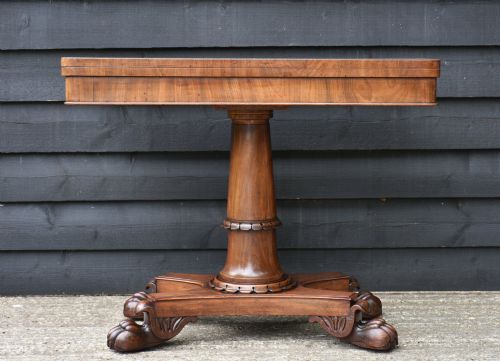
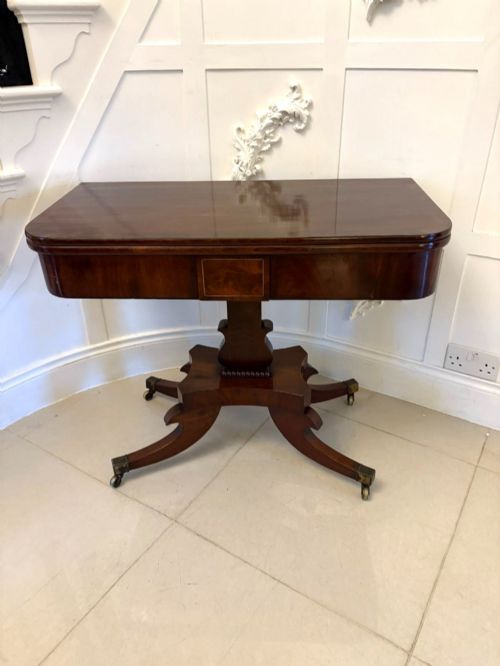
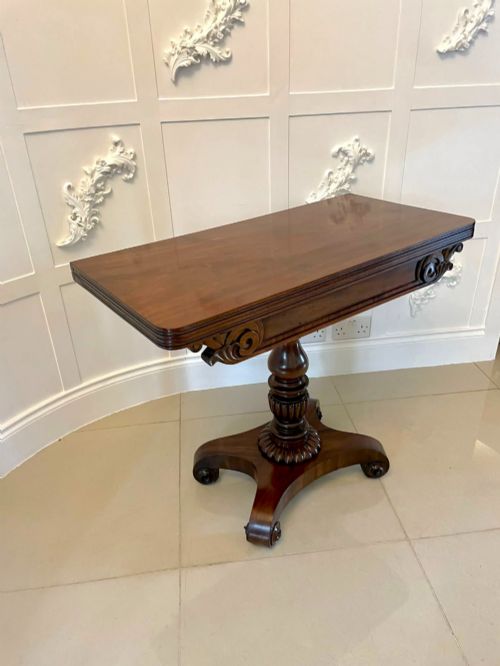
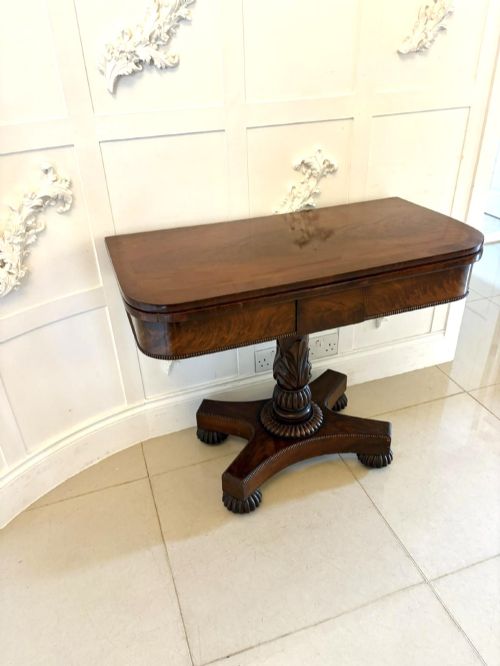


Regency Folding Tea Table
A regency folding tea table brings a clever double life to a room, offering a neat console that opens for evening play or tea.
Regency Folding Tea Table
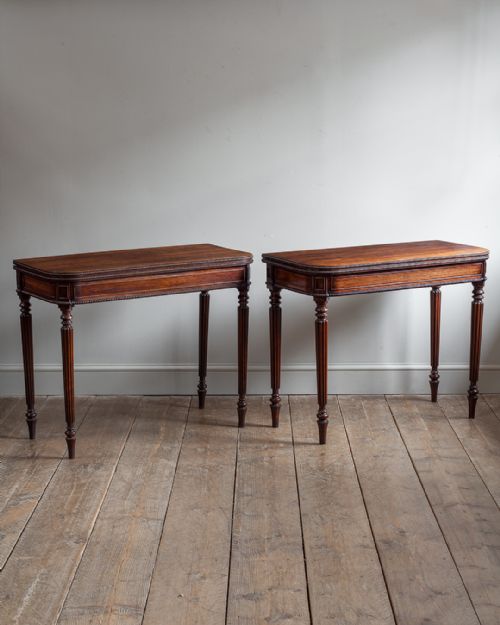
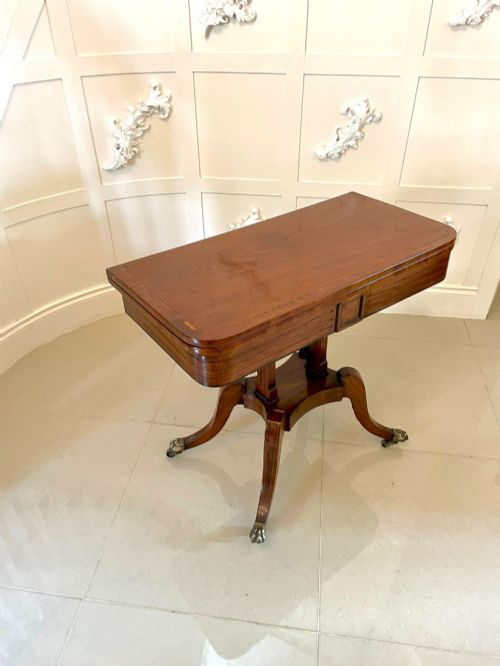
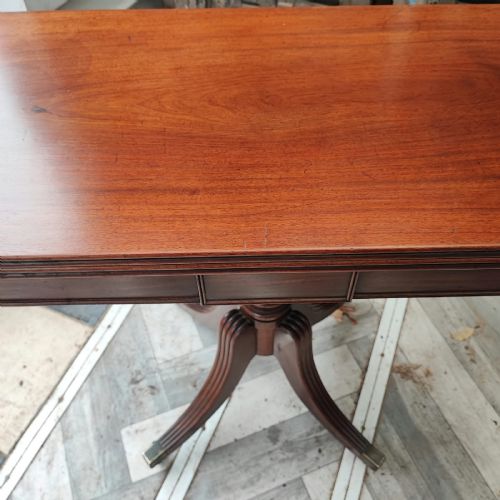
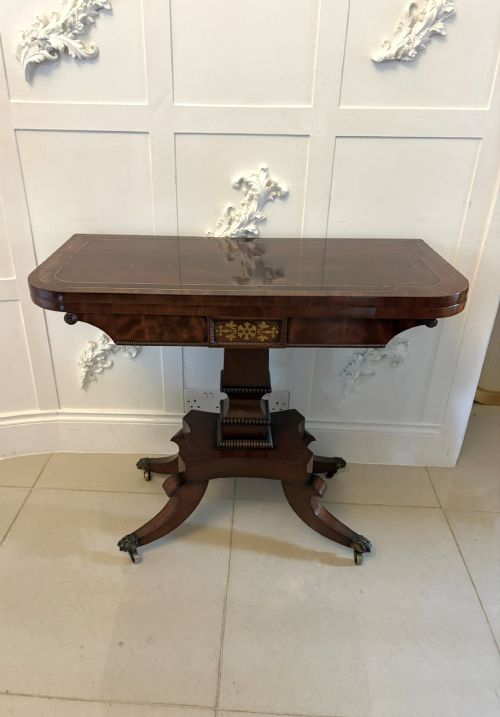
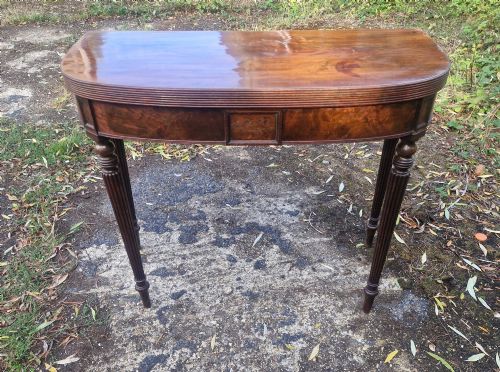
A regency folding tea table spans the 19th Century, Georgian, and William IV periods, appearing most often in rich mahogany and rosewood. These adaptable pieces function as tea tables, card tables, and console tables with hinged tops that swivel or fold to reveal a larger surface.
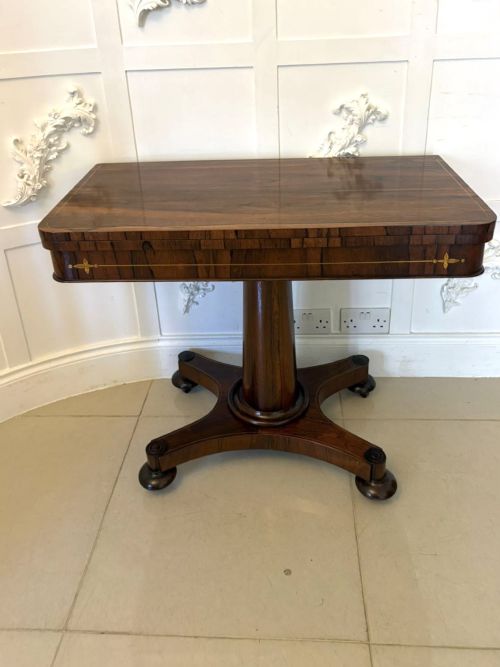
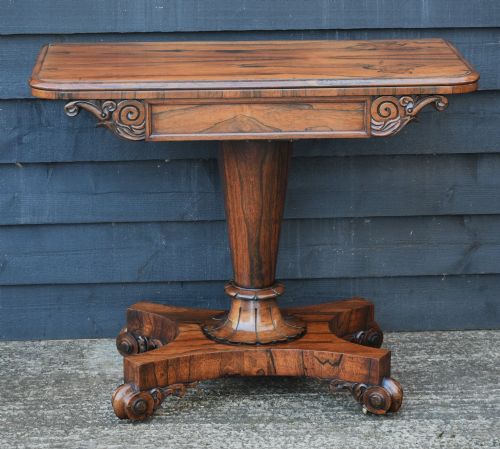
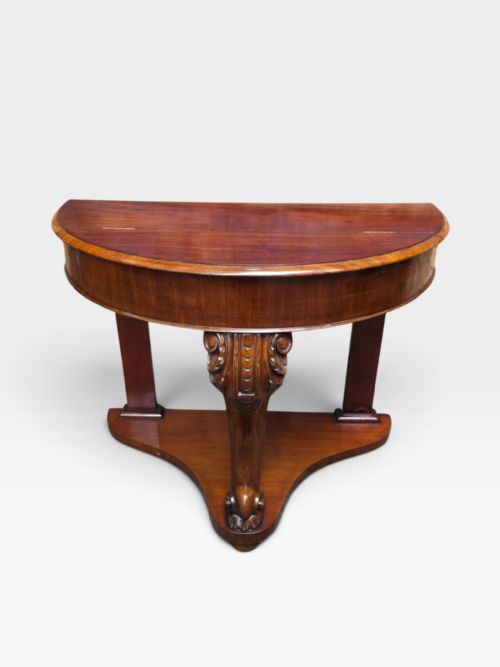
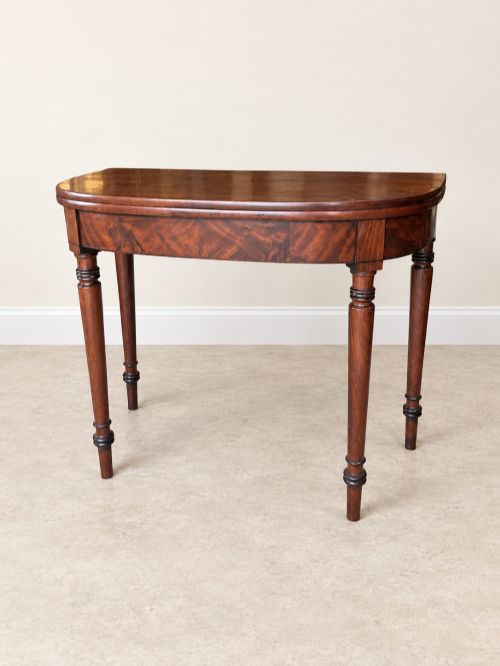
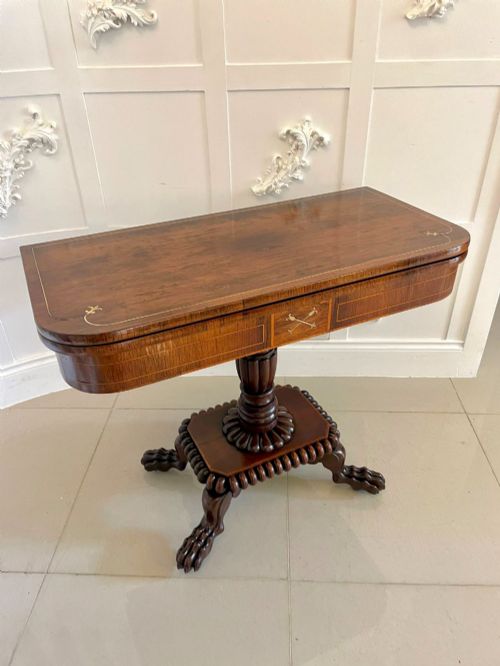
The specimens on this page include D-shaped forms, demi-lune designs, and rectangular tops supported by pillars, pedestals with scroll feet, or saber legs. Many examples combine card and games functions within the same hinged structure, reflecting the social habits of the period.
Materials and construction
Cabinet makers built these tables using solid mahogany and rosewood, frequently applying flame mahogany veneer or burr yew crossbanding to add depth and visual movement to the timber. Satinwood and ebony feature as contrasting inlay elements.
Brass inlay and brass stringing appear across many examples, tracing the curves of the top and the lines of the frieze. Carved wooden details such as paw feet and lyre supports shape the pedestals and legs.
Listings feature mahogany, rosewood, satinwood, and burr yew, often enriched with brass inlay and flame mahogany veneer.
Distinctions in quality
Quality rests in the selection of the timber figures, such as highly figured flame mahogany or richly grained rosewood, matched across the folding leaves. The precision of the brass inlay and the crispness of any carved wooden elements also set better examples apart.
Structural integrity in the pivoting mechanism and the stability of the pedestal base determine how well a table survives daily use. Tables attributed to prominent makers show finer joinery and more refined proportions in the legs and aprons.
George Bullock·Gillows
The Regency Folding Tea Table Glossary
- Crossbanding
- A strip of veneer applied to the border of a table top running perpendicular to the grain of the main panel. This technique creates a distinct visual frame around woods like flame mahogany.
- Demi-lune
- A half-moon shape used for table tops and consoles designed to sit flush against a wall when folded.
- Concertina action
- A table frame that extends outwards on an expanding wooden lattice when the top unfolds, supporting both leaves evenly.
- Stringing
- Thin lines of contrasting wood or brass inlaid into channels cut into the surface of the timber to outline edges and panels.
- Saber leg
- A curving, concave leg that tapers downwards and outwards, typical of seating and table supports from the period.
Regency Folding Tea Table: Frequently Asked Questions
How do I use a folding tea table today?
These tables sit neatly against a living room or hallway wall as a console when closed, taking up very little floor space.
When guests arrive or you need extra surface area, the top folds or swivels open to serve as a tea or display table.
Were these tables used for cards or tea?
They were built to serve both purposes depending on the domestic occasion and the specific interior layout.
Many surfaces feature dual functions as card and tea tables, often lined with baize or finished in polished wood inside the folding leaf.
How do I tell a Regency table from a William IV table?
Regency pieces tend to show lighter proportions with slender saber legs, delicate brass stringing, and restrained classical lines.
William IV examples generally appear heavier and more robust, utilising bolder carved paw feet, thicker pedestals, and darker rosewood timbers.
What is a concertina action on a card table?
A concertina action is a complex table frame that expands on a hinged wooden mechanism when the top unfolds.
This design allows all four legs to move outward symmetrically to support the open leaves, unlike simpler pivoted or swing-leg designs.