


Regency Floor Standing Lamp
These pieces known as a regency floor standing lamp bring sculptural vertical presence and height to a room.
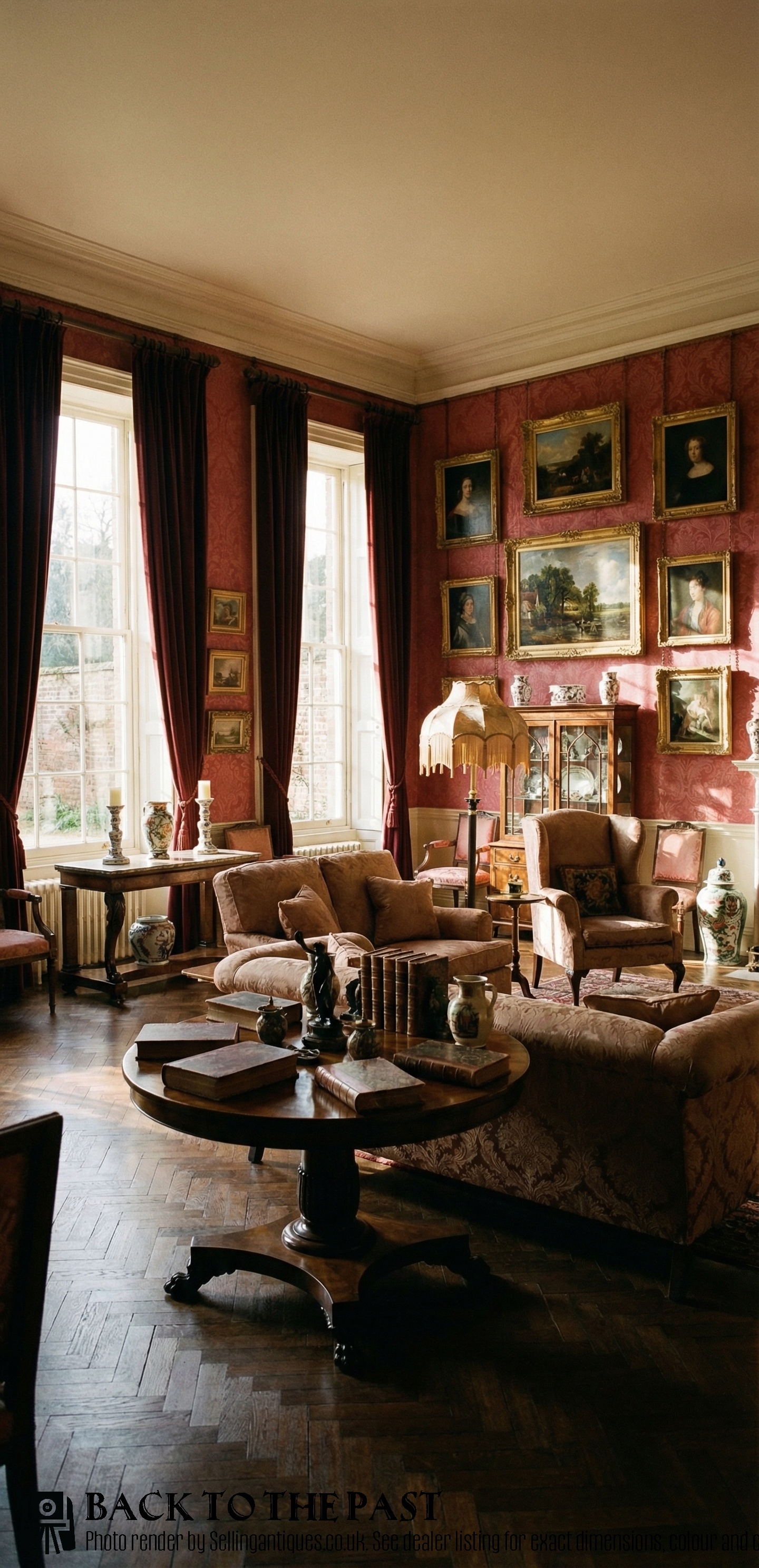
Regency Floor Standing Lamp
A regency floor standing lamp provides elevated illumination through tall vertical standards that often take the form of torcheres, standard lamps, or converted lighting devices. These objects serve both practical lighting functions and decorative roles within period interiors.
Most examples found in these listings draw upon the Regency style alongside later revivals such as Hollywood Regency, Regency Revival, and Neoclassical Revival. Pieces range from genuine 19th-century artefacts to early 20th-century interpretations dating from the 1920s and 1930s.
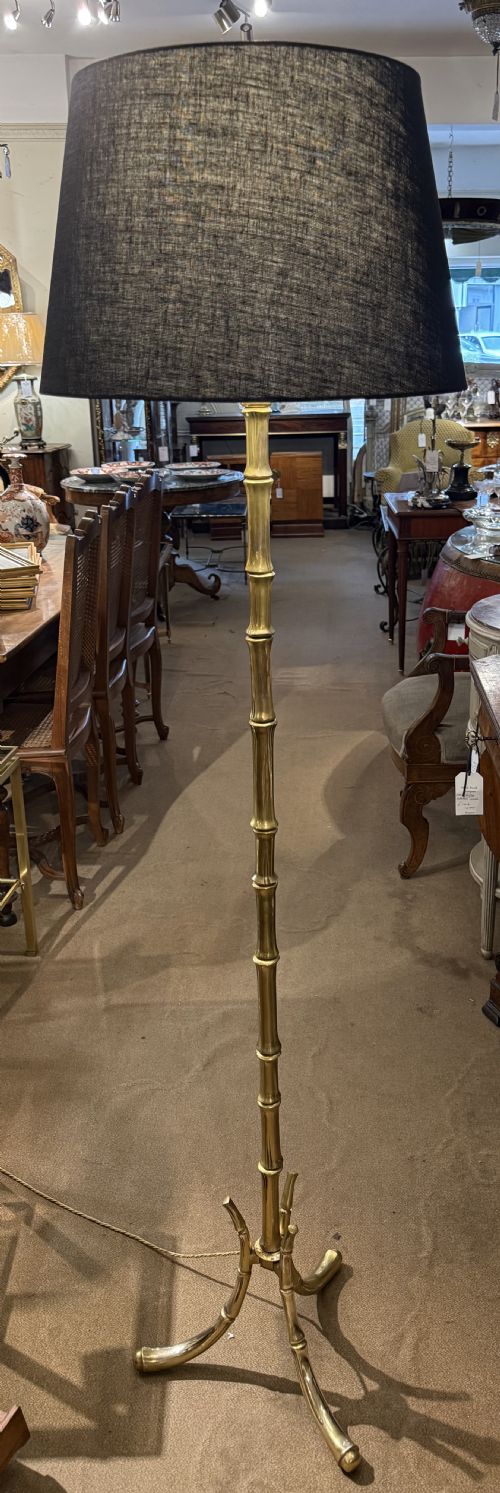
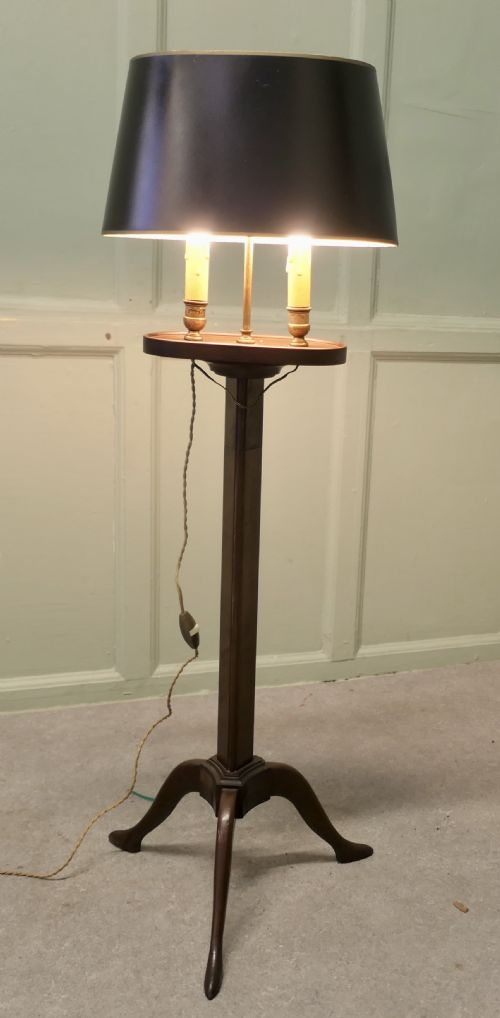
Common structural formats include adjustable height designs, twin arm configurations, and multi-functional lamp tables. Materials span solid brass, gilt bronze, painted metal, and rich timbers such as mahogany and rosewood.
How they were made
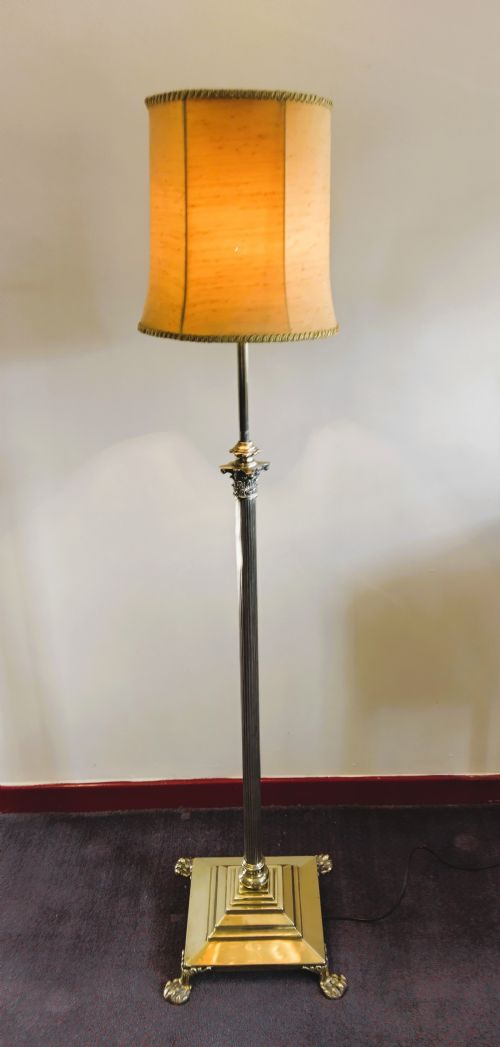
Construction relies heavily on metals such as brass, gilt bronze, and painted metal, often cast or turned to create slender vertical shafts and weighted bases. Many standard lamps incorporate adjustable height mechanisms, while others utilise twin candle arms.
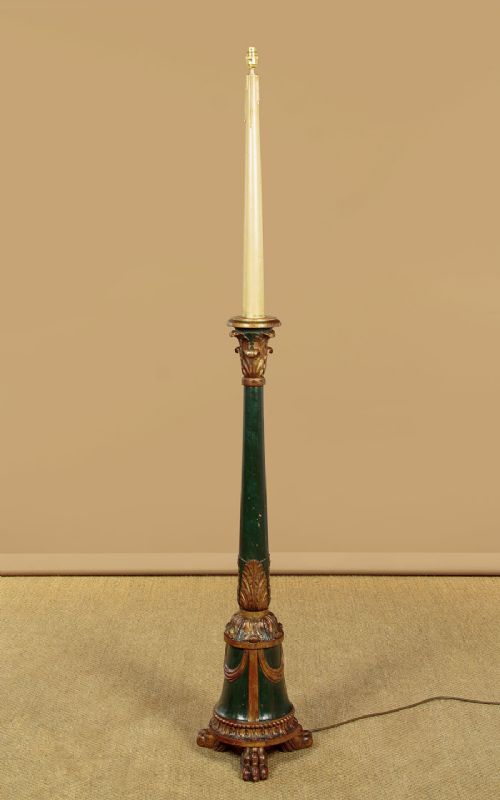
Woodworking traditions appear in pieces fashioned from solid mahogany and rosewood, sometimes enhanced with parcel gilt or marbleised finishes. Several items demonstrate adaptive reuse, where earlier tables or torchere forms have been converted into functional lamps.
Some tall standards began life as quiet tables before accepting an illuminating promotion.
What varies in quality
Quality reveals itself in the weight and purity of the metalwork, particularly in solid brass and gilt bronze castings that provide structural stability to tall standards. Finer pieces display crisp casting detail and precise engineering in adjustable height mechanisms.
The choice of materials dictates the character of each piece, from richly grained mahogany to delicate parcel gilt surfaces. Adaptation work alters the original purpose of an object, meaning the standard of conversion and integration defines the integrity of the finished lamp.
Maison Bagues·Humphrey Hopper
The Regency Floor Standing Lamp Glossary
- Torchere
- A tall ornamental stand originally designed to hold a torch or candle. In later periods, these forms are frequently adapted as floor standing lamps.
- Bouillotte lamp
- A traditional lighting form featuring adjustable shades and multiple arms. These designs derive from card playing lamps of the late eighteenth century.
- Parcel gilt
- A decorative technique where specific areas of an object are partially gilded with gold leaf or paint. This treatment highlights carved details on wood or metal surfaces.
- Neoclassical
- A style drawing inspiration from the classical art and architecture of ancient Greece and Rome. It emphasises symmetry, proportion, and restrained ornamentation.
- Standard lamp
- A British term for a floor lamp comprising a vertical pole supported by a heavy base. These fixtures provide ambient illumination across a room.
Regency Floor Standing Lamp: Frequently Asked Questions
What is a regency floor standing lamp?
A regency floor standing lamp is a tall lighting fixture designed to rest directly on the floor. These pieces often adopt classical proportions and decorative motifs originating from the Regency period and subsequent revivals.
They appear in various formats including standard lamps, torcheres, and converted furniture pieces. Materials commonly include brass, gilt bronze, and dark hardwoods.
How were these lamps used historically?
Historically, tall stands and torcheres provided illumination in large rooms before the widespread adoption of overhead electric lighting. They held candles or oil lamps to light specific corners or seating areas.
Many surviving examples from the nineteenth century have undergone later conversion to electricity. This adaptation allowed older decorative standards to remain functional in modern domestic spaces.
How do I identify a revival piece?
Revival pieces often date from the early twentieth century, spanning decades such as the 1920s and 1930s. They emulate the neoclassical lines and decorative vocabulary of earlier Regency and Georgian eras.
Examining the manufacturing techniques, wiring methods, and surface wear helps distinguish nineteenth-century originals from later interpretations like Hollywood Regency designs.
What materials are common in these lamps?
Metal is the predominant material, with solid brass, gilt bronze, and painted metal frequently used for columns and weighted bases. Fabric shades often complement the metal structures.
Timber examples incorporate mahogany and rosewood, sometimes accented with parcel gilt or marbleised finishes. Each material contributes distinct weight and visual presence to the standard.