



Decorative Bronze Standing Light
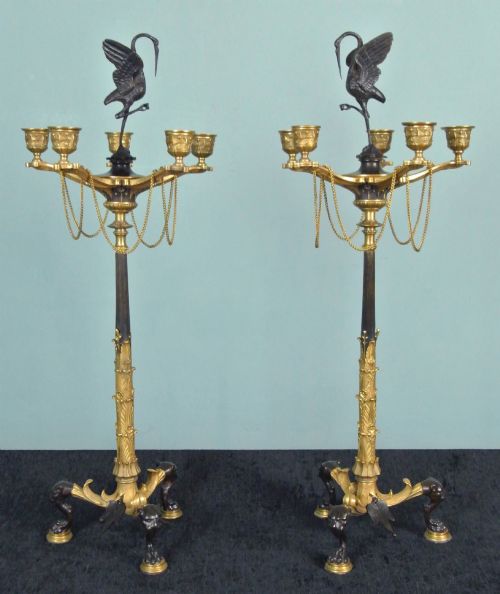
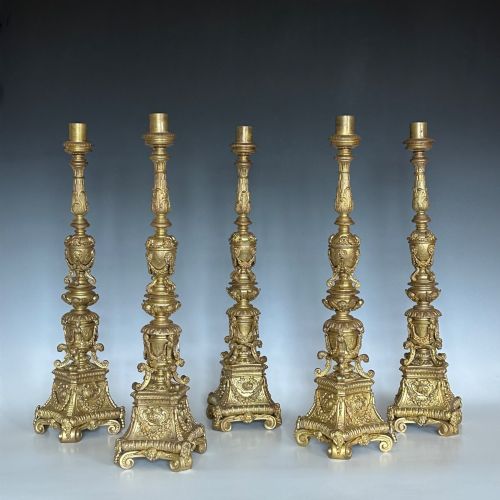
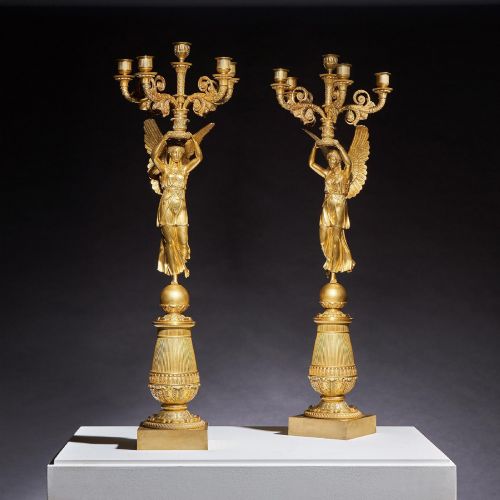
These decorative bronze standing light options combine heavy cast metal with classical form, offering both warmth and period weight for a room.
Decorative Bronze Standing Light
A decorative bronze standing light brings sculptural presence to a room, appearing most frequently on this page as candlesticks, candelabra, and floor lamps from the nineteenth century. These items range from Regency classical forms to elaborate French Rococo Revival and Art Nouveau designs.
Buyers encounter variations spanning simple patinated metal candlesticks to monumental gilt bronze candelabra with multiple arms. French workshops dominate the selection, alongside Venetian, Japanese, and British examples featuring figures, putti, and classical columns.
The physical stature of these pieces varies from small table candelabra to tall floor standards. Many incorporate marble bases, glass elements, or carved wood alongside the primary bronze structure.
How they were made
The foundation of these items relies on bronze, gilt bronze, and ormolu, often paired with secondary materials like brass, patinated metal, marble, and carved wood. Metal components undergo lost-wax or sand casting to achieve rigid structural forms before receiving hand-chased surface details.
Gilding and patination complete the finish, using mercury gilt or chemical treatments to create contrast between polished highlights and darkened recesses. Components are mechanically joined with threaded screws and pins, allowing complex multi-arm candelabra to be assembled from separate cast sections.
French workshops dominate the stylistic range, incorporating French Empire, Rococo Revival, and Art Nouveau forms alongside Japanese influences.
What varies in quality
Weight and construction integrity separate robust items from flimsy ones, particularly in multi-armed candelabra where arm alignment requires exact geometry. The depth of the original mercury gilding or the richness of the patination further distinguishes workshop output.
Barbedienne·Pierre Philippe Thomire·Abel Landry·Auguste Cain
The Decorative Bronze Standing Light Glossary
- Ormolu
- Finely ground high-carat gold applied to a bronze base using a mercury amalgamation process. This technique yields a warm, deep yellow lustre that does not tarnish easily.
- Patinated metal
- Metal treated with chemical solutions to produce a specific surface colour, ranging from deep brown to near-black. It protects the base metal while adding visual depth.
- Candelabra
- A branched candlestick designed to hold multiple taper candles simultaneously. They often feature removable central finials or matching drip pans.
- Athenienne
- A neoclassical tripod stand supporting a shallow bowl or brazier, adapted during the Regency period to serve as a lamp or candleholder. It references ancient Greek domestic furniture.
- Spelter
- A zinc alloy frequently utilised as a less expensive alternative to bronze for sculptural figures. It takes patination well but possesses a lighter weight and softer structural strength.
Decorative Bronze Standing Light: Frequently Asked Questions
How do I clean bronze lighting?
Dust gently with a soft, dry brush to prevent accumulation in recessed chasing. Avoid abrasive commercial polishes that strip historical patination or damage delicate gilt surfaces.
Moisture should be kept away from organic secondary materials like marble or wood bases. Professional conservation is recommended for deep cleaning or restoration.
Were these originally wired for electricity?
Most items originating from the eighteenth and nineteenth centuries began life holding candles or oil. Floor lamps and select table standards were built for electricity or later adapted from fuel sources.
Rewiring can be performed by specialists using internal paths that preserve the structural integrity of the antique metalwork. Original wax drips and bobeches should be retained where possible.
How do I tell Regency from Art Nouveau?
Regency pieces rely on strict classical geometry, symmetry, and ancient Greek or Roman motifs such as columns and acanthus leaves. They project formal architectural dignity.
Art Nouveau examples embrace asymmetrical plant stems, whiplash curves, and naturalistic female figures from the turn of the twentieth century. The decorative vocabulary shifts from straight architectural lines to flowing organic movement.
What is the difference between bronze and brass?
Bronze is an alloy primarily composed of copper and tin, prized for its durability, heavy weight, and ability to hold fine detail during casting. It forms a stable patinated skin over time.
Brass substitutes tin with zinc, resulting in a brighter yellow metal that is softer and more easily worked into sheet forms. Antique lighting often combines both metals depending on the structural requirement.