



Regency Flame Mahogany Box
These pieces of regency flame mahogany box are refined storage vessels shaped by the early nineteenth century.
Regency Flame Mahogany Box
When buyers search for a regency flame mahogany box, they encounter a focused selection of decorative containers designed for specific domestic uses. The listings demonstrate that these items predominantly take the form of tea caddies, wine coolers, cellarettes, writing slopes, and work boxes.
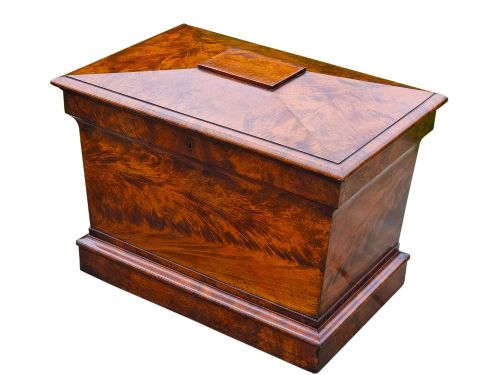
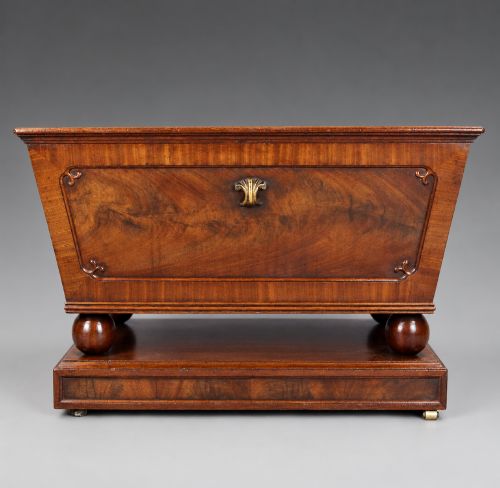
The objects span periods from the Georgian era through the Regency and into the Victorian era, specifically covering dates around eighteen hundred to eighteen seventy. Wine coolers and cellarettes appear frequently, often constructed in the sarcophagus shape with substantial proportions.
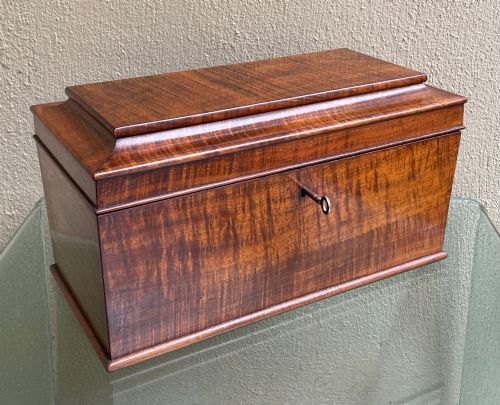
Smaller tabletop formats also emerge regularly within this category. Tea caddies, double tea caddies, work boxes, and miniature table cabinets represent the more intimate domestic pieces found on the market.
Judging Quality and Execution
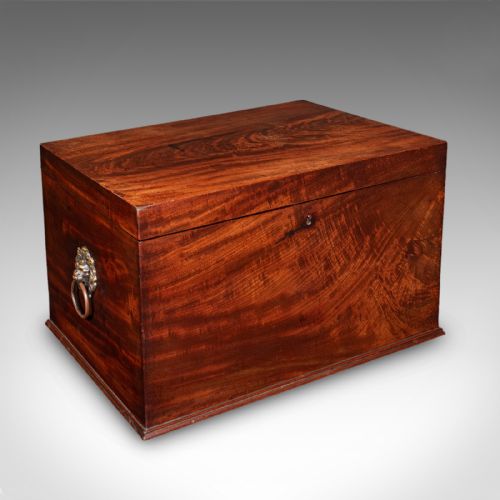
The quality of a piece rests primarily in the selection of the wood veneer and the precision of its application. Highly figured flame mahogany with symmetrical grain alignment distinguishes superior examples from standard utility boxes.
Construction details such as secret drawers, dovetail joints, and robust brass mounts indicate higher workshop standards. The inclusion of original internal components, including cut glass mixing bowls and fitted compartments, elevates the standing of the piece.
Regency Flame Mahogany Box Retail Price Guide 2026
Typical asking prices for regency flame mahogany box among the pieces listed under this phrase on Sellingantiques today, from the lower quarter to the upper quarter. They describe what is for sale here now, not the wider market.
Many writing slopes and caddies contain hidden compartments secured by secret wooden pins that only reveal themselves after intricate puzzle maneuvers.
Gillingtons·Gillows
The Regency Flame Mahogany Box Glossary
- Flame mahogany
- A veneer cut from the fork of the mahogany tree to create a dramatic flame-like pattern. This figured wood was favoured for the primary display surfaces of high-status furniture.
- Sarcophagus
- A monumental coffin-like shape with a domed lid and flared base, adapted during the Regency period for large wine coolers and cellarettes. Such forms often stood on paw feet.
- Cellarette
- A lockable container used for storing wine bottles near the dining table. These large boxes frequently incorporated internal lead-lined compartments for ice.
- Teapoy
- A small stand or large caddy designed to hold multiple varieties of tea leaves. They usually feature internal lidded canisters and a mixing bowl.
- Writing slope
- A portable desk with a hinged sloping lid that opens to reveal a velvet or leather writing surface, inkwells, and secret compartments.
Regency Flame Mahogany Box: Frequently Asked Questions
What is a regency flame mahogany box used for?
These boxes served specialised functions in domestic households during the early nineteenth century, primarily holding tea, wine, writing materials, or sewing equipment. Tea caddies kept expensive leaves secure, while larger cellarettes stored bottles of wine for the dining room.
Today, buyers utilise these lidded containers to store small personal items, jewellery, or writing accessories on tabletops and sideboards. Their decorative wood grain makes them prominent display pieces in period and modern interiors alike.
How do I identify a Regency period piece?
Authentic Regency items typically display architectural proportions, classical motifs, and rich mahogany timbers dating from roughly eighteen hundred to eighteen thirty. Cabinet makers of this era favoured bold wood figures, brass lion paw feet, and robust brass carrying handles.
Later Victorian pieces from eighteen fifty or eighteen seventy sometimes replicate these forms with heavier carving or different interior fittings. Examining the construction methods, such as hand-cut dovetails and timber shrinkage, helps confirm the original period.
How should I care for flame mahogany veneer?
Flame mahogany requires protection from direct sunlight and extreme humidity changes to prevent the delicate veneer from cracking or fading. Regular dusting with a soft, dry cloth preserves the polished surface without the need for heavy chemical waxes.
Keeping the wood nourished with appropriate cabinet wax applied sparingly maintains the depth of the grain pattern. Placing these boxes away from direct heat sources ensures the timber remains stable over decades.