

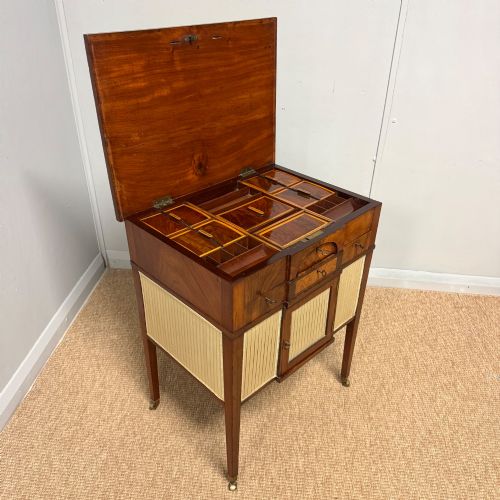
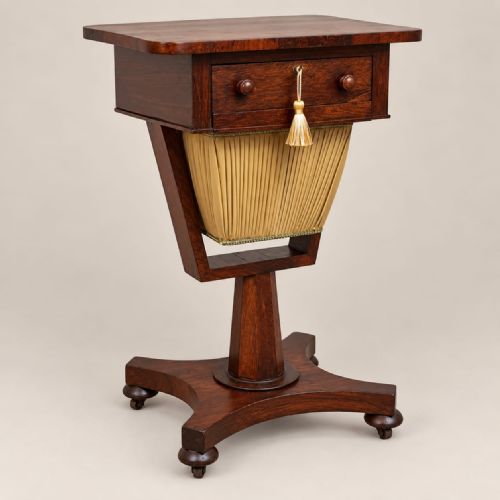


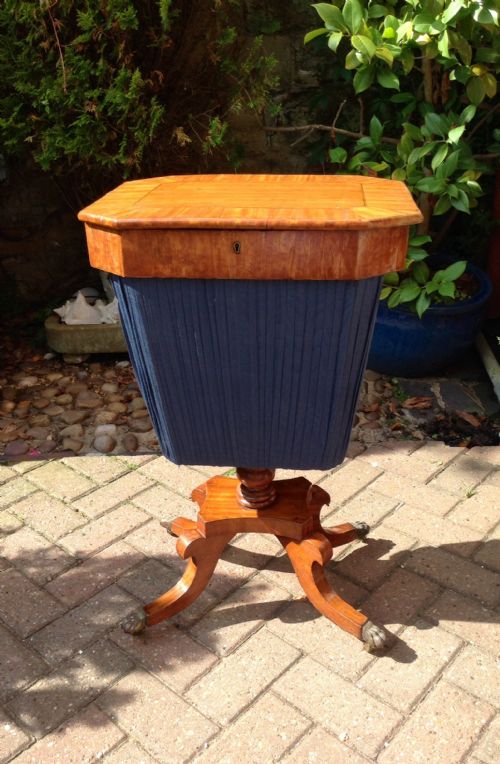


Regency Fabric Sewing Box
These regency fabric sewing box pieces are elegant timber work tables lined with silk and brass, made to hold needles and threads in style.
Regency Fabric Sewing Box
A regency fabric sewing box typically takes the form of a small freestanding work table or occasional stand designed for needlework and small domestic crafts. You will most frequently encounter mahogany and rosewood examples from the Regency, Georgian, and William IV periods, often featuring drop flaps and pedestal bases.
The form spans various configurations including lyre-ended stands, sofa tables with integrated compartments, and occasional side tables. Interior arrangements generally include silk-lined work bags or compartments specifically organised for sewing implements and threads.
How they were made
Cabinet makers utilised dense imported hardwoods like mahogany, rosewood, kingwood, and pollard oak, often accented with boxwood stringing and brass fittings. These timbers were selected for their rich grain and ability to take a fine polish on turned pedestals and table tops.
Silk fabric formed the drop bags suspended beneath the tables to hold textiles, whilst internal wooden compartments utilised precise joinery to house needles and spools. Brass castors and mounts provided mobility and structural definition to the heavier pedestal bases.
Regency Fabric Sewing Box Retail Price Guide 2026
Typical asking prices for regency fabric sewing box among the pieces listed under this phrase on Sellingantiques today, from the lower quarter to the upper quarter. They describe what is for sale here now, not the wider market.
Listings feature mahogany, rosewood, kingwood, pollard oak, and satinwood across the Regency, Georgian, and William IV periods.
What varies in quality
The distinction between standard pieces and the finest examples lies in the selection of timber veneers and the intricacy of the cabinet work. Superior items display matched rosewood or mahogany grains, refined brass inlay, and sophisticated pedestal or lyre-end carving.
Makers such as Gillows represent the upper tier through exceptional structural integrity and sophisticated multi-use designs, such as combined games and work tables. The retention of original silk linings and fitted interior compartments further separates standard utility pieces from high-status salon furniture.
Gillows
The Regency Fabric Sewing Box Glossary
- Lyre-end
- A form of table support shaped like an ancient Greek lyre, frequently carved from mahogany or rosewood in Regency furniture. This decorative terminal provides stable support for pedestal work tables.
- Drop flap
- A hinged leaf on the side of a table that can be raised to extend the surface or dropped when not in use. They are commonly found on work and Pembroke tables.
- Pedestal
- A central column supporting a table top, often rising from a platform base with carved or reeded feet. Regency examples frequently feature brass castors beneath.
- Work box
- A portable or table-mounted container designed to hold sewing equipment, threads, and fabrics. These evolved into the larger fitted work tables seen in the nineteenth century.
- Satinwood
- A durable, yellowish timber prized for its smooth grain and used for contrasting stringing or veneering on fine period furniture. It catches the light particularly well in polished surfaces.
Regency Fabric Sewing Box: Frequently Asked Questions
What is a regency fabric sewing box used for?
These tables served as functional furniture for upper-class households where ladies engaged in needlework, embroidery, and small crafts. The integrated fabric bags and wooden compartments kept threads, needles, and textiles neatly stored near seating areas.
Beyond practical sewing tasks, they doubled as occasional lamp tables or writing surfaces in drawing rooms. Their refined appearance allowed them to remain on display in formal spaces rather than being tucked away.
How do I date a sewing table?
Dating relies on identifying the prevailing timber choices and construction styles of the period. Regency and Georgian pieces often feature rich mahogany or rosewood with delicate boxwood inlay, whilst William IV examples tend toward heavier pedestals and bolder proportions.
Cabinet-making techniques also shift over time, moving from hand-cut dovetails in the early nineteenth century toward more mechanised production later in the Victorian era. Examining the turning on the pedestals and the style of the brass castors helps narrow down the decade.
Are the fabric bags original?
Original silk or fabric bags are uncommon due to the delicate nature of textiles over two centuries of use. Most surviving pieces feature replacement fabric linings that match the historic style and colour palette of the period.
When a piece retains its original silk work bag, it usually shows signs of age, fading, or wear. Buyers should examine whether the suspension frame and drawstrings are period-correct even if the fabric itself has been renewed.
Where should I place a work table at home?
These compact tables fit well beside sofas, armchairs, or in hallways as decorative occasional surfaces. Their narrow proportions and drop flaps make them adaptable for smaller rooms where surface space is limited.
Keep them away from direct sunlight and strong heat sources to protect the polished wood finishes and delicate veneers. The internal compartments remain useful for storing modern small items while preserving period character.