

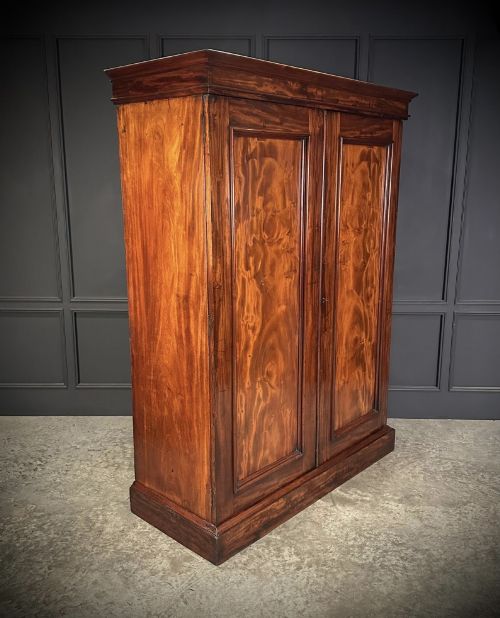
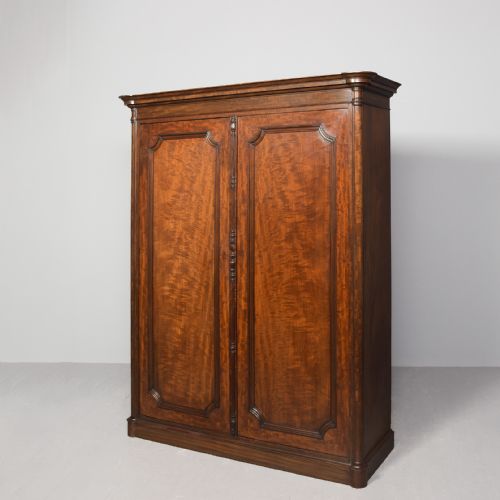
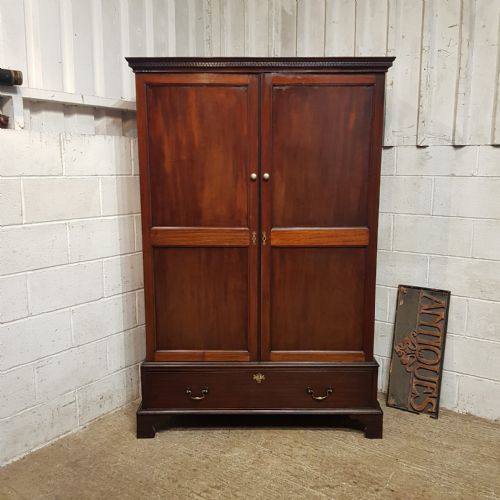


Regency Double Armoire
A regency double armoire brings grand proportions and rich timbers to a bedroom, offering substantial storage inside classic period lines.

Regency Double Armoire
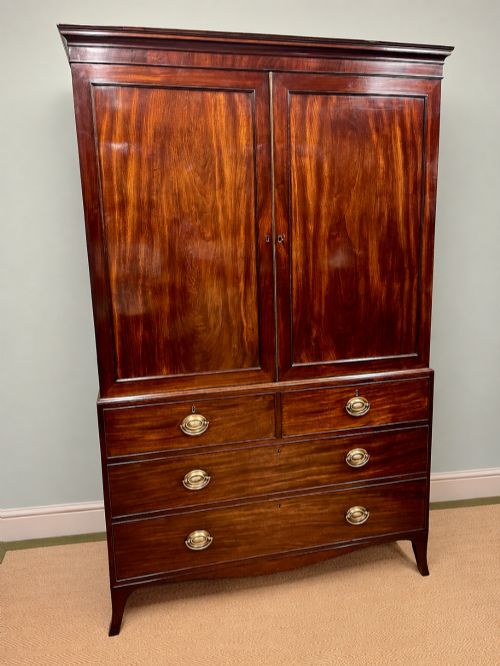
A regency double armoire encompasses large freestanding storage pieces from the Regency and Georgian eras, along with later interpretations from the William IV and Regency Revival periods. Buyers searching for a regency double armoire encounter substantial wardrobes, linen presses, and storage cabinets designed to hold clothes and linens.
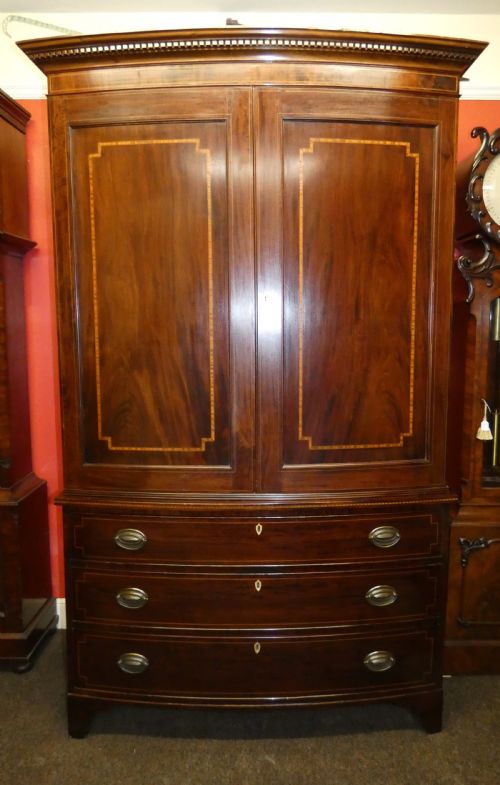
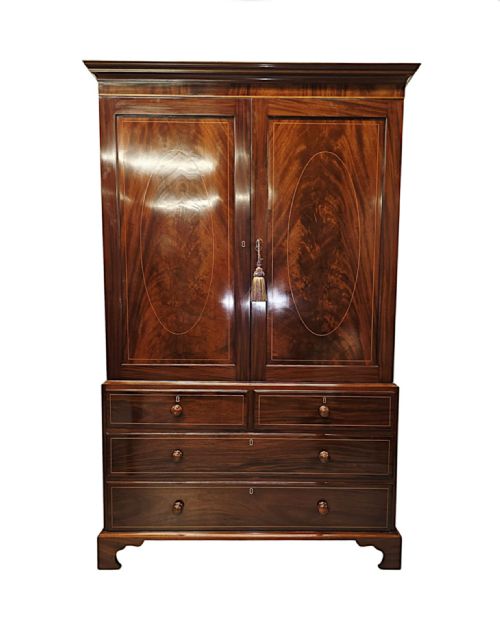
The pieces appearing on this page span several decades, featuring genuine Regency examples alongside 19th-century interpretations and early 20th-century revival pieces dated around 1920. Forms vary from traditional linen presses with sliding trays to full-height hanging wardrobes and bow-fronted cabinets.
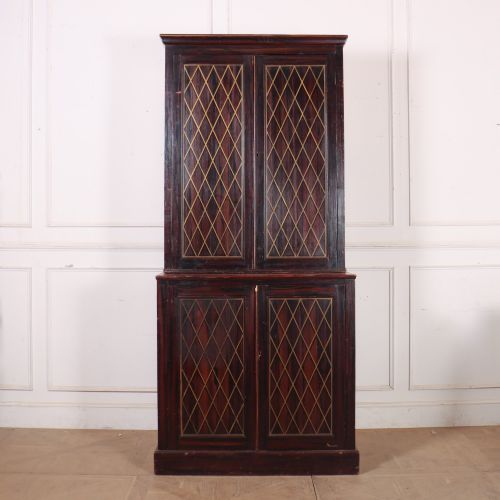
Makers and workshops of the 19th century produced these large storage items in mahogany, flame mahogany, walnut veneer, and painted finishes. While the search specifies an armoire, the inventory includes closely related double wardrobes and linen presses that served the same domestic purpose in period homes.
How they were made
Cabinet makers constructed these large pieces using a solid wood framework of mahogany, oak, or pine, overlaid with decorative veneers such as flame mahogany and burr walnut. These choice timbers provided the striking grain patterns prized by period craftsmen.
Surface decoration relies on natural timber figuring, contrasting inlay work, and occasionally paint with parcel gilt detailing. Brass hardware, including hinges and escutcheons, secures the double doors and internal fittings.
Regency Double Armoire Retail Price Guide 2026
Typical asking prices for regency double armoire among the pieces listed under this phrase on Sellingantiques today, from the lower quarter to the upper quarter. They describe what is for sale here now, not the wider market.
Some gentleman's wardrobes include clever internal compartments designed specifically for top hats and walking canes.
What varies in quality
The grade of timber veneer dictates much of the visual appeal, with highly figured flame mahogany and burr walnut representing the more ambitious end of production compared to plain painted or simpler wood surfaces. Selection of grain across large double doors shows the skill of the cabinet maker.
Proportion and architectural detail separate standard utility pieces from finer examples, particularly where classical cornices, brass mounts, and bow-front structures are executed with precision.
S & H Jewell
The Regency Double Armoire Glossary
- Linen Press
- A tall piece of furniture featuring upper doors that enclose sliding trays for folded textiles, usually sitting above a base section of drawers.
- Flame Mahogany
- A veneer cut from the fork of the mahogany tree, producing a distinctive flickering flame pattern across wide surfaces.
- Burr Walnut
- Timber taken from a growth or burl on the walnut tree, creating a dense and swirling pattern valued for decorative cabinet fronts.
- Bow-Front
- A convex curved cabinet front that projects outward in a smooth arc, softening the corners of large wardrobes.
Regency Double Armoire: Frequently Asked Questions
What is a regency double armoire?
A regency double armoire is a large two-door storage piece dating from the early 19th century or later revival periods, built to house clothing or linens.
These pieces often feature classical architectural details and rich timber veneers like mahogany or walnut.
How were linen presses used?
Linen presses were designed to store household textiles flat on internal sliding shelves to keep them neat and pressed.
The lower drawers provided additional space for bulkier items of clothing.
How do I identify a Regency period piece?
Regency furniture typically displays restrained classical lines, symmetry, and architectural motifs inspired by ancient Greece and Rome.
Makers often relied on the natural grain of mahogany or decorative brass mounts rather than heavy carving.
Will a double armoire fit in a modern bedroom?
These large storage units require significant floor space and adequate ceiling height due to their grand proportions.
Measuring access routes and ceiling clearance is essential before placing one in a room.