


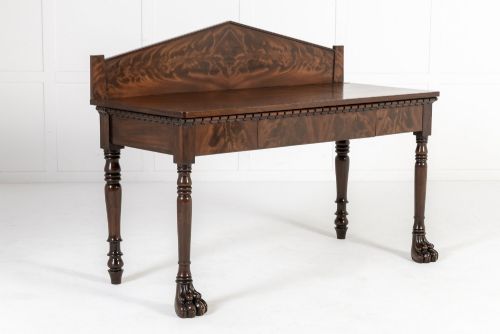
Regency Dining Room Table
A regency dining room table brings architectural symmetry and warm timber grain to a room, drawing people together for long meals.
Regency Dining Room Table
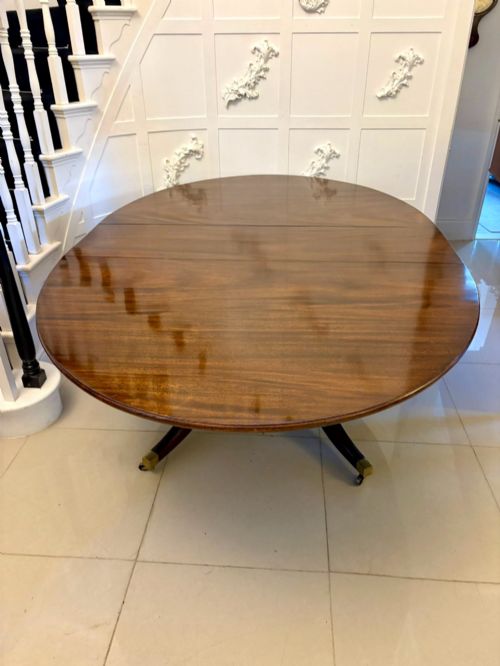
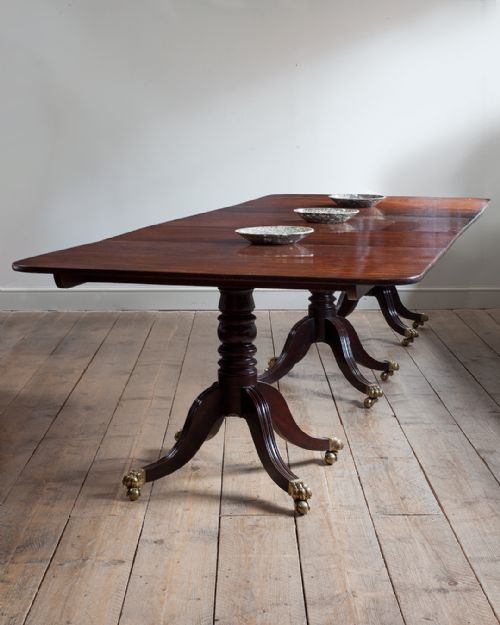
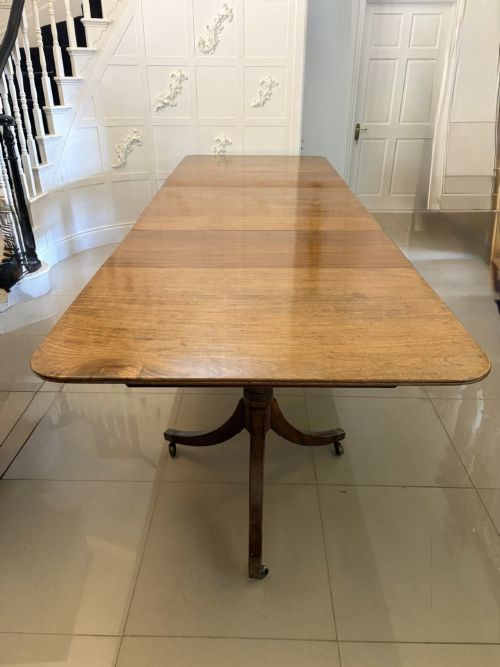
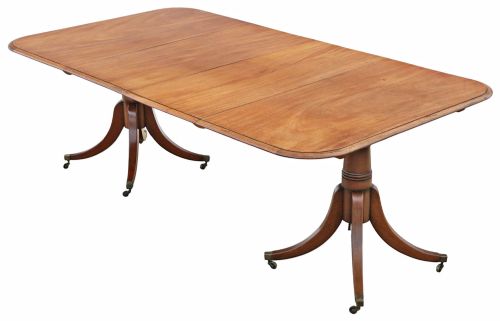
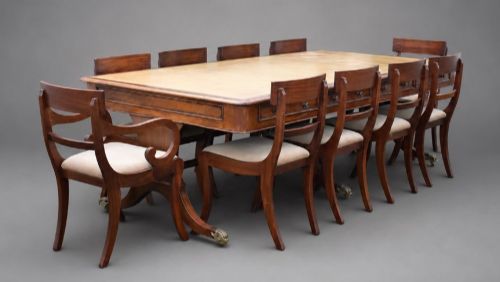
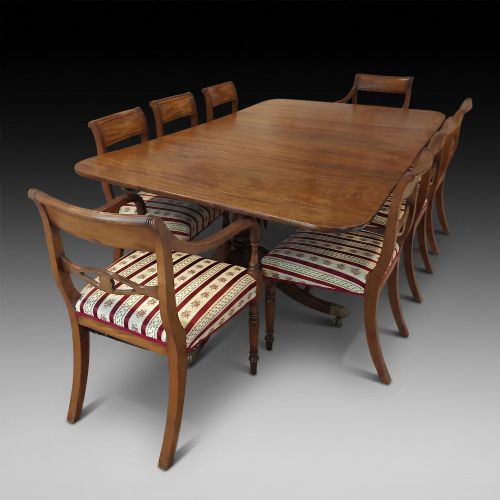
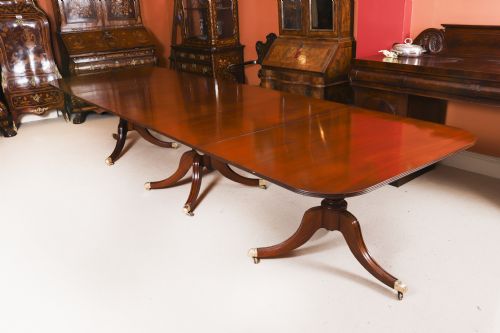
A regency dining room table brings together the heavy timber forms and architectural proportions characteristic of the early nineteenth century. When searching for a regency dining room table, buyers frequently encounter multiple pedestal tables, including twin and triple pillar formats designed to accommodate additional leaves for large gatherings.
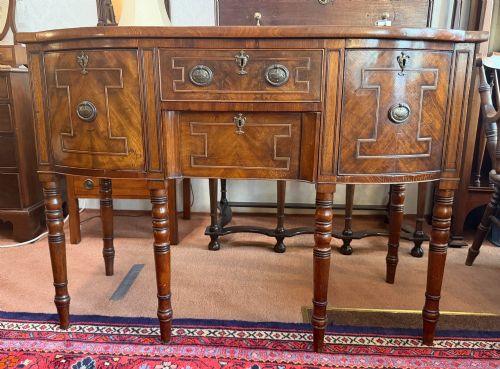
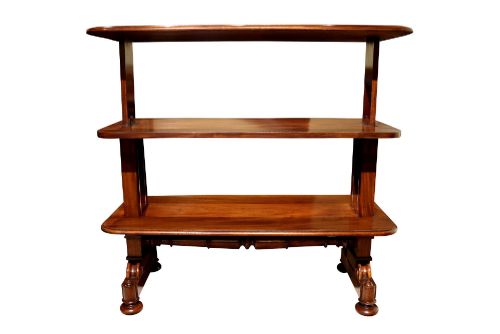
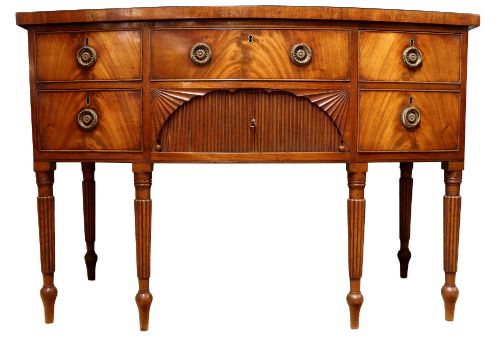
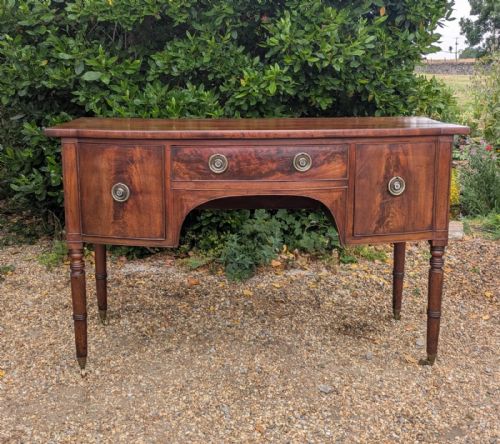
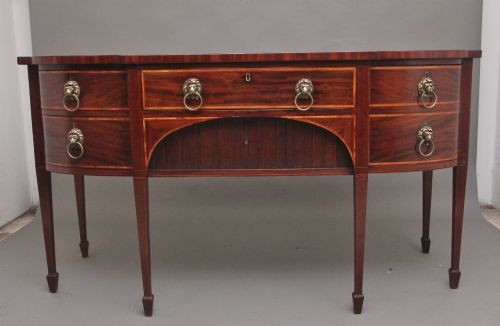
The selection spans periods from the Georgian and late Georgian eras through to the Regency period proper, alongside later revival pieces from the twentieth century. Alongside the central dining tables, related forms such as serving tables, sideboards, and dumb waiters appear frequently in the listings, showing how dining rooms were furnished as complete suites.
Materials and Construction
Makers relied primarily on solid mahogany and flame mahogany veneer, often enhanced with contrasting boxwood stringing or brass inlay to accentuate the structural lines. Supporting timbers such as oak occasionally appear in secondary framing or internal construction.
Pedestal tables utilise heavy timber pillars mounted on tripod or quadruped bases, frequently terminating in brass paw castors for mobility. Leaf extension mechanisms allow the tables to expand securely using internal runner systems and drop-in leaves.
Dining furniture on the site spans the Georgian, Regency, and William IV eras, alongside twentieth-century revival pieces.
Distinctions in Quality
The choice of timber grain defines the visual impact, with matched flame mahogany veneers and rich figuring separating superior examples from plain stock. Subtle details such as precise brass inlay, fine boxwood stringing, and well-executed boxwood or ebony banding show the level of artisan skill invested in the piece.
Structural stability in multi-pillar extending tables depends on the integrity of the pedestals and the smoothness of the extension mechanism. Heavier proportions, solid brass castors, and careful timber seasoning ensure the table remains level and sturdy across multiple configurations.
Whytock and Reid·Mack Williams and Gibton·The Woodworkers Ltd Kilkenny·Gillows
The Regency Dining Room Table Glossary
- Pedestal table
- A table supported by one or more central pillars rather than four corner legs. This construction allows greater freedom for seating placement around the perimeter.
- Flame mahogany
- A veneer cut from the fork of the mahogany tree where the branch meets the trunk. The resulting grain pattern resembles flickering flames.
- Dumb waiter
- A tiered freestanding piece of furniture used to hold dishes and silverware near the dining table. They typically feature rotating or graduated circular trays on a central column.
- Stringing
- A narrow strip of contrasting wood inlay used to outline the edges of tabletops or drawer fronts. It adds a refined linear border to the timber surface.
Regency Dining Room Table: Frequently Asked Questions
How do I seat ten people?
Multi-pillar extending dining tables utilise removable leaves supported by central pedestals to expand the surface area. Adding or removing these leaves alters the length to suit dinner parties of varying sizes.
Pedestal placement is designed to keep leg room clear around the perimeter of the table. This configuration allows chairs to push in smoothly without obstruction from corner legs.
What is a triple pillar table?
A triple pillar table rests upon three separate column supports rather than standard end legs. This format provides the necessary structural backing for very long timber surfaces.
The three pedestals distribute weight evenly across the floor and maintain stability when the table is fully extended with multiple leaves in place.
Are leaves included with tables?
Extending dining tables frequently incorporate matching drop-in leaves that store separately when not in use. These extra sections allow the overall length to adapt from intimate meals to large gatherings.
Buyers should confirm whether matching leaves accompany the main table structure. The timber grain on additional leaves should align harmoniously with the fixed sections.
How do I care for mahogany?
Regular polishing with traditional wax helps maintain the lustre of flame mahogany veneer and solid timber surfaces. Avoiding direct sunlight prevents the rich reddish-brown tones from fading over time.
Use protective mats under hot dishes and liquids to guard the polished finish against heat rings and moisture marks. Gentle dusting with a soft cloth preserves the timber grain.