

Regency Dining Room Chairs
Regency dining room chairs bring architectural precision and rich mahogany to the table, offering a refined seat for formal meals.
Regency Dining Room Chairs
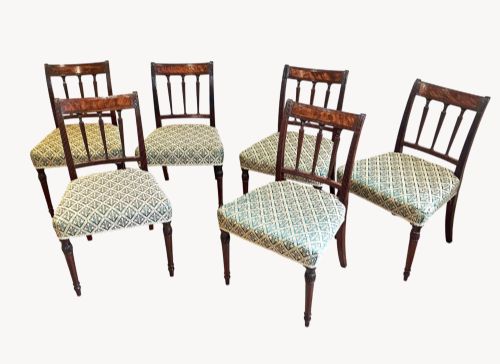
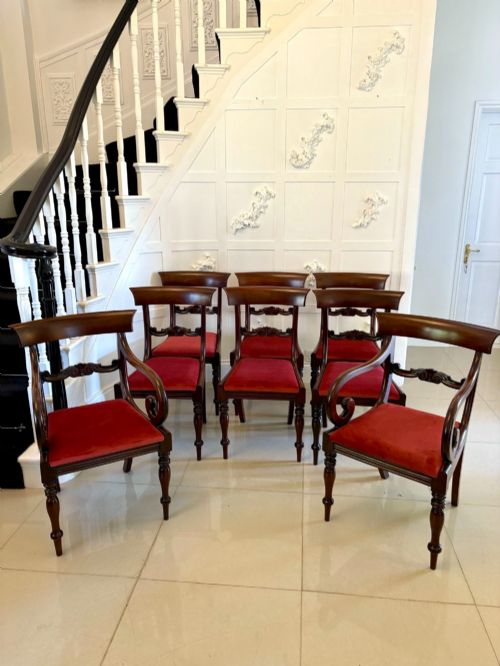
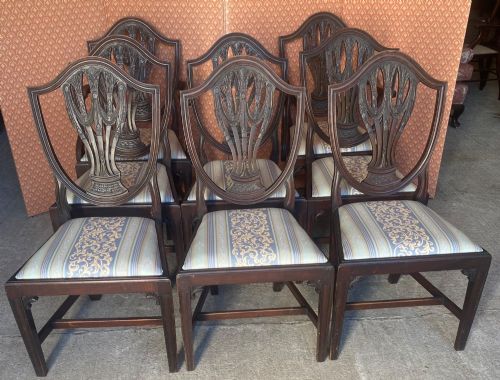
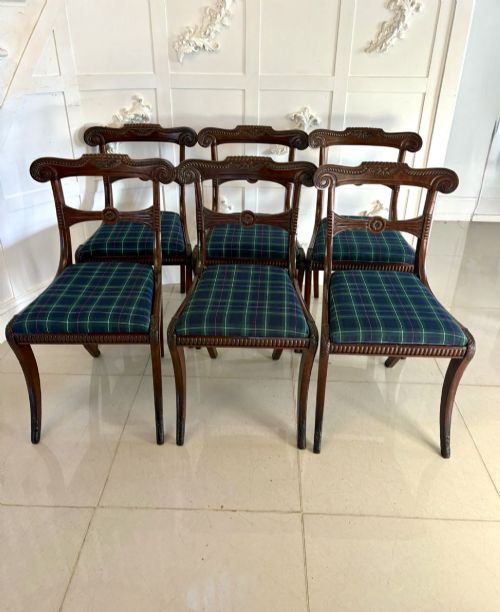
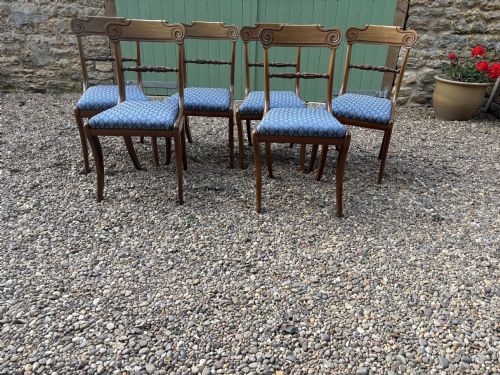
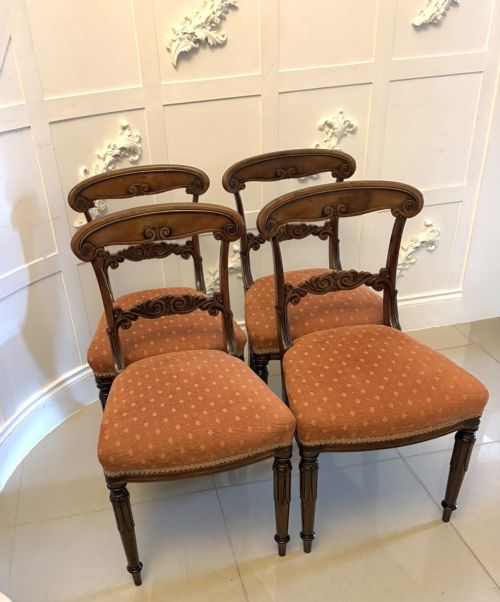
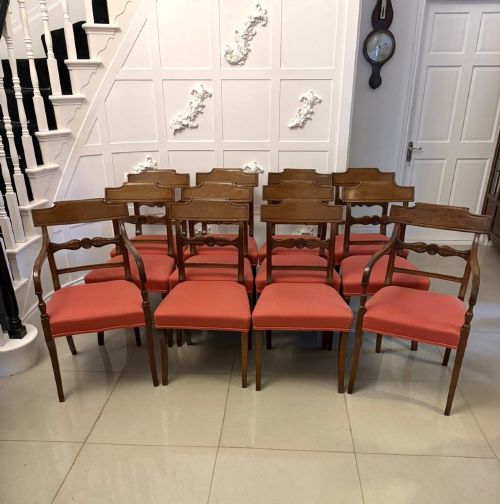
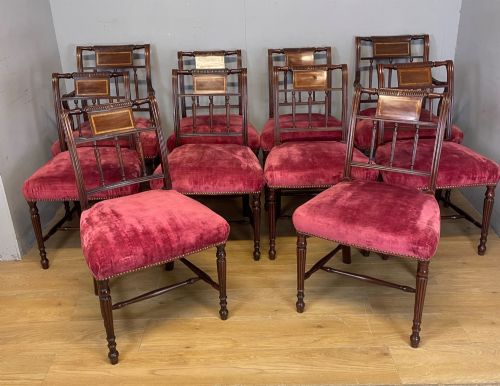
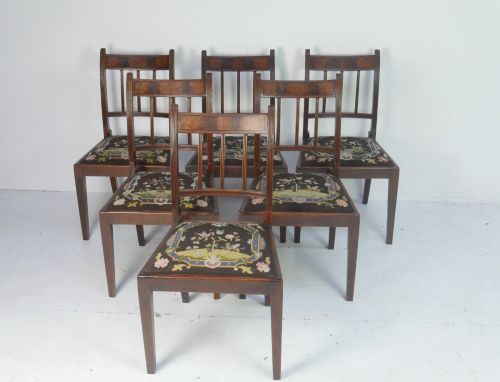
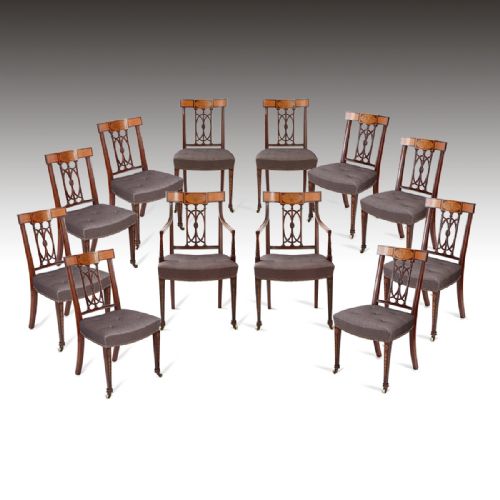
When searching for regency dining room chairs, buyers encounter pieces spanning the Regency, William IV, and Georgian periods alongside later revivals, forming sets ranging from pairs up to fourteen chairs.
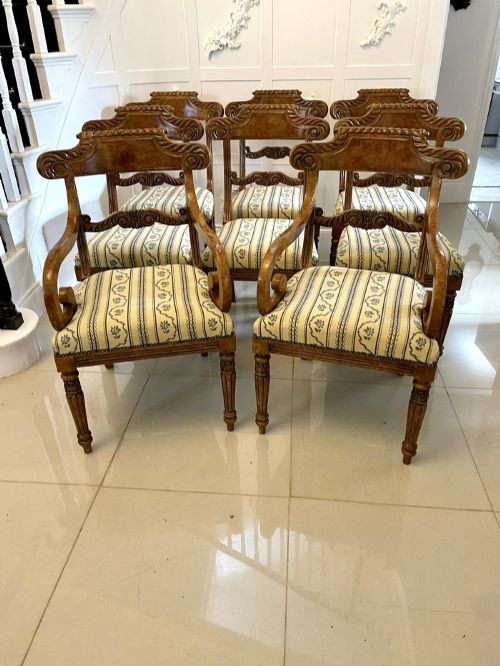
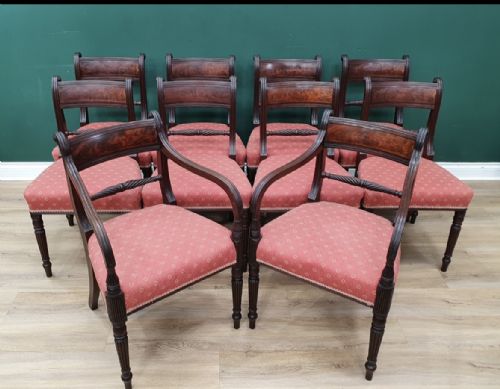
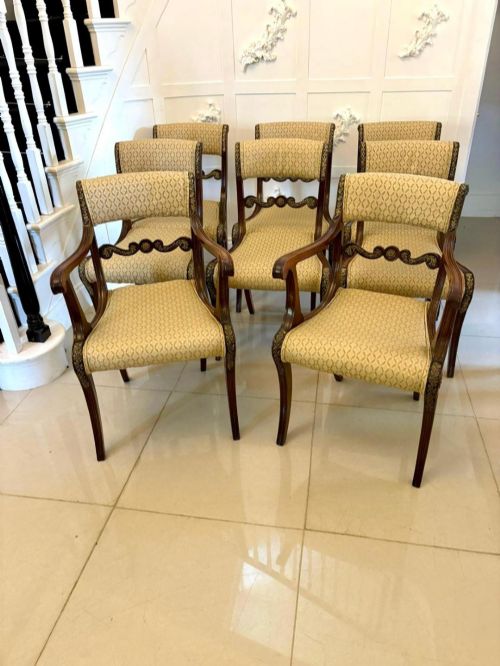
Mahogany predominates the listings, alongside rosewood and ebony, while forms encompass standard side chairs, carvers, armchairs, and expansive dining suites.
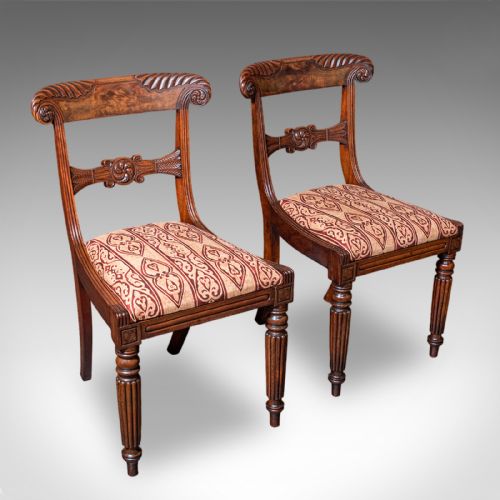
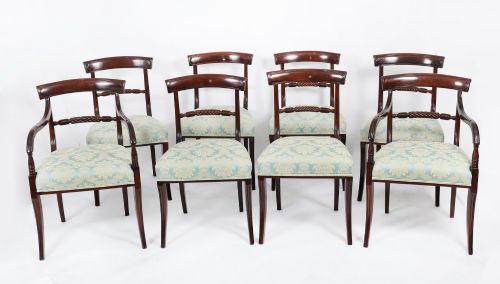
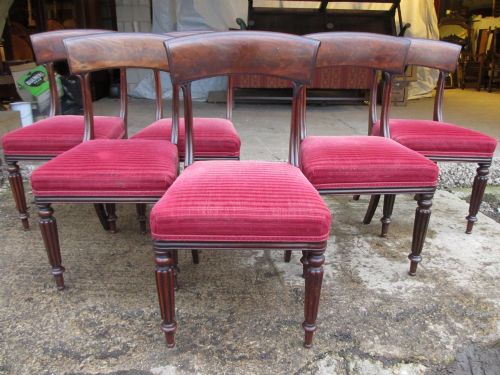
The most common finds are sets of four, six, or eight chairs, often featuring bar backs, rope backs, or shield backs supported by reeded legs.
Materials and Construction
Cabinetmakers utilised dense timbers such as mahogany and rosewood, selected for grain depth and structural strength.
Upholstered seats employed traditional fabrics, leather, and velvet, secured over sturdy wood frames.
Regency Dining Room Chairs Retail Price Guide 2026
Typical asking prices for regency dining room chairs among the pieces listed under this phrase on Sellingantiques today, from the lower quarter to the upper quarter. They describe what is for sale here now, not the wider market.
A stately fourteen-piece Anglo-Indian ebony suite proves that dining parties in the period could be exceptionally grand affairs.
Distinctions in Quality
The distinction between ordinary sets and exhibition pieces lies in the crispness of the carved details, the choice of timber figuring, and the uniformity across larger sets.
Original matching sets command greater interest than assembled groups or later revival pieces produced during the Edwardian era.
Gillows
The Regency Dining Room Chairs Glossary
- Carver
- An armchair designed to sit at the head of a dining table. These typically match the smaller side chairs in a dining suite.
- Bar back
- A horizontal top rail across the back of a chair, often curved to fit the spine. This form is common in Regency seating.
- Reeded legs
- Cylindrical chair legs carved with parallel convex mouldings. They reflect classical architectural influences popular during the period.
- Rosewood
- A heavy, dark timber with distinct figuring used for high-status furniture. It appears frequently in nineteenth-century dining sets.
Regency Dining Room Chairs: Frequently Asked Questions
How many chairs came in a standard set?
Sets varied considerably based on the size of the dining room and household requirements. The evidence shows groupings from pairs up to fourteen chairs.
Larger dining sets often included a mix of single side chairs and a pair of armchairs for the heads of the table.
What is the difference between Regency and William IV?
William IV furniture follows closely from the Regency period but generally displays heavier proportions and bolder classical carving. Rosewood and mahogany appear across both eras.
Chairs from the William IV period often incorporate balloon backs or more substantial turnings compared to earlier Regency designs.
Can I find matching dining tables?
Complete dining suites combining tables and chairs do appear alongside standalone seating sets. Boardroom tables also accompany large chair sets in the listings.
Most entries focus purely on chair sets intended for formal dining rooms.
Are later revival chairs common?
Twentieth-century and Edwardian revival pieces appear alongside authentic nineteenth-century items. These offer the Regency aesthetic using period-appropriate materials.
Checking the period details helps distinguish original pieces from later interpretations.