








Regency Dessert Table
These regency dessert table pieces are tiered mahogany serving furniture and silver service items built to hold fruit and wine.
Regency Dessert Table
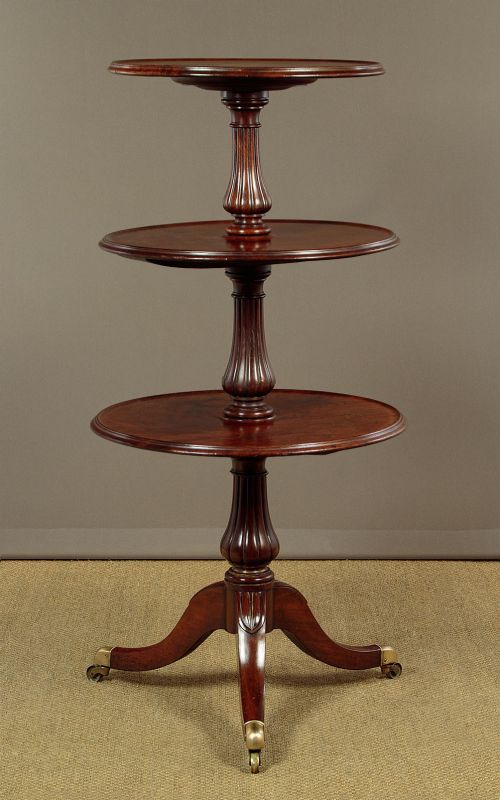
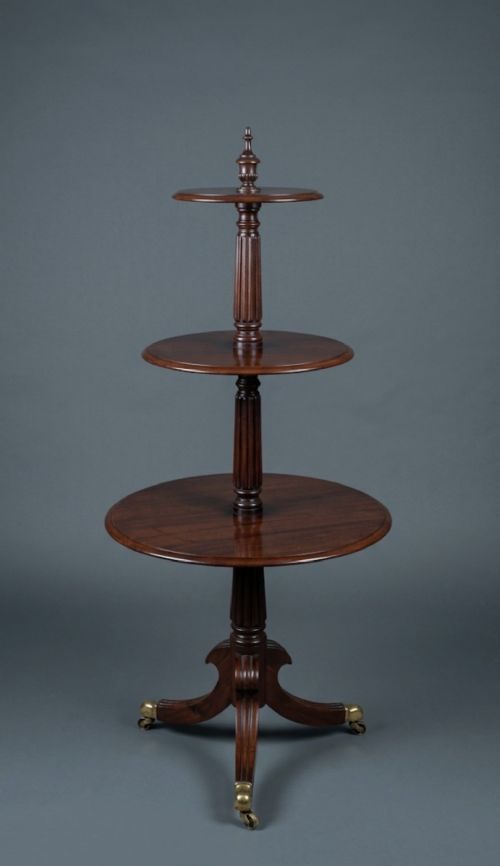
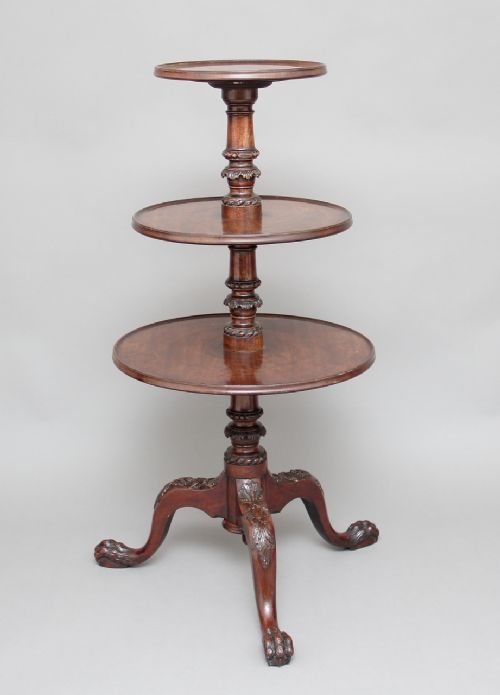
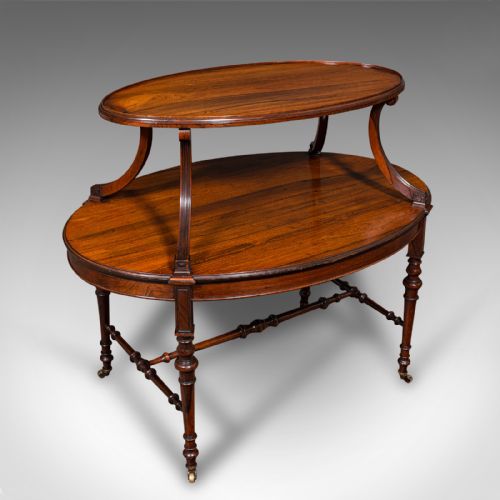
A regency dessert table search reveals a selection of tiered dumb waiters, serving tables, and occasional stands originating from the Georgian and Regency periods. The most common form met here is the mahogany dumb waiter, appearing in circular and oval multi-tiered configurations designed to hold dishes without constant staff attention.
Beyond structural tables, the listings encompass related service accessories including porcelain dessert serving dishes, sterling silver berry spoons, and brass pedestal table platters. These smaller items complement the larger tiered stands by completing the presentation of fruit and wine.
The objects span late eighteenth century origins through to nineteenth century interpretations, occasionally including twentieth century pieces. Mahogany remains the dominant timber across the freestanding furniture.
How they were made
Makers utilised solid mahogany and brass hardware to construct the tiered dumb waiters and display serving tables. Turning and joinery created the central pedestals and rotating tiers characteristic of these functional serving pieces.
Porcelain serving dishes and enamel elements show moulded ceramic techniques finished with gilt detailing. Sterling silver berry spoons demonstrate traditional silversmithing methods including repoussé work and hallmarking.
Regency Dessert Table Retail Price Guide 2026
Typical asking prices for regency dessert table among the pieces listed under this phrase on Sellingantiques today, from the lower quarter to the upper quarter. They describe what is for sale here now, not the wider market.
Object forms range from circular tiered dumb waiters to berry spoons and cut crystal finger bowls.
What varies in quality
The refinement of the timber turning on the central column distinguishes standard utilitarian stands from finer examples. Cabinetmakers working in the manner of established workshops achieved cleaner proportions and more balanced tier spacing.
Detailing on hardware, such as brass castors or pedestal platters, separates simple utilitarian metalwork from superior cast components. Ceramic quality relies upon the crispness of the moulded relief and the preservation of the porcelain glaze.
Gillows·Ridgway
The Regency Dessert Table Glossary
- Dumb waiter
- A freestanding tiered table designed to hold food and drink, allowing diners to serve themselves without servants present. These pieces typically feature multiple rotating trays on a central pedestal.
- Berry spoon
- A large serving spoon with fruit motifs embossed on the bowl, commonly used for serving soft fruits during dessert courses. These are often found paired in fitted cases.
- Tiered table
- A piece of furniture constructed with multiple horizontal surfaces arranged vertically above one another. This design maximised surface area for serving dishes in dining rooms.
- Pedestal platter
- A raised serving plate supported by a central column or base, designed to elevate fruit or sweetmeats on the table.
Regency Dessert Table: Frequently Asked Questions
What is a dumb waiter?
A dumb waiter is a multi-tiered freestanding table used in dining rooms to hold serving dishes and wine bottles. The design allowed guests to help themselves during a meal without servants in the room.
These pieces typically feature circular or oval trays mounted on a central wooden pillar, often fitted with brass castors for movement.
How were tiered tables used?
Tiered tables served as auxiliary surfaces for the dessert course, holding fruit, sweetmeats, and wine glasses away from the main dining table. Their vertical structure saved floor space while keeping multiple dishes within reach.
In period dining rooms, they stood near the table and were accessed as needed during the meal.
What woods were used?
Mahogany is the primary timber found in these serving tables, selected for its strength and rich grain. Cabinetmakers utilised it for both the turned central pillars and the graduated circular shelves.
Other materials like brass and porcelain appear in the accompanying platters and serving dishes rather than the main furniture.
How do I spot a Regency piece?
Regency pieces often display classical proportions, reeded column details, and dark mahogany surfaces reflecting early nineteenth-century design tastes. The construction methods rely on solid timber turning and traditional joinery.
Pieces associated with this era also show specific hardware choices, such as brass pedestal feet and castors.