


Regency Crystal Wall Sconces
Regency crystal wall sconces cast a brilliant light down a corridor, combining cut crystal with brass and gilt metal.
Regency Crystal Wall Sconces
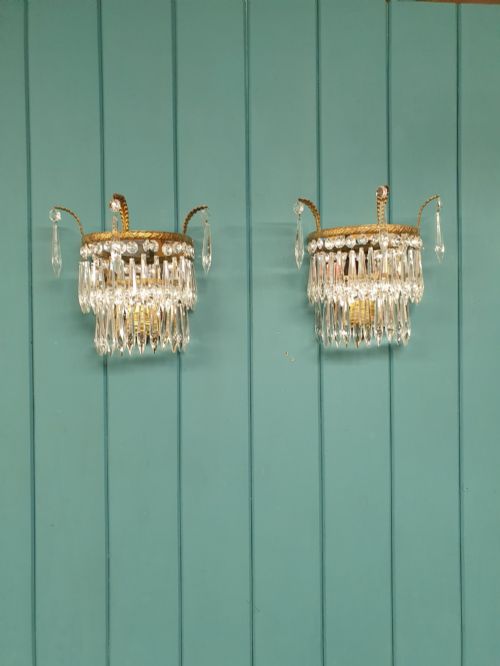
When you search for regency crystal wall sconces, you are looking at wall lights and wall sconces designed to illuminate interior spaces with candle or electric power. The pieces on this page span the nineteenth and twentieth centuries, taking forms such as pairs of spike wall lights, tent wall lights, and twin branch wall lights.
The styles present range from French Regency and Italian Regency to Grand Regency and Regency Revival, alongside French Chateau, French Neoclassical, and French Empire. You will most frequently encounter pairs of wall lights dating from the 1920s, alongside Edwardian and Victorian examples.
These fixtures serve as functional wall art that reflects ambient light through glass and crystal components. The designs draw on classical motifs and symmetrical arrangements suited to traditional and formal interiors.
How they were made
Makers constructed these wall lights using structural frames of brass, gilt metal, and general metalwork to support the weight of the glass components. These metal mounts often feature decorative casting and plating to achieve a finished appearance.
The decorative hanging elements consist of cut glass and cut crystal, alongside specialised variants such as rock crystal. Artisans shaped and faceted these transparent components by hand to maximise light refraction.
The object forms recorded here comprise wall lights and wall sconces, styled in French Regency, Italian Regency, and Regency Revival.
What varies in quality
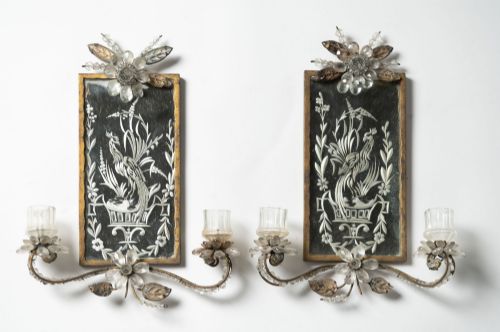
The sophistication of the metalwork sets the baseline for quality across these fixtures, with crisp casting and refined gilt finishes distinguishing finer examples from simpler metal frames. The integration of mirror backs also elevates the complexity and visual impact of the design.
The clarity and depth of the cut crystal or cut glass determine the optical performance of the sconce. Superior pieces feature precise facet cutting that catches and disperses light effectively.
Maison Baguès
The Regency Crystal Wall Sconces Glossary
- Regency
- A style period characterised by classical revival motifs, symmetry, and influences from French Empire and neoclassical designs. It remains a defining aesthetic for formal wall lighting.
- Cut crystal
- Glass with a high lead content that has been cut and polished with facets to increase brilliance and light dispersion. It forms the primary decorative element on many sconces.
- Spike wall lights
- A specific configuration of wall sconce featuring upward-pointing central elements or drops. This traditional form creates a distinct vertical silhouette against the wall.
- Tent wall lights
- Fixtures featuring an upper canopy of glass drops arranged in a tent-like canopy above the arms. This classic construction diffuses light through cascading tiers of crystals.
- Rock crystal
- A naturally occurring colourless quartz mineral used in high-end antique lighting components. It offers superior durability and unique natural inclusions compared to manufactured glass.
Regency Crystal Wall Sconces: Frequently Asked Questions
How were regency crystal wall sconces used?
These fixtures were mounted on drawing room and hallway walls to supplement natural daylight and candle illumination.
The reflective glass and metal surfaces multiplied the available light within the room.
Are these wall lights wired for electricity?
Many antique wall lights have been adapted for modern electrical wiring during their long histories.
Buyers should inspect the individual wiring standard of each piece upon arrival.
How do I date a crystal wall sconce?
Dating relies on examining the construction methods of the metal frame and the style of the glass cutting.
Listings on this page reference periods from the Victorian era through the 1930s.
How should I clean crystal wall sconces?
Cleaning requires removing dust with a soft brush and wiping glass components with a gentle glass cleaner.
Harsh chemical agents can damage the vintage metal finishes on the frames.