









Regency Crystal Goblet
A regency crystal goblet brings weighty lead glass and bright wheel-cut facets to the table, offering a tactile drinking vessel prized by collectors.
Regency Crystal Goblet
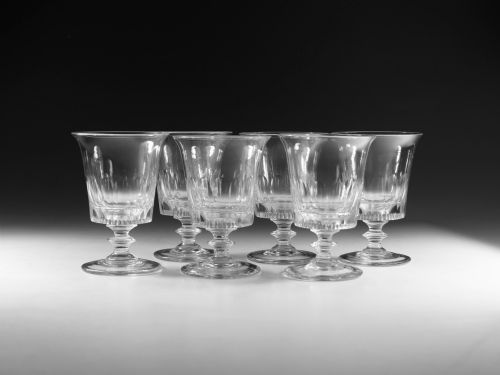
A regency crystal goblet typically appears on this page in the form of heavy rummers, port glasses, and ale glasses originating from the Georgian and Regency periods. These substantial drinking vessels often feature deep cutting or delicate wheel engraving.
The selection ranges from large serving rummers and paired Anglo-Irish pieces to smaller port and sherry glasses, alongside distinct variants with square lemon squeezer feet. Most examples date from around eighteen-ten to eighteen-thirty, reflecting the heavy lead glass production of the era.
How they were made
These pieces utilise lead glass, flint glass, and clear or coloured glass, melted in traditional furnaces and blown into iron or wooden moulds before hand-finishing. The dense material allowed glassmakers to shape thick walls capable of supporting deep facets.
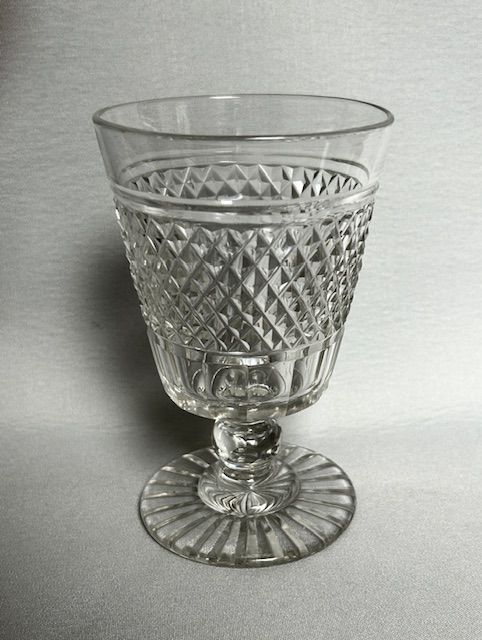
Craftsmen applied wheel-cutting techniques to create hobnail patterns, flutes, and panels, alongside fine copper-wheel engraving depicting hops, barley, bridges, or armorial crests. Bases were frequently formed with heavy square lemon squeezer feet or polished pontil marks.
Regency Crystal Goblet Retail Price Guide 2026
Typical asking prices for regency crystal goblet among the pieces listed under this phrase on Sellingantiques today, from the lower quarter to the upper quarter. They describe what is for sale here now, not the wider market.
Listings feature lead crystal and flint glass forms ranging from Georgian port glasses to large Regency table rummers with hobnail cutting.
What varies in quality
The quality of a regency crystal goblet rests upon the clarity and weight of the lead glass, alongside the crispness of the cut facets and engravings. Superior examples display sharp, well-defined wheel work without blurring or softening.
Proportion and stability also distinguish the work, as finely balanced vessels with even wall thickness and polished bases command greater appreciation among collectors than heavy, clumsy castings.
The Regency Crystal Goblet Glossary
- Rummer
- A large, heavy drinking glass popular in the eighteenth and nineteenth centuries, typically used for ale, wine, or spirits. These vessels often feature sturdy stems and bucket bowls.
- Lemon squeezer base
- A square, pressed glass foot with sloping sides that mimics the shape of a domestic kitchen lemon squeezer. This style appears frequently on Georgian and Regency rummers.
- Lead glass
- Glass containing a significant proportion of lead oxide, which increases brilliance, weight, and workability. This material forms the foundation of high-quality crystal glassware.
- Pontil mark
- A rough scar left on the underside of blown glassware where the pontil rod was snapped off after shaping. Skilled finishers often ground and polished these marks smooth.
Regency Crystal Goblet: Frequently Asked Questions
What is a rummer glass?
A rummer is a capacious drinking vessel designed for heavy ales, wines, or spirits during the Georgian and Regency eras. These glasses possess thick walls and sturdy stems intended for tavern and dining table use.
Collectors prize them for their solid weight and the decorative wheel-engraved motifs often depicting hops and barley.
How do I date a Regency goblet?
Dating relies on observing the form, the weight of the lead glass, and the specific cutting styles employed by period glasshouses. Pieces from this era often feature heavy bucket bowls and square lemon squeezer bases.
Engraved details such as armorial crests or specific architectural themes like bridges also help narrow the production window.
What are lemon squeezer feet?
Lemon squeezer feet are square, moulded glass bases with sharp, sloping facets designed to resemble contemporary kitchen squeezers. Makers produced them by pressing hot glass into moulds during the early nineteenth century.
This distinct base shape provides exceptional stability to large rummers and heavy table glassware.
Were these glasses used daily?
These vessels served functional roles in homes, inns, and banqueting halls for serving ales, wines, port, and sherry. Their robust lead glass construction made them durable enough for regular communal and dining use.
Today, many collectors prefer to display them while occasionally utilising them for formal dining settings.