








Regency Crystal Glassware
Regency crystal glassware brings heavy lead-infused brilliance to the table through faceted decanters, deep rummers, and cut bowls.
Regency Crystal Glassware
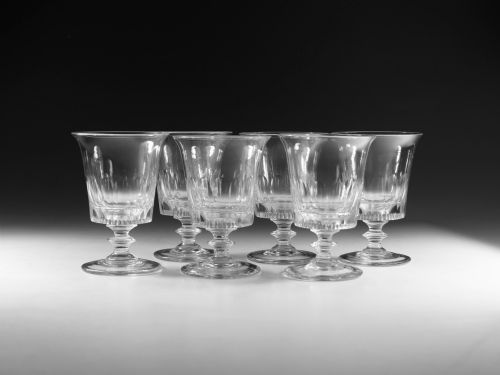
When you search for regency crystal glassware, you encounter heavy drinking vessels, serving pieces, and tablewares that span the Georgian, Regency, and early Victorian eras. The selection here centres heavily on rummers, decanters, port glasses, and comports produced around eighteen hundred to eighteen thirty.
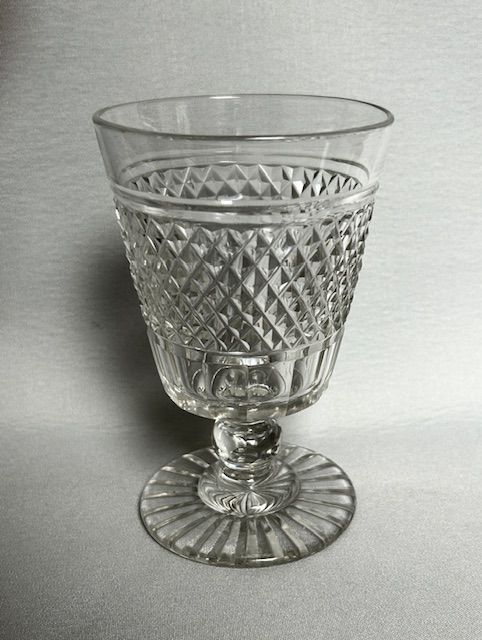
The most common forms you will meet on this page are rummers and decanters. These pieces frequently feature cut decoration such as hobnail patterns or pillar fluting, alongside engraved hop and barley motifs.
Originating largely from English and Irish workshops, these items reflect the domestic dining habits of the early nineteenth century. You will find specialised vessels ranging from celery vases and water jugs to finger bowls and tea mixing bowls.
Assessing Quality
Quality in these pieces rests primarily upon the depth and crispness of the cutting and the clarity of the metal itself. Superior examples display sharp, cleanly defined facets and heavy weight, whereas lesser pieces show softer edges and grey or cloudy metal.
The sophistication of the engraving and the stability of formed bases, such as square lemon squeezer feet, further separate standard production from finer work. Complete sets and matched pairs command greater attention than solitary items.
Regency Crystal Glassware Retail Price Guide 2026
Typical asking prices for regency crystal glassware among the pieces listed under this phrase on Sellingantiques today, from the lower quarter to the upper quarter. They describe what is for sale here now, not the wider market.
Tea mixing bowls from this era let hostesses blend expensive loose teas at the table before serving.
The Regency Crystal Glassware Glossary
- Rummer
- A large drinking glass used for ale, wine, or punch during the eighteenth and nineteenth centuries. These sturdy vessels often sat on short stems with heavy footed bases.
- Hobnail cut
- A decorative surface pattern of small, closely spaced raised pyramids or points resembling the hobnails on boots. This deep cutting catches the candlelight effectively.
- Lemon squeezer foot
- A square, pressed glass base with sloping sides that mimics the form of a citrus juicer. It provides a stable footing for heavy rummers and decanters.
- Lead crystal
- Glass containing a significant proportion of lead oxide, which increases the weight, brilliance, and workability for cutting. It rings clearly when struck.
- Celery vase
- A tall vessel designed to hold and display stalks of celery upright on the dining table. They often feature pedestal feet and heavy cut glass bodies.
Regency Crystal Glassware: Frequently Asked Questions
What are Regency rummers used for?
Rummers served as versatile drinking vessels for ale, wine, or spirits during grand evening meals and tavern gatherings. Their generous capacity and sturdy build made them practical for daily use.
Collectors today appreciate them for serving port or claret after dinner, bringing period weight and brilliance to the table.
How do I clean antique crystal?
Wash these pieces gently by hand in lukewarm water using a mild detergent. Avoid sudden temperature changes to protect the old lead glass from thermal shock.
Dry them immediately with a soft linen cloth to preserve the bright refractive shine on the cut facets.
Can I use these glasses daily?
Many buyers enjoy using their antique glassware for special dinners and evening drinks. The thick lead crystal is remarkably durable when handled with reasonable care.
Hand washing remains essential, as modern dishwashers can cloud the historic glass and weaken delicate rims over time.
How do I spot Irish crystal?
Irish glass from this era often exhibits a distinctively dark, heavy metal with a faint blue or greyish tint. The cutting tends to be exceptionally deep and bold.
Many of these pieces lack factory marks, so attribution relies on weight, hue, and characteristic Irish cutting styles.