




Regency Column Candlesticks
Regency column candlesticks are formal metal lighting pieces of classic proportion, sought after for bringing architectural dignity and polished warmth to a room.
Regency Column Candlesticks
When you search for regency column candlesticks, you are looking at upright metal lighting pieces influenced by classical architecture and the Neoclassical taste. The selection on this page centres heavily on brass, bronze, and Old Sheffield Plate from the eighteenth and nineteenth centuries.
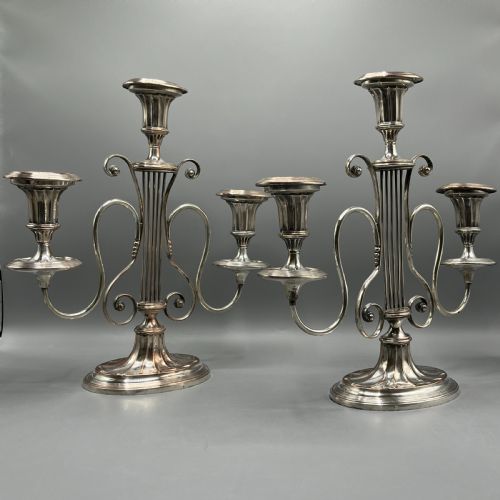
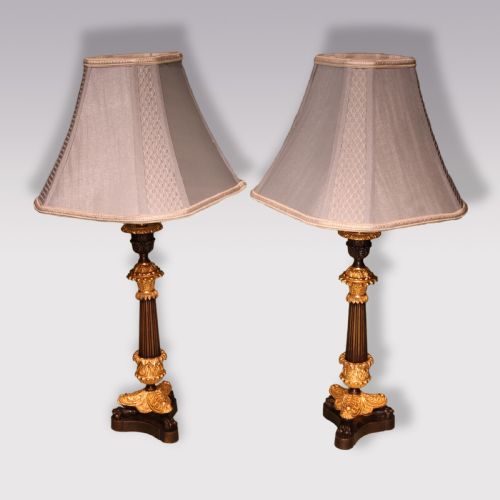
You are most likely to meet pairs of brass column candlesticks and converted candlestick lamps dating across the Regency and Georgian periods. Alongside standard sticks, the evidence includes multi-light candelabra and extending forms that reflect formal dining and drawing-room lighting requirements.
The styles span French Empire, Georgian, and Chinoiserie interpretations alongside classic Regency designs. Many examples utilise columnar shafts with Corinthian capitals, pairing structural severity with refined surface finishing.
Materials and construction
The pieces on this page are cast and fabricated primarily in brass, bronze, and copper, often enriched with ormolu highlights or silver fused onto a copper base through Old Sheffield plating. Makers employed heavy casting techniques to ensure the vertical shafts and stepped bases remained stable when supporting candles or wiring.
Surface treatment relies on polished or lacquered brass, fire-gilded bronze, and rich patination developed over centuries. Construction often involves multi-part assembly, screwing or pegging the column securely to a weighted base.
Some candlesticks were thoughtfully stretched by clever makers using extending mechanisms to suit changing dining-table heights over the centuries.
Judging quality
Quality in these items rests upon the crispness of the casting detail in the capitals and bases, and the integrity of the metal used. Heavier castings with sharp, well-defined acanthus leaves or fluting separate finer workshop output from simpler commercial production.
The survival of original surface finishes, such as untouched bronze patination or intact ormolu and Old Sheffield plating, elevates a piece. Alterations from original candlestick to lamp form also influence how a collector assesses the object.
The Regency Column Candlesticks Glossary
- Old Sheffield Plate
- A composite material made by fusing a thin sheet of silver to a thicker copper base, common in quality tableware and lighting before electroplating was invented.
- Ormolu
- Finely ground high-carat gold applied to a bronze base using a mercury amalgamation technique, producing a rich golden surface found on high-status Regency items.
- Corinthian Capital
- The topmost decorative section of a classical column, featuring ornate carved or cast acanthus leaves that appear frequently on column candlesticks.
- Empire
- A stylistic period spanning the late eighteenth and early nineteenth centuries, characterised by heavy classical military and Roman motifs popular in France and Britain.
Regency Column Candlesticks: Frequently Asked Questions
What is a column candlestick?
A column candlestick is a vertical lighting form designed with a distinct base, a straight architectural shaft, and an upper capital that holds the candle.
These pieces draw on classical Greek and Roman architecture to bring formal symmetry to interior spaces.
Are these pieces wired for electricity?
Many of the candlesticks seen here have been adapted into table lamps, while others remain configured for traditional candle use.
Conversion methods vary depending on when the wiring was installed by previous owners.
How do I date a brass candlestick?
Dating relies on manufacturing marks, base construction, casting methods, and the style of the capital and shaft.
Earlier examples often feature heavier multi-part brass construction and distinct patination compared to later reproductions.
What materials are used in these items?
The primary materials recorded are brass, bronze, copper, and Old Sheffield Plate, occasionally combined with ormolu gilding.
Each metal creates a different visual weight and surface texture depending on its age and care.