

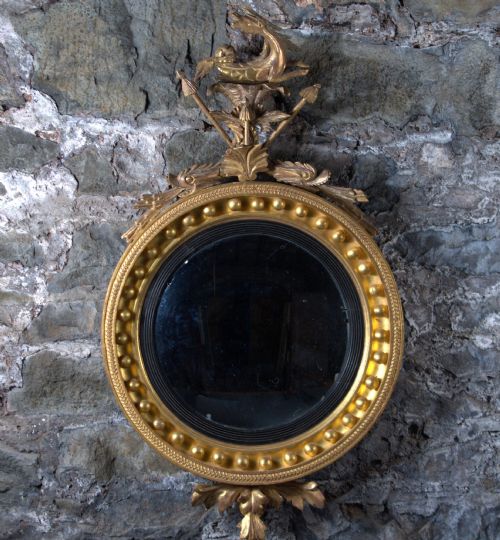
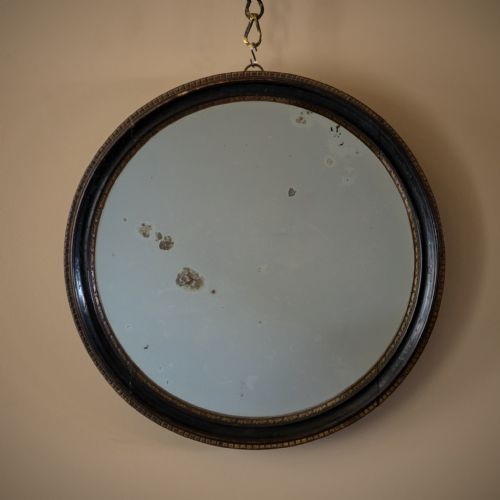

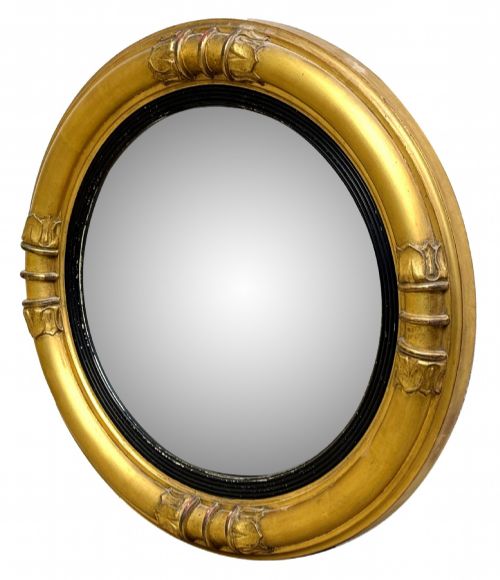
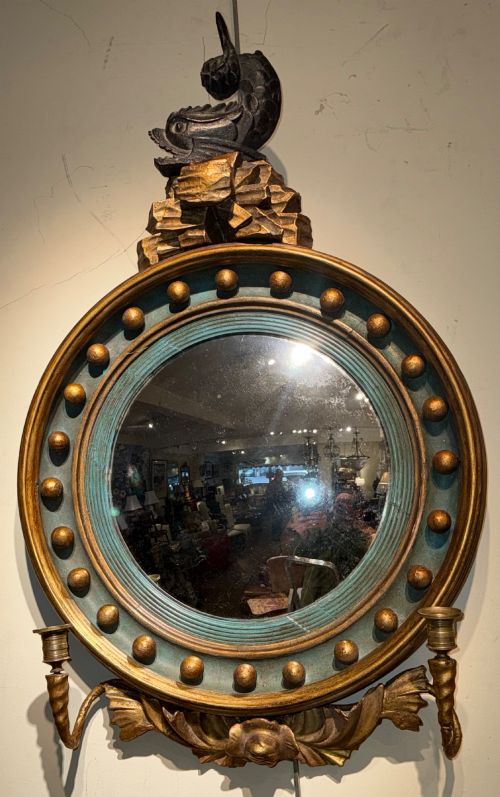


Regency Circular Wall Mirror
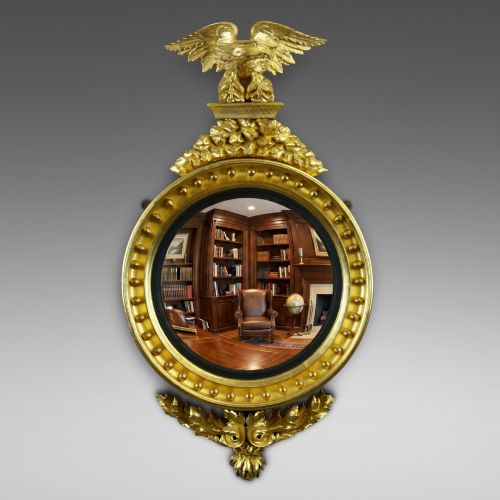
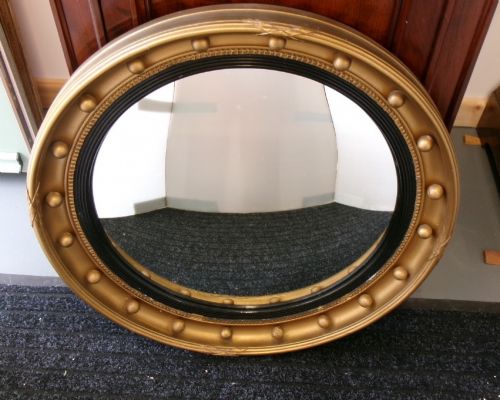
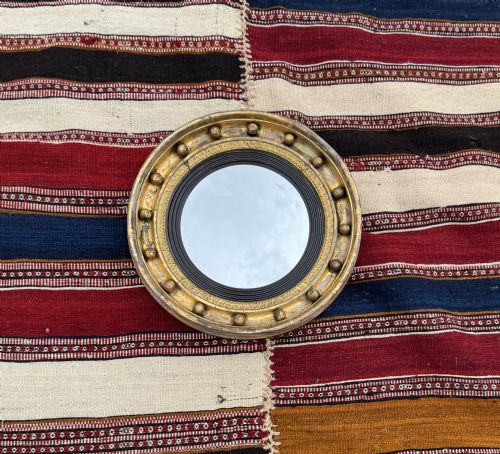
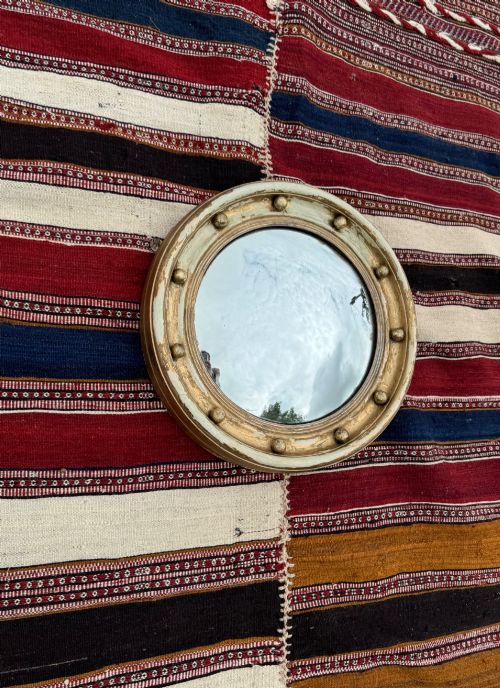
A regency circular wall mirror bends the room into a single luminous sphere, drawing the eye with its curved convex glass and gilt frame.
Regency Circular Wall Mirror
A regency circular wall mirror is typically a round looking glass held within a deep circular frame, designed to catch and reflect light across a room. The pieces found here span the Regency period and the 19th Century, alongside later revivals stretching into the 20th Century.
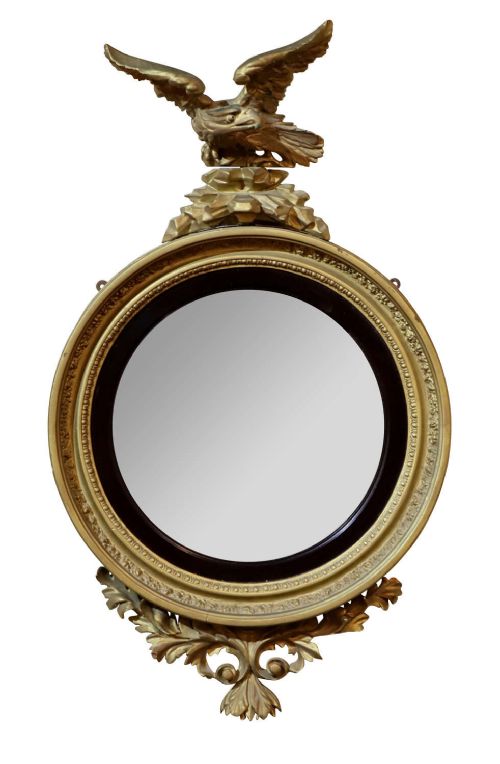
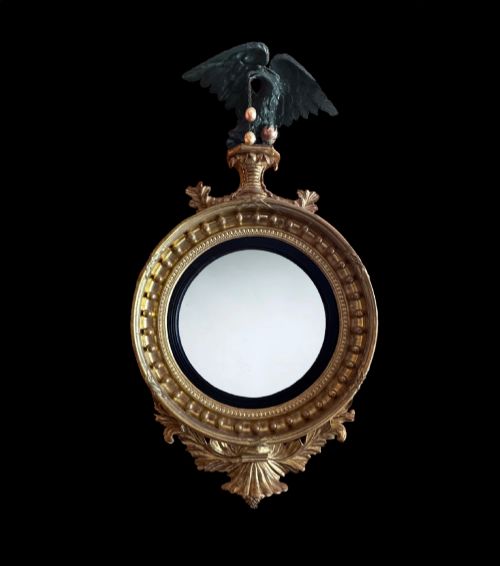
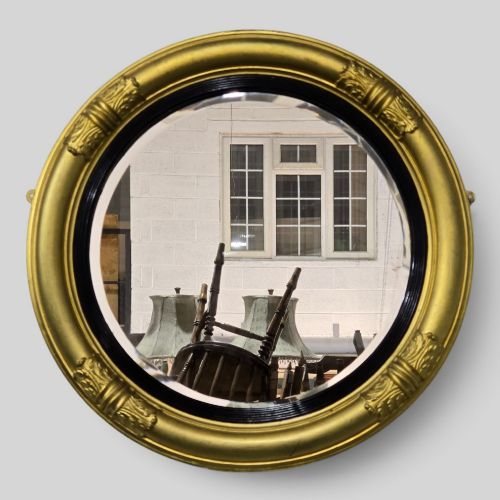
The version you are most likely to meet on this page is the giltwood convex mirror, often featuring a round plate glass set beneath a carved eagle surmount or within a moulded frame. These circular wall mirrors appear in scales ranging from small boudoir pieces to grand four-foot diameters.
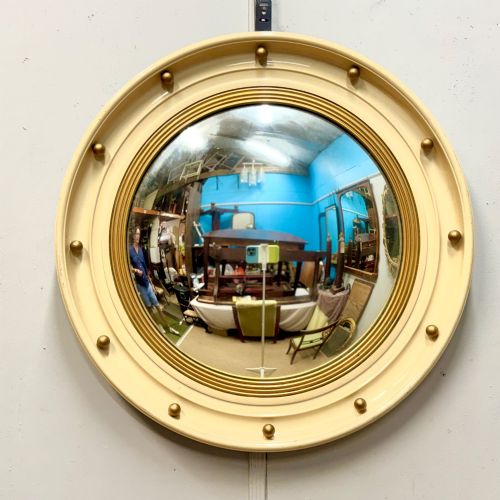
Makers and makers' marks are absent from the evidence, leaving the work itself to speak through its proportions, gilding, and frame ornamentation. Examples run from authentic Regency pieces to Victorian porthole designs and later Edwardian butler's mirrors.
How they were made
Makers built these frames using wood or gesso applied over a wooden base, shaping the contours before finishing the surface. Giltwood and painted wood finishes predominate, with ebonised wood and japanned treatments appearing on specific variants.
The defining optical element is the convex mirror glass, which curves outward to capture a wide-angle reflection of the interior. Carved details such as eagles, dragons, or simple moulded balls accent the frame perimeter.
Listings include materials such as glass, giltwood, ebonised wood, gesso, and painted wood across periods from the Regency era to the 1930s.
What varies in quality
Quality rests upon the crispness of the carved ornamentation on the frame and the depth of the gilt or painted finish. Superior examples display finely rendered details on creatures like eagles and dragons rather than soft, indistinct moulding.
The condition of the convex mirror glass and its silvering layer determines visual clarity, while the joinery of the circular wooden frame dictates structural integrity over time.
The Regency Circular Wall Mirror Glossary
- Convex glass
- Curved mirror glass that bulges outward to provide a wide, distorted reflection of the surrounding room. This spherical shape gathers light from every corner.
- Giltwood
- Wood carved and coated with a thin layer of gold leaf or metallic powder. It provides a bright reflective surface that catches natural daylight.
- Gesso
- A plaster-like mixture applied to wood frames to create a smooth surface for gilding or painting. Artisans carved intricate details directly into this hardened layer.
- Ebonised wood
- Timber treated with chemical stains or dark paint to imitate expensive ebony. This dark finish creates a striking contrast against the gold elements.
- Butler's mirror
- A convex looking glass traditionally used to oversee staff or monitor dining rooms. The round shape offers a wide field of view.
Regency Circular Wall Mirror: Frequently Asked Questions
Why are convex mirrors round?
The spherical shape allows the glass to capture a wide-angle view of the entire room in a single compact frame. This optical property made them popular for monitoring large spaces from a fixed wall position.
Craftsmen housed this curved plate within circular wooden surrounds to distribute the visual weight evenly around the perimeter.
What is an eagle surmount?
An eagle surmount is a carved wooden bird placed at the very top of the mirror frame, often with wings spread wide. This decorative motif was popular on Regency convex mirrors.
Other examples feature dragons or simple moulded balls instead of the traditional bird figure.
How do I date a convex mirror?
Dating relies on examining the construction of the wooden frame, the composition of the gesso, and the manufacturing characteristics of the glass. Authentic Regency pieces date from the early nineteenth century.
Later Victorian interpretations and twentieth-century revivals often utilise heavier plaster mouldings or different backing boards.
Where should I hang a circular wall mirror?
These pieces function well as focal points above mantelpieces, sideboards, or console tables where their reflective properties brighten dark corners. Their spherical reflection draws the eye immediately upon entering a room.
Ensure the wall fixings can support the weight, particularly on larger scales and grander giltwood frames.