




Regency China Tureen
A regency china tureen brings disciplined classical proportion and robust utility to the table, uniting Georgian substance with refined early nineteenth-century ornament.
Regency China Tureen
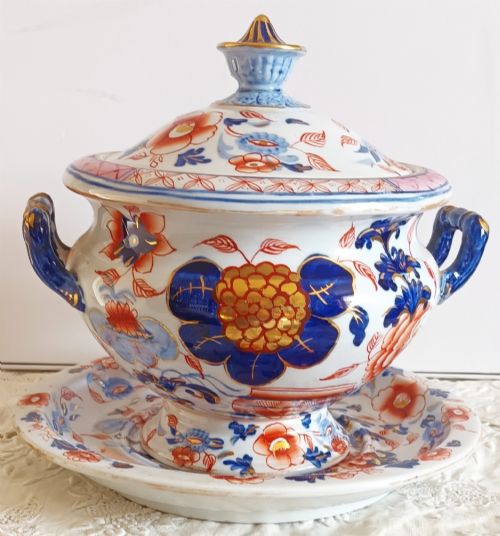
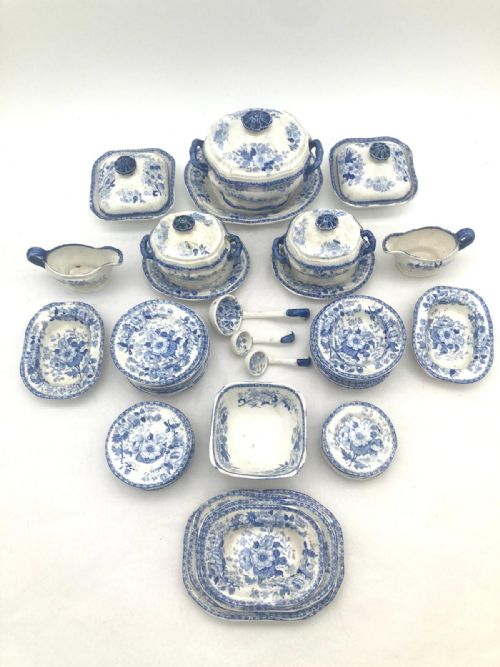
A regency china tureen serves as a principal vessel for soup, sauce, or vegetables, embodying the decorative ambitions of the early nineteenth century. When buyers search for a regency china tureen, they encounter substantive earthenware, ironstone, and porcelain forms dating across the Georgian, Regency, and broader nineteenth-century periods. These table pieces encompass saucetureens, soup tureens, vegetable vessels, and smaller child's service iterations.
The objects appearing on this page derive predominantly from English manufacture, spanning designated Regency and Georgian eras alongside circa 1800 to 1830 dates. Forms range from miniature dinnerware to large covered bowls, incorporating specialised patterns such as English Chinoiserie, floral sheet prints, and blue and white transfer designs. Buyers are most likely to meet ironstone and porcelain examples displaying transfer-printed motifs or hand-applied enamel details.
Materials and construction methods
Potters constructed these vessels utilising durable ceramic bodies, notably earthenware and ironstone ceramic, which provided the structural strength required for daily dining use. Manufacturers applied smooth glazes to seal the porous clay bodies, frequently incorporating transfer printing to execute complex pictorial scenes such as the Green Mandarin and Canovian Statues patterns.
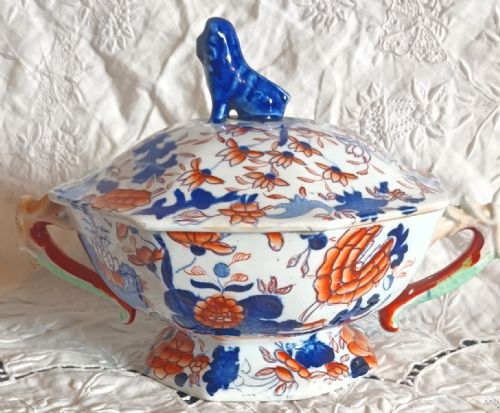
Enamel colours and gold leaf or gilt highlights were introduced over the glaze to enrich specific patterns like the Japan Basket and floral motifs. Potters shaped utilitarian and decorative vessels alike, adding functional elements such as lion head covers and matching bases to complete the service.
Regency China Tureen Retail Price Guide 2026
Typical asking prices for regency china tureen among the pieces listed under this phrase on Sellingantiques today, from the lower quarter to the upper quarter. They describe what is for sale here now, not the wider market.
Several tureens incorporate spirited animal details, including matching lion head covers and elephant design transfer prints.
Assessing quality in early nineteenth-century tureens
Quality in these vessels rests upon the crispness of the transfer printing and the precision of any hand-applied enamel work or gilding. Subtleties in the modelling of handles, covers, and animal-head motifs distinguish standard production pieces from more ambitious factory output.
The integrity of the ceramic body and the uniformity of the glaze application determine the enduring condition and visual harmony of the tureen. Superior examples maintain sharp pattern registration and a clean, unblemished ceramic ground across both base and cover.
Minton·Mason s Ironstone·Flight Barr And Barr·Wedgwood·Rogers
The Regency China Tureen Glossary
- Ironstone
- A dense, durable type of earthenware patented in the early nineteenth century to imitate Chinese porcelain while offering greater resistance to breakage. It formed the heavy body for many large serving vessels and soup tureens of the period.
- Transfer printing
- A mechanical method of decorating ceramics by transferring an engraved copperplate design onto paper and then onto the unglazed or glazed ceramic body. This technique allowed for intricate, repeatable blue and white or polychrome scenes.
- Chinoiserie
- A European artistic style that reflected Chinese decorative motifs and imaginary landscapes, frequently adapted by English potteries during the Georgian and Regency eras. It appears on tureens through stylised garden scenes and exotic architectural elements.
- Sauce tureen
- A small covered serving vessel designed specifically for holding and presenting gravies or sauces at the dining table. These pieces often included an integral or matching stand to protect table surfaces.
Regency China Tureen: Frequently Asked Questions
What is a regency china tureen?
A regency china tureen is a covered ceramic vessel created during the early nineteenth century to serve soup, sauce, or vegetables at formal dining tables.
These pieces reflect the decorative styles and ceramic technologies of the Georgian and Regency periods, utilising earthenware, ironstone, or porcelain.
How were these tureens used?
They functioned as central serving pieces on the dining table, designed to keep liquids and vegetables warm between the kitchen and the dining room.
Sauce tureens held gravies for individual meats, while larger soup and vegetable tureens served multiple diners from the centre of the table.
How do I care for antique ironstone?
Antique ironstone and ceramic tureens require gentle hand washing with mild soap and warm water to protect their historic glazes and enamel details.
Harsh detergents, abrasive scrubbers, and modern dishwashers should be strictly avoided to preserve the integrity of the nineteenth-century ceramic body.
How can I date a regency tureen?
Dating relies on identifying factory marks, ceramic bodies such as patent ironstone, and decorative methods like blue and white transfer printing.
Stylistic cues from the Georgian and Regency eras, combined with specific pattern names, help narrow the manufacture window to the early decades of the nineteenth century.