





Regency Caned Library Chair
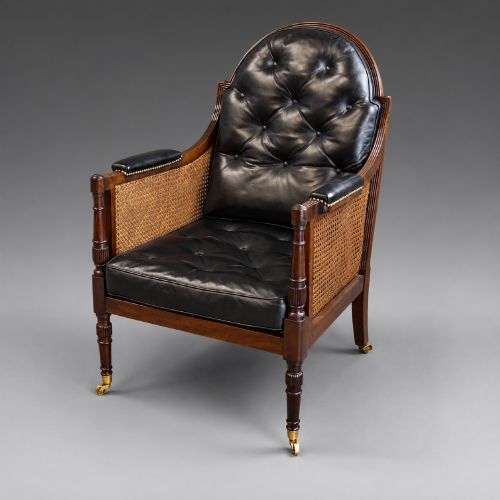
A regency caned library chair offers deep-seated comfort and architectural presence, combining period craftsmanship with practical seating.
Regency Caned Library Chair
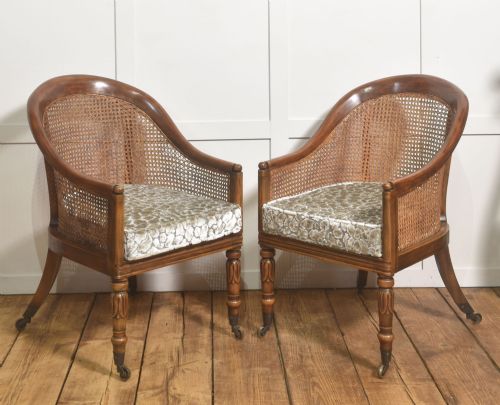
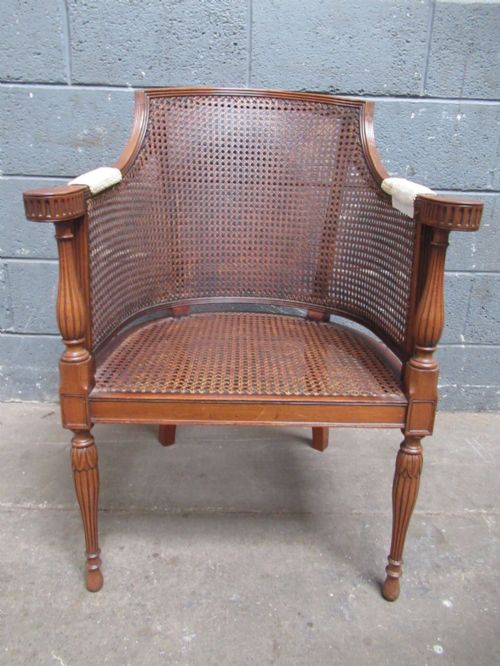
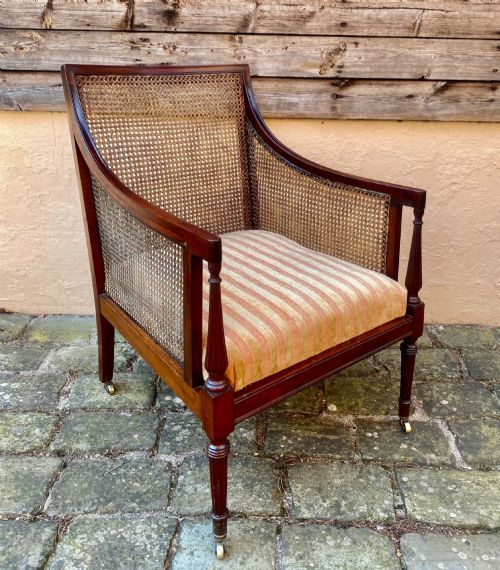
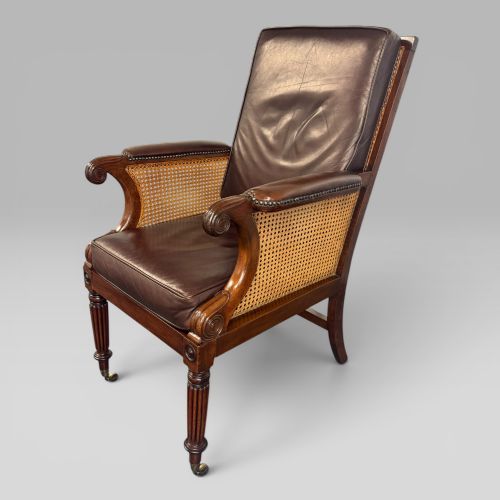
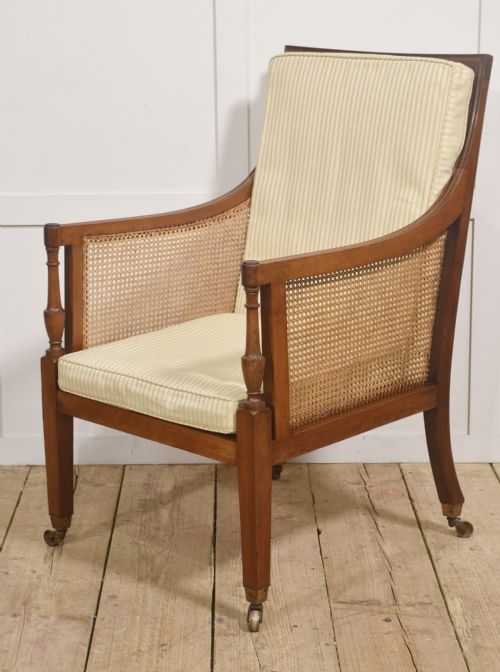
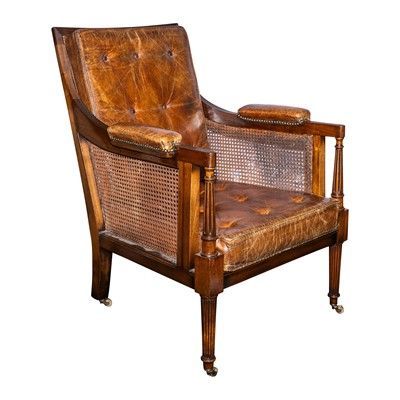
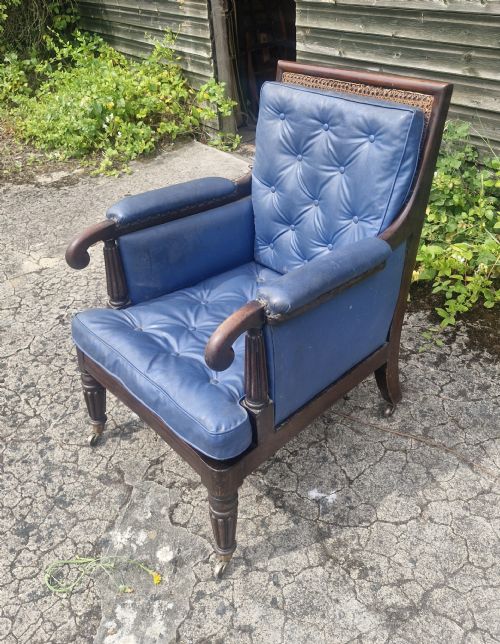
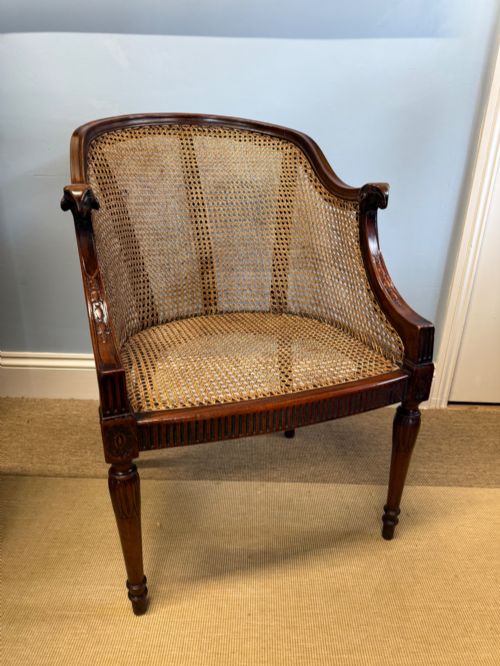
A regency caned library chair is a substantial armchair designed for reading and study, characteristically featuring low-slung proportions and enclosed sides. The form bridges the Georgian and William IV eras, emerging most frequently in Regency and nineteenth century iterations across this selection.
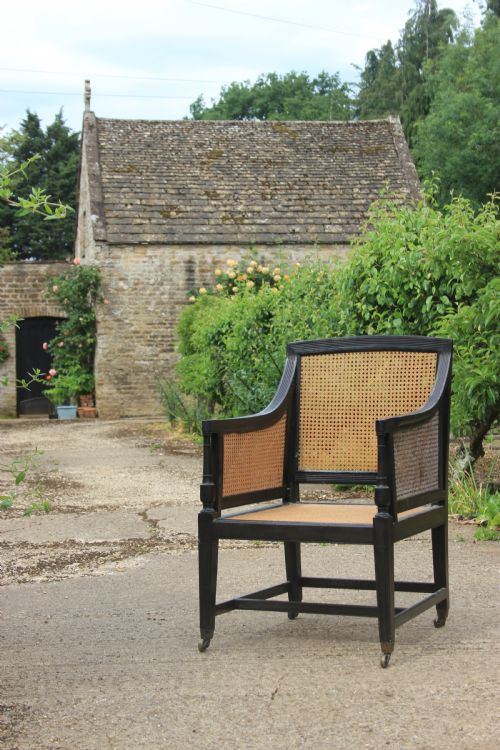
Makers utilised various timber frames, most notably mahogany, rosewood, and ebonised or faux rosewood finishes, fitted with woven cane panels. Certain examples incorporate ingenious metamorphic mechanics, converting swiftly from a comfortable armchair into a set of library steps.
The profile ranges from tub-shaped seats to generous bergère armchairs, occasionally appearing in pairs. While many date to the early nineteenth century, subsequent revivals from the Edwardian period and the early twentieth century continue the traditional aesthetic.
How They Were Made
Cabinetmakers constructed the foundational frames primarily from solid mahogany or rosewood, sometimes applying parcel gilt highlights or paint finishes to simulate exotic hardwoods. These timbers provided the structural integrity required to support both the user and the tension of the woven cane.
The characteristic caned panels, or bergère work, involved hand-weaving natural rattan cane through drilled holes around the frame apertures. This technique offered a resilient, breathable surface that predated modern sprung upholstery.
Secondary materials such as brass fittings, leather writing or cushion inserts, and velvet or fabric squab cushions completed the construction. Structural complexity reached its peak in metamorphic library chairs, where pivoting wooden hinges and folding steps demanded precise carpentry.
Regency Caned Library Chair Retail Price Guide 2026
Typical asking prices for regency caned library chair among the pieces listed under this phrase on Sellingantiques today, from the lower quarter to the upper quarter. They describe what is for sale here now, not the wider market.
Some library chairs cleverly hide a staircase inside their cushions.
What Varies in Quality
The refinement of the wooden frame carving and the generosity of proportions dictate the standing of an individual piece. Better examples display well-drawn curves, crisp turnings, and sophisticated cabinetwork rather than blocky, uninspired joinery.
The integrity and fineness of the cane work distinguish higher tiers of production. Tightly woven, uniform cane panels demonstrate superior hand-craftsmanship compared to loose or coarse modern replacements.
Attribution or association with prominent workshops like Gillows elevates certain chairs above standard anonymous production. Original surfaces, untouched patina, and fully functional metamorphic mechanisms further separate exceptional library chairs from ordinary survivors.
Gillows·Richard Hicks Bridgens
The Regency Caned Library Chair Glossary
- Bergère
- An enclosed upholstered or caned armchair with solid sides, originating in France and adopted by British makers during the Regency. These seats typically feature rounded backs flowing directly into the arms.
- Caning
- The practice of weaving rattan strips to form a light, supportive mesh for seats and backrests. This method provides flexible support while maintaining a visually transparent profile.
- Metamorphic
- Describing furniture designed to transform into an entirely different object, such as a library armchair converting into library steps. Such dual-purpose items reflect Regency ingenuity and space-saving utility.
- Faux Rosewood
- A painted surface treatment, also known as simulated rosewood, used to mimic expensive exotic timber on cheaper woods like beech or mahogany. Artisans applied graining combs and glazes over a prepared ground to achieve the desired figure.
- Parcel Gilt
- The application of gold leaf to specific carved details or highlights against a contrasting painted or polished wood background. This decorative technique accentuates architectural mouldings and floral motifs.
Regency Caned Library Chair: Frequently Asked Questions
What defines a library bergère?
A library bergère is a wide, low armchair featuring fully caned back and side panels designed for comfortable reading. These seats often include loose squab cushions for added padding.
They emerged strongly during the Regency period and remained popular through the nineteenth century, combining sturdy timber frames with breathable woven rattan.
How do metamorphic library chairs work?
Metamorphic chairs contain concealed hinges and pivots that allow the seat back and frame to unfold securely into a set of sturdy steps. This ingenuity served domestic libraries where high shelves required physical access.
Craftsmen engineered these mechanisms discreetly so the chair retained its formal elegance when closed.
Are these chairs comfortable for daily use?
Yes, provided they retain a well-fitted squab cushion and the cane work remains taut and supportive. The low, deep proportions were specifically engineered for relaxed seated reading.
Modern owners frequently pair them with custom cushions to suit contemporary comfort preferences without altering the antique frame.
How can I tell a Regency chair from a later revival?
Distinguishing the original Regency period from Edwardian or twentieth-century revivals involves examining timber ageing, joinery construction, and hand-cut elements. Genuine early nineteenth-century pieces display period-specific tool marks and timber shrinkage.
Later copies often employ standardised machine joinery and possess a different weight and patina.