
Regency Cane Seat
A regency cane seat brings architectural line and open, springy comfort to a room.
Regency Cane Seat
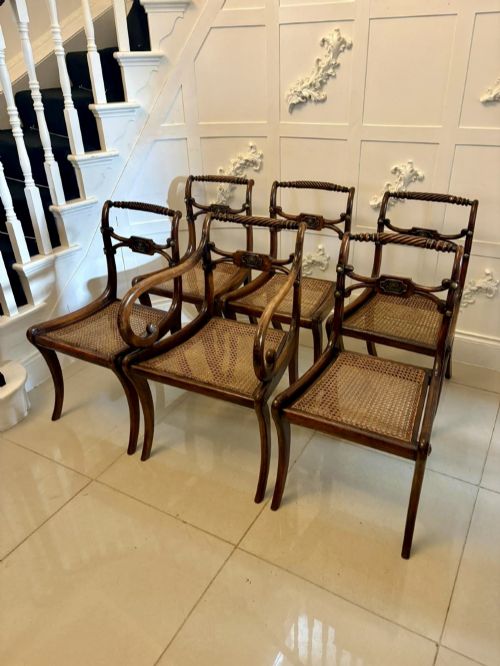
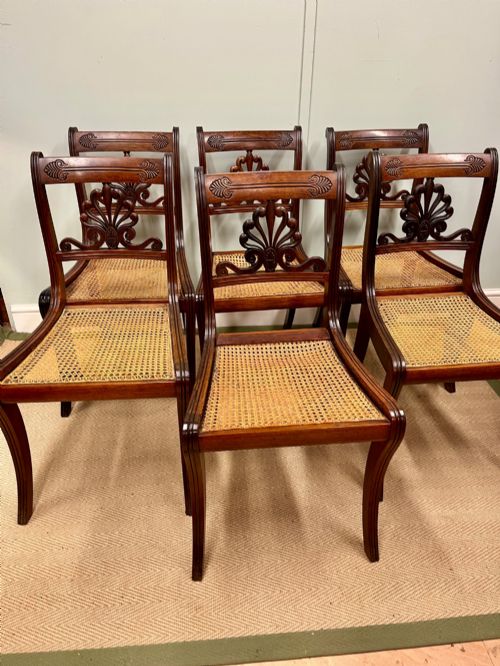
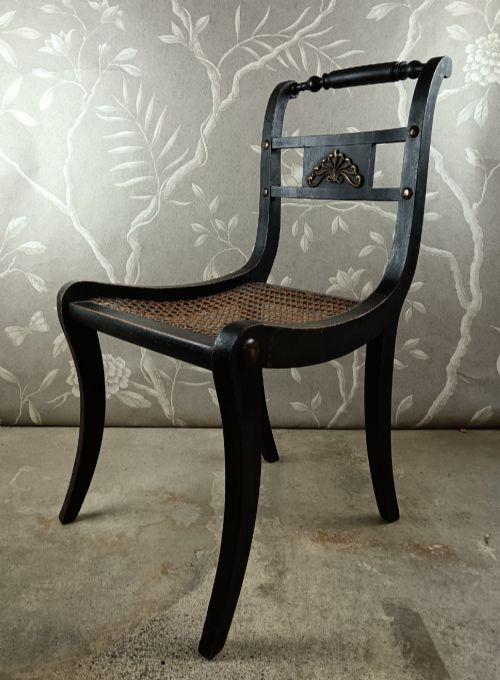
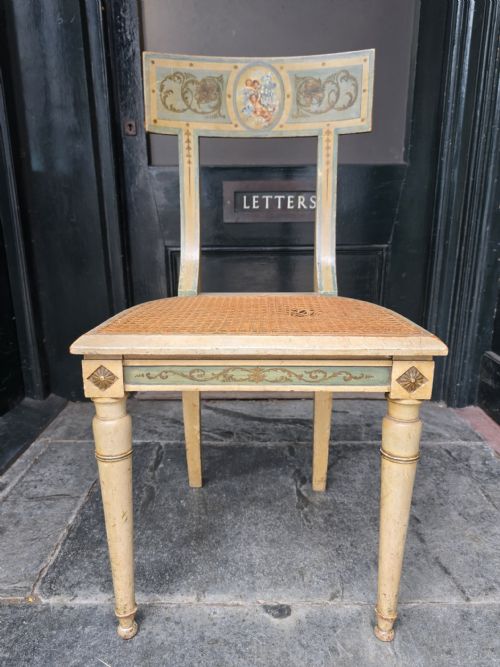
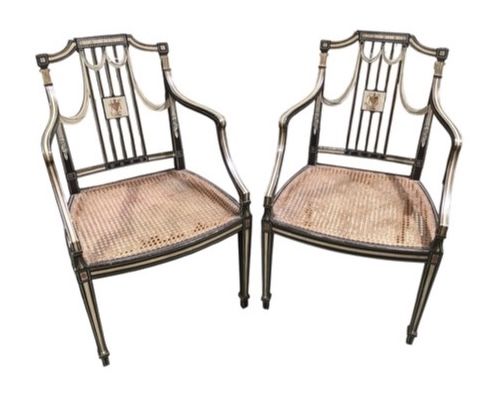
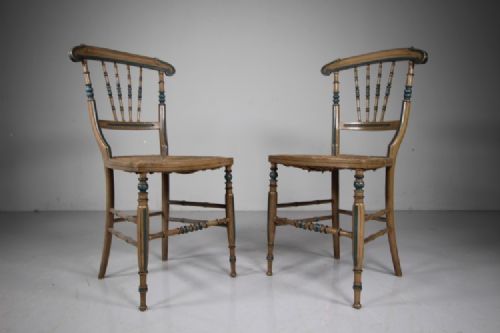
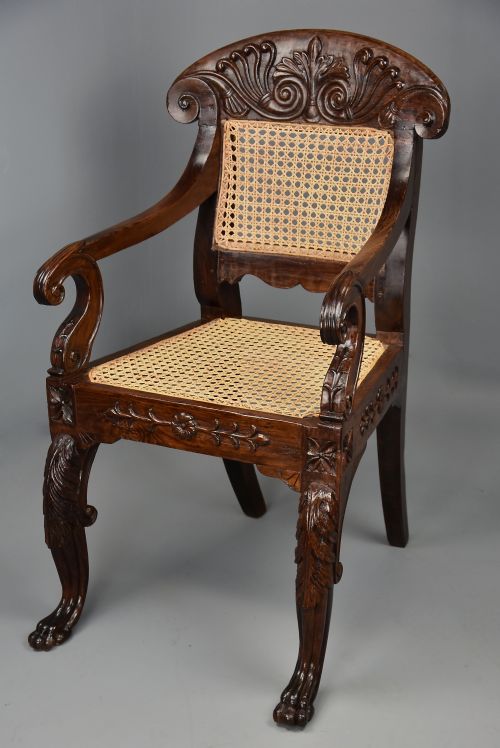
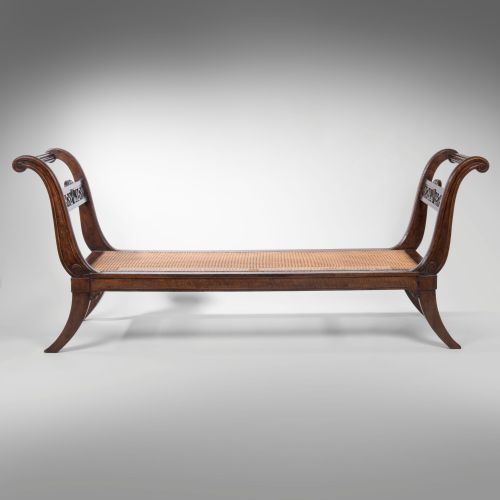
When you search for regency cane seat, you encounter seating designed for lightness and classical proportion, spanning dining chairs, armchairs, daybeds, and window seats. The forms draw on ancient Greek and Roman models, featuring sabre legs, klismos backs, and X-frame structures that lighten heavy timber frames.
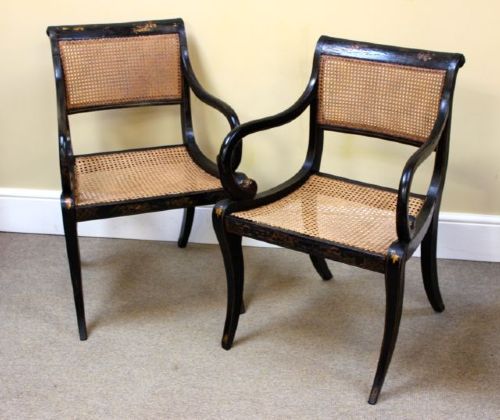
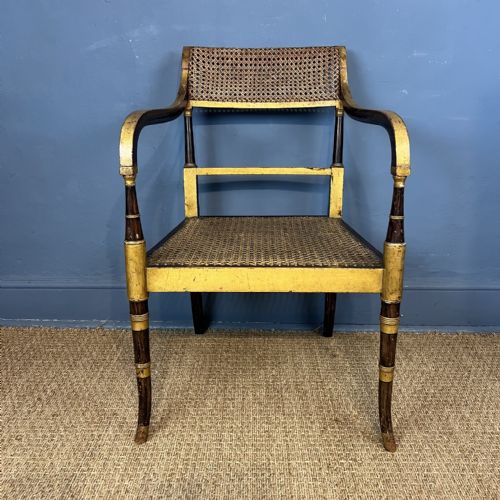
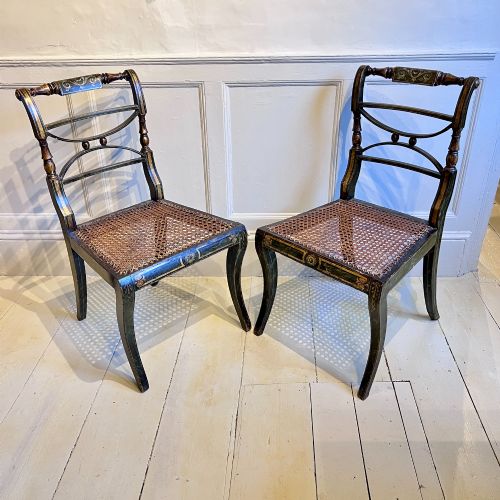
You meet period originals alongside later revivals from the nineteenth and early twentieth centuries. Mahogany, rosewood, and ebonised woods dominate the construction, often enhanced with painted decoration or parcel gilding to catch the light.
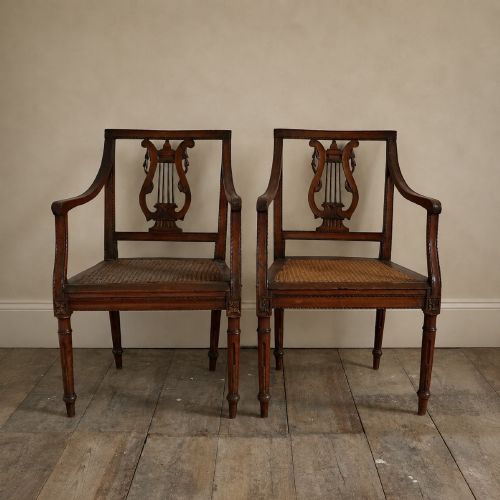
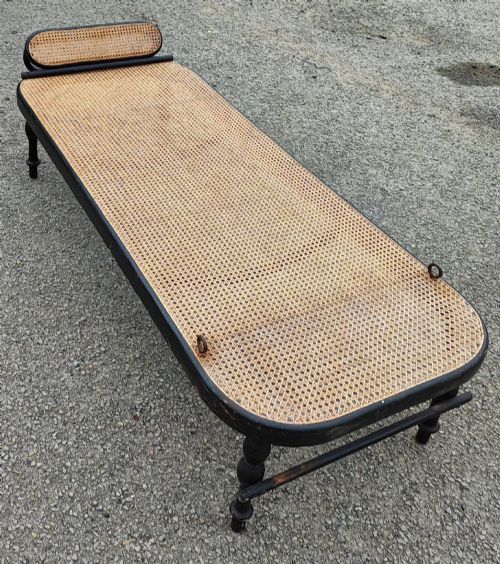
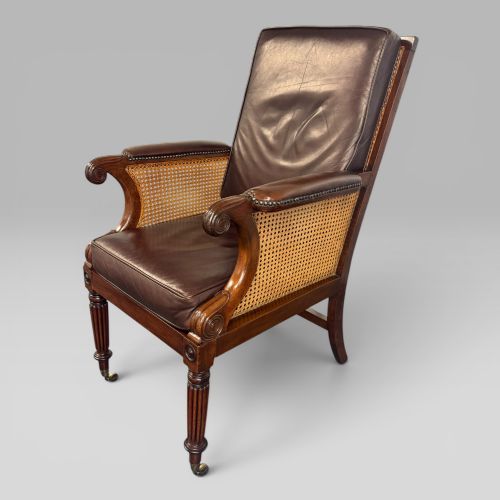
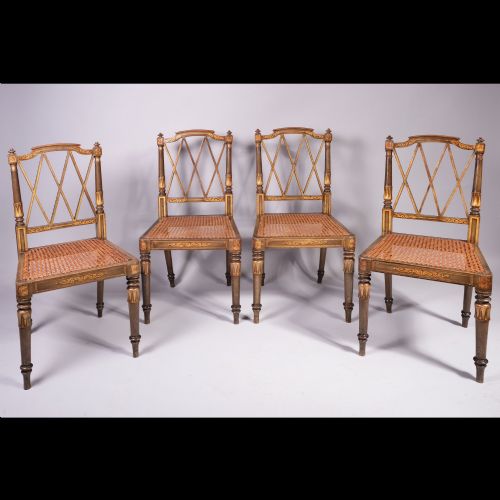
Dining chairs appear as single sets or carvers with elbow rests, while library armchairs and bergères provide deeper, enclosed seating. Daybeds and window seats extend the repertoire for long, low lounging spaces within a drawing room or hallway.
Materials and Construction Methods
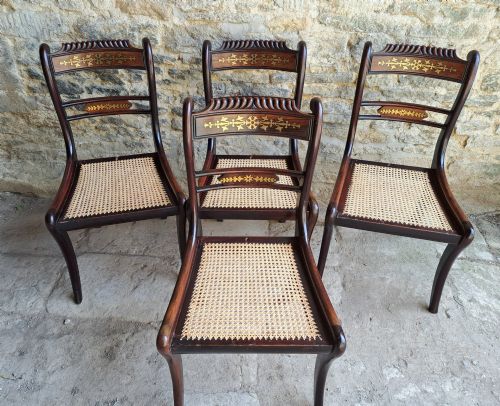
Cabinetmakers utilised dense tropical hardwoods such as mahogany and rosewood, alongside beech treated with faux rosewood paint finishes or ebonisation. Brass inlay, parcel gilding, and hand-painted motifs were applied to plain timber surfaces to create rich decorative contrast.
The cane work itself relies on split rattan woven through holes drilled around the perimeter of the seat frame. This provides a resilient, breathable mesh surface that supports the sitter without requiring thick upholstery.
The inventory spans the Regency era, Georgian period, and later twentieth-century revivals.
Distinguishing Quality Across the Range
The fineness of the cane work dictates the initial impression of quality, with tighter, more uniform weaves requiring greater skill from the artisan. The crispness of carved details on sabre legs, crest rails, and arm supports reveals the time invested by the original maker.
Subtle touches such as brass stringing inlaid flush into rosewood or mahogany elevate a piece above standard utility furniture. The integration of structural integrity with light, flowing proportions marks out the superior examples.
The Regency Cane Seat Glossary
- Cane
- Split rattan woven into a tight mesh pattern to form a resilient seat or back panel. This material allows air circulation and maintains a light visual profile.
- Bergère
- An enclosed upholstered or caned armchair with solid wooden sides. It typically accommodates a loose squab cushion for added comfort.
- Sabre leg
- A concave-curving chair leg that tapers toward the foot, mimicking the shape of a cavalry sabre. It is a defining feature of classical revival seating.
- Parcel gilt
- A surface treatment where selected carved details or mouldings are highlighted with thin sheets of gold leaf. This technique emphasises specific architectural lines against a dark wood or painted ground.
- Faux rosewood
- A painted finish applied to cheaper timbers like beech to imitate the rich grain and deep colour of genuine rosewood. Artisans used feather brushes and glazes to replicate natural figuring.
Regency Cane Seat: Frequently Asked Questions
How do I care for a cane seat?
Keep caned furniture away from direct heat sources and radiators to prevent the natural rattan from drying out and snapping. Lightly dampening the underside of the cane periodically helps maintain its tension and elasticity.
Avoid placing heavy point loads on the centre of the mesh. Using a loose squab cushion distributes weight evenly and extends the life of the weave.
Can broken cane be repaired?
Traditional hand-woven cane can be completely re-woven by a skilled restorer using matching rattan strands. The process involves threading the material through existing holes in the seat rail in the historic multi-strand pattern.
Professional re-caning restores both the structural integrity and the authentic appearance of the piece. Modern pre-woven cane sheets are rarely appropriate for period antiques.
Were these chairs originally painted?
Many seating pieces from this era were finished with decorative paint, japanning, or simulated rosewood rather than polished natural timber. These painted surfaces were often embellished with delicate floral motifs or gilt lining.
Surviving examples with original painted decoration are prized for retaining their decorative surface schemes. Later revivals also adopted painted finishes to capture the same classical lightness.
What is the difference between a single chair and a carver?
Single chairs feature an open seat frame with no armrests, designed to sit neatly around a dining table or against a wall. Carvers include elbow rests and broader proportions, traditionally placed at the head of a dining table or used as occasional armchairs.
Dining sets frequently combined a majority of single chairs with one or two matching carvers. Both shared the same leg styling and caned seat construction.