



Cane Back Library Chair
A cane back library chair brings low-slung comfort and rich timber frames to a study, offering classic seating built for long hours of reading.
Cane Back Library Chair
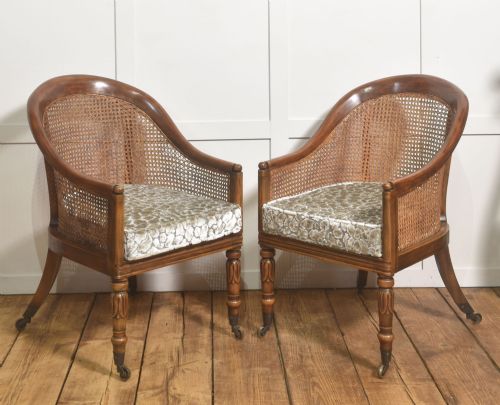
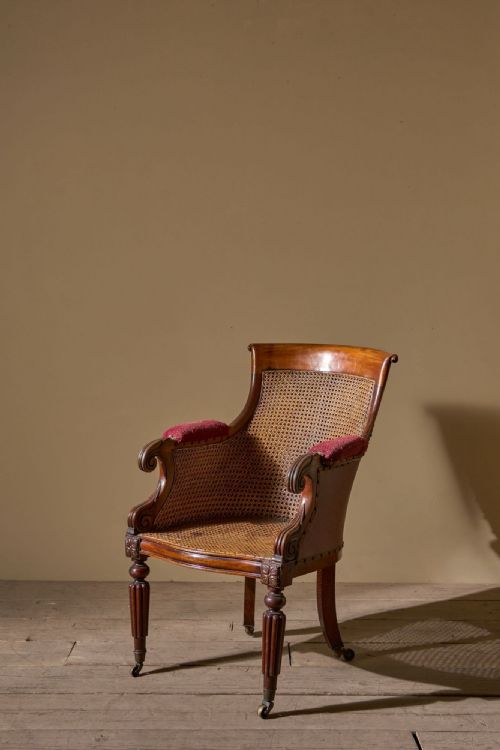
A cane back library chair is a sturdy armchair designed for reading rooms and studies, typically featuring a low seat and supportive armrests. The form appears primarily across nineteenth-century periods, including Regency, William IV, and Victorian eras.
Most examples on this page are constructed from mahogany, though walnut, ebonised wood, and faux rosewood also appear. These seating pieces often take the form of bergère armchairs with woven cane panels on the back and sometimes the sides.
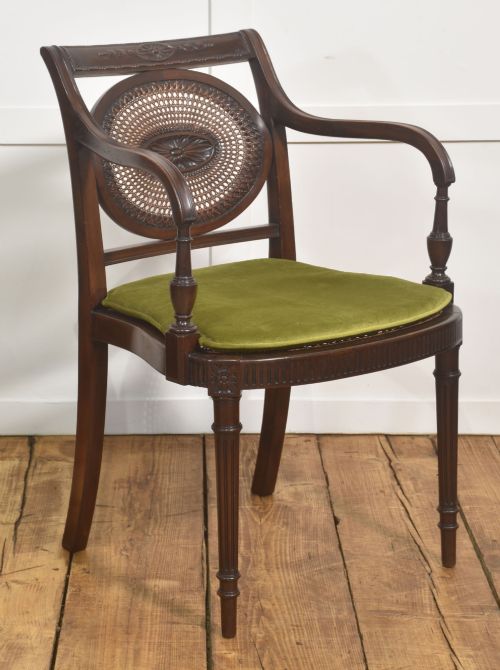
Makers and workshops of the period produced variations ranging from simple country house seating to sophisticated metamorphic designs that convert into library steps. Revival styles from the early twentieth century, such as Sheraton Revival and Regency Revival, also feature prominently.
Materials and construction methods
Frames are turned and carved from dense hardwoods like mahogany and walnut, providing a strong structural skeleton to support the woven panels. Cabinetmakers shaped the armrests and legs to match prevailing aesthetic movements, utilising brass details where appropriate.
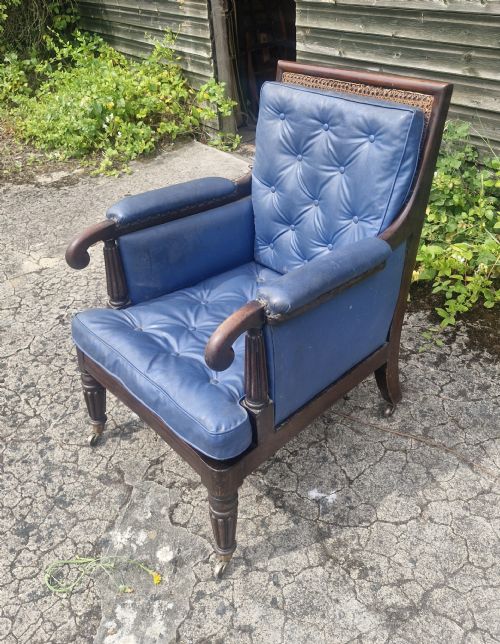
Caning and rattan cane are woven tightly into frames to create flexible, breathable backrests and seats. Many of these armchairs are fitted with loose squab cushions upholstered in leather, fabric, or velvet for additional comfort.
Listings feature nineteenth-century and early twentieth-century pieces, spanning Regency, William IV, Victorian, and Sheraton Revival styles.
Assessing quality and finish
The finesse of the timber turning and the crispness of any carved detailing separate standard seating from exceptional library chairs. Better examples display carefully selected mahogany grain and tight, uniform hand-woven cane panels.
Structural integrity of the joints and the original proportions of the frame dictate the overall caliber of the piece. Subtle variations in hardware, such as brass castors or mounts, indicate the original tier of production.
Gillows
The Cane Back Library Chair Glossary
- Bergere
- An enclosed armchair with a wooden frame where the back and sides are filled with cane or wickerwork. These chairs usually include a fitted seat cushion.
- Caning
- A method of weaving rattan or cane strips into open mesh panels for chair backs and seats. It provides a resilient and breathable surface.
- Metamorphic furniture
- Pieces designed to transform into secondary objects, such as an armchair that unfolds into a set of library steps. This clever engineering was popular in nineteenth-century studies.
- Ebonised wood
- Timber treated with a dark stain or finish to imitate ebony. This technique created a striking, dark surface popular during the Regency period.
- Squab cushion
- A loose, upholstered cushion placed over a caned or webbed chair seat. It provides comfort while allowing the rigid frame beneath to remain visible.
Cane Back Library Chair: Frequently Asked Questions
What is a bergere chair?
A bergere is an upholstered armchair with enclosed sides and a cane back panel. The design originated in France and became popular in British libraries during the Regency and Victorian periods.
These chairs combine a rigid wooden frame with woven cane to offer both firm support and a lighter visual presence than fully stuffed armchairs.
How do I care for cane seating?
Cane requires moderate humidity to prevent the natural fibres from drying out and snapping. Light dusting and occasional damp wiping keep the woven panels in good condition.
Avoid placing these chairs in direct sunlight or next to heat sources, which can cause the rattan to become brittle over time.
Are these chairs comfortable for reading?
Library chairs are engineered with low seats and supportive armrests specifically for long hours of reading. The addition of loose leather or fabric cushions ensures comfort during extended use.
The flexible nature of cane backrests also allows the material to conform gently to the sitter.