

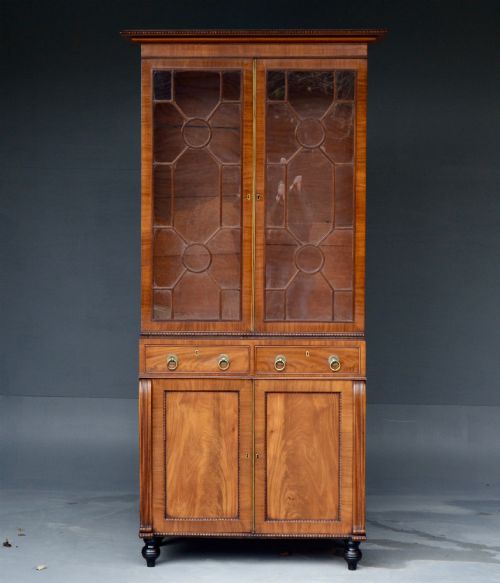
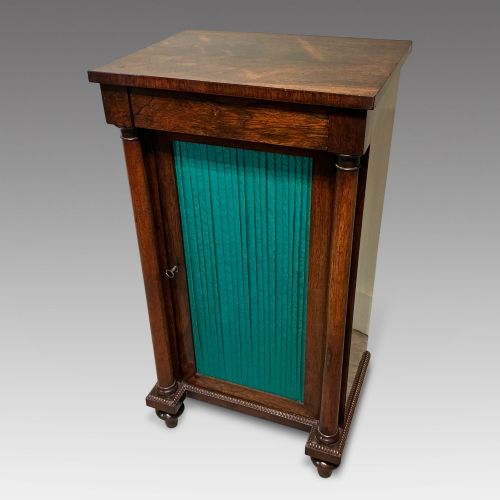
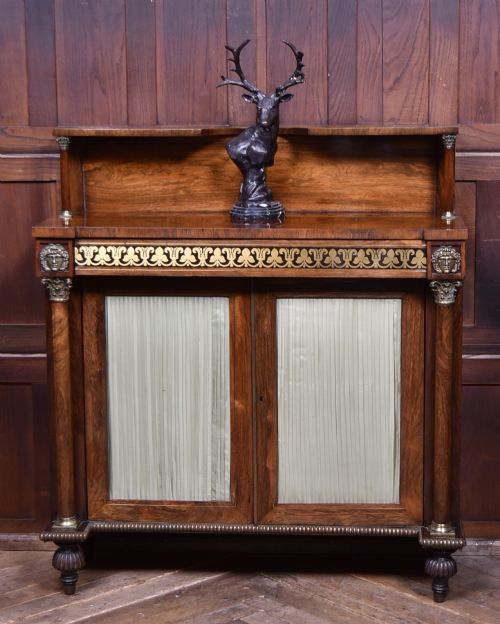
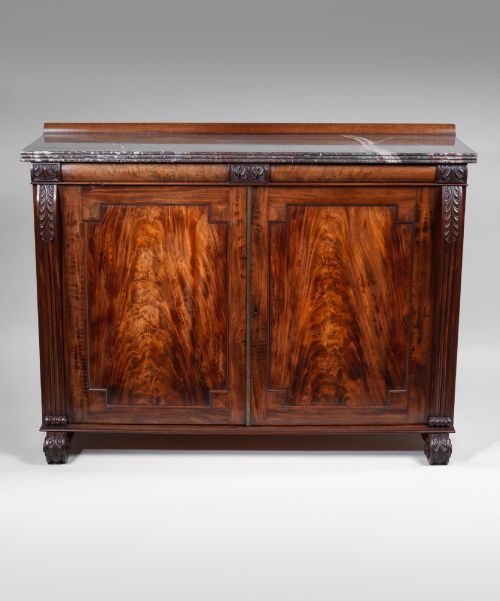
Regency Cabinet with Doors
A regency cabinet with doors brings architectural restraint and fine timber grain into a room, offering enclosed storage alongside display.
Regency Cabinet with Doors
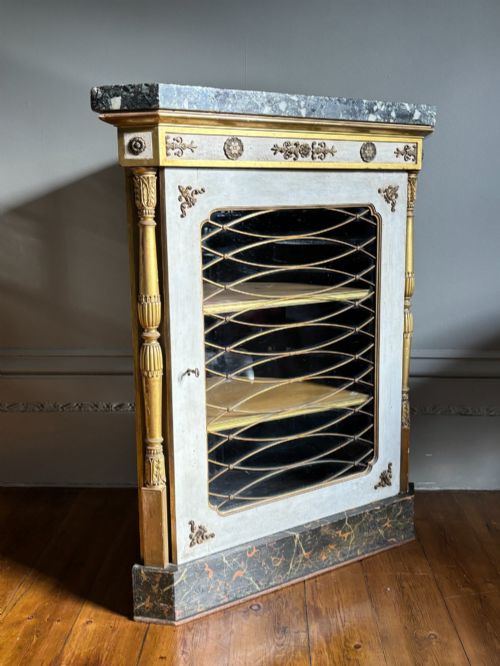
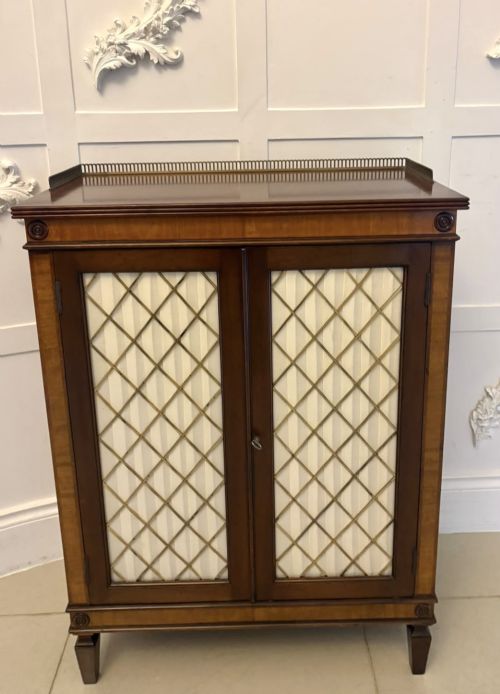
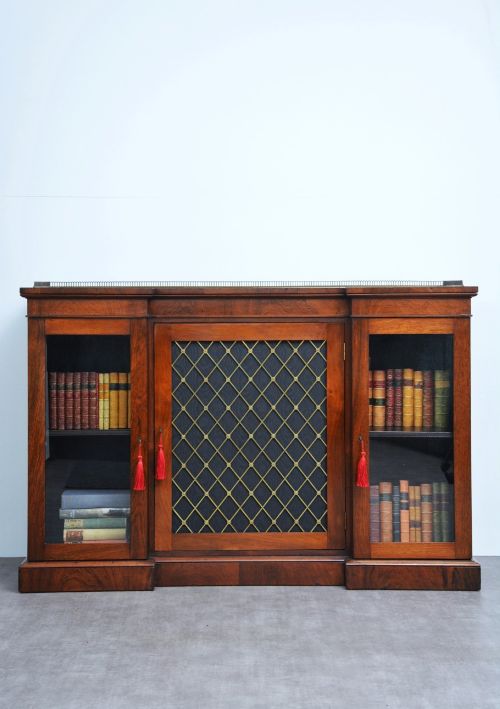
When you search for a regency cabinet with doors, you encounter case furniture designed to hold books, china or papers behind timber or glass panels. These pieces span the Regency, Georgian and Victorian periods, drawing on styles from William IV to Gothic Revival.
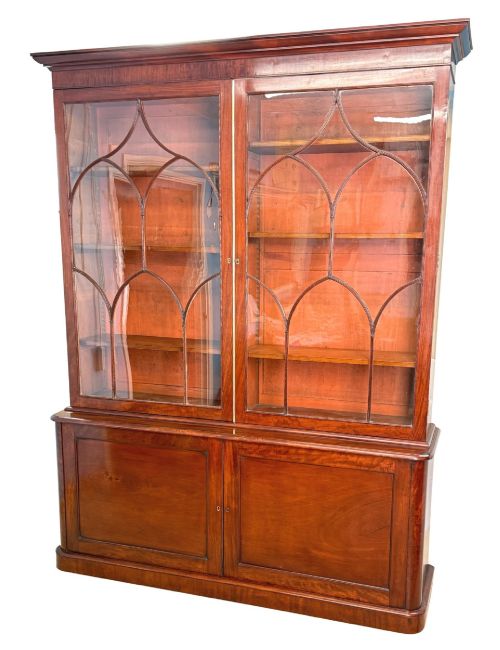
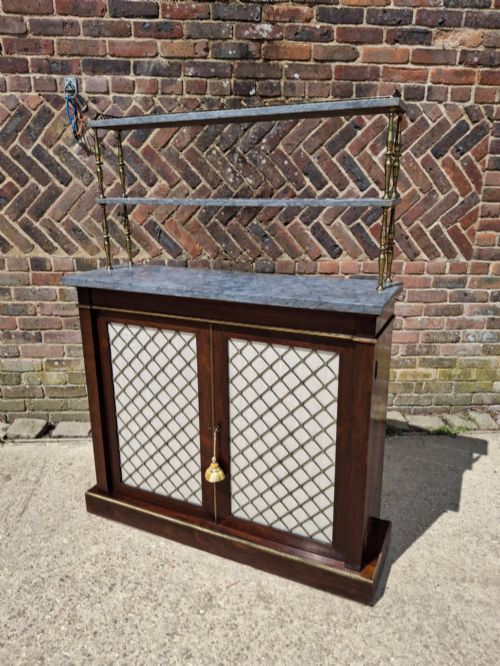
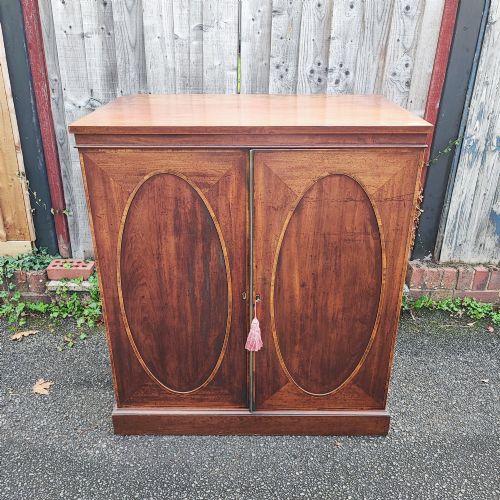
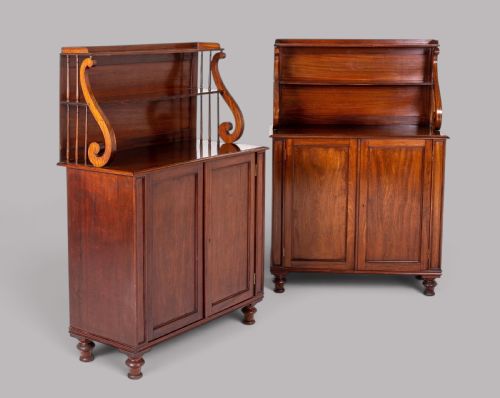
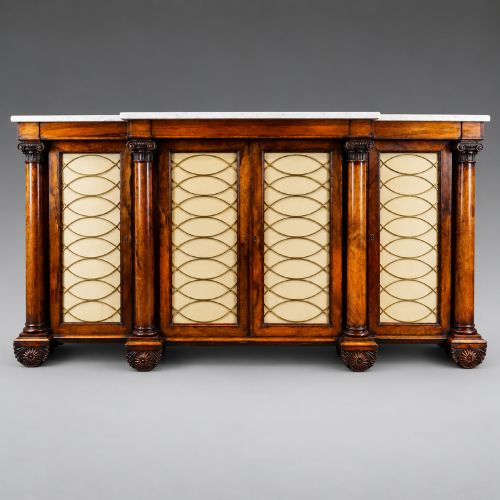
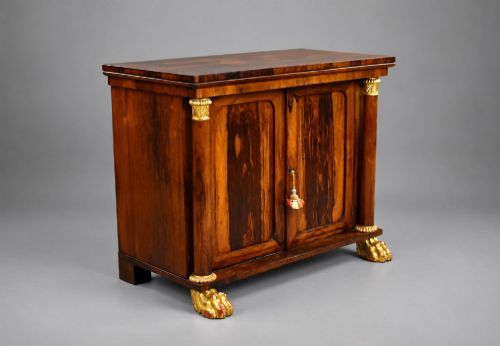
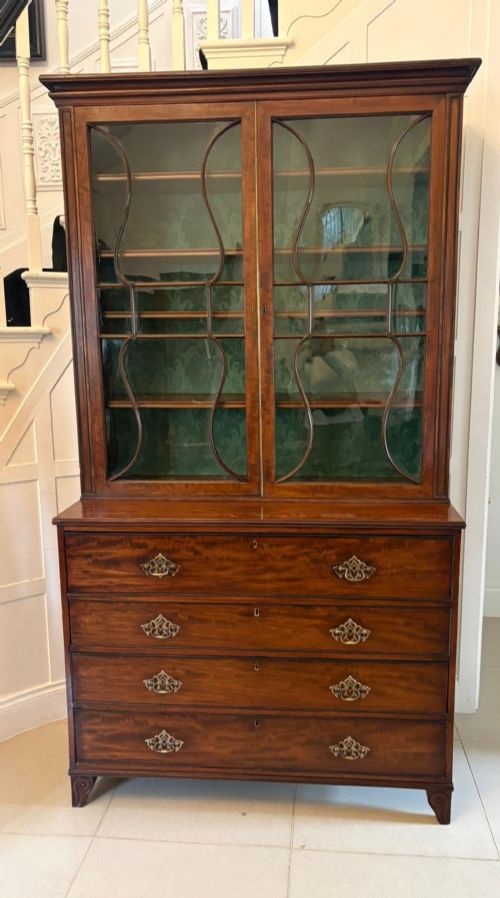
The selections here run from small mahogany side cabinets and rosewood chiffoniers to large breakfront bookcases with glazed doors. You also find corner cupboards, secretaire bookcases with fitted interiors, and walnut side cabinets.
Most examples hail from the nineteenth century, utilising dense native and exotic timbers shaped with architectural cornices, brass galleries and panelled doors.
How they were made
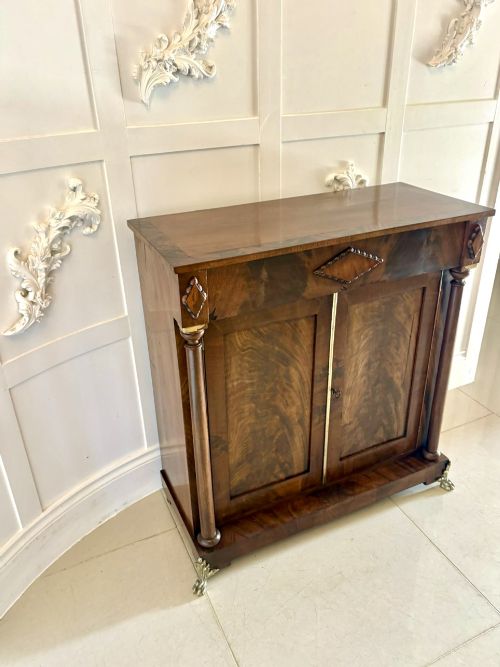
Cabinet makers built these pieces using solid timbers and decorative veneers over secondary woods, applying flame mahogany, burr walnut, rosewood and goncalo alves to prominent surfaces. Timber selection governed the visual impact, often enhanced by simulated rosewood finishes or inlaid decoration.
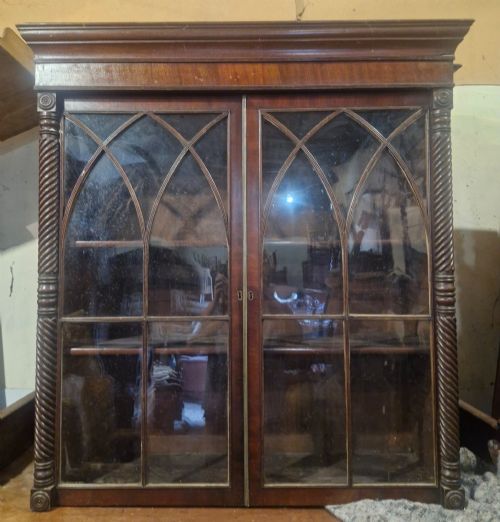
Joinery relied on traditional framing for panelled doors and fitted interiors, while brass inlay, brass grilles and brass galleries added metallic contrast to the dark wood. Glazed doors required precise muntin work to hold individual panes securely within the bookcase frames.
Regency Cabinet with Doors Retail Price Guide 2026
Typical asking prices for regency cabinet with doors among the pieces listed under this phrase on Sellingantiques today, from the lower quarter to the upper quarter. They describe what is for sale here now, not the wider market.
One clever Welsh oak bread and cheese cupboard preserves ventilation perforations, keeping dairy cool before the age of refrigeration.
What varies in quality
Quality rests on the selection and matching of timber veneers, such as symmetrical flame mahogany or figured rosewood across large door panels. Superior examples exhibit refined brass detailing, crisp carving on mouldings and balanced proportions that reflect architectural proportions.
Interior execution also separates standard pieces from finer ones, visible in fitted secretaire drawers with multiple compartments and well-finished adjustable shelving. The integration of original hardware, working locks with keys and clean structural joinery elevates a piece above simpler vernacular items.
James Winter & Sons
The Regency Cabinet with Doors Glossary
- Chiffonier
- A low sideboard or cabinet featuring enclosed storage beneath a shelf or superstructure, popular during the Regency and William IV periods.
- Secretaire
- A desk disguised as a drawer or cabinet, dropping down to reveal small drawers and pigeonholes for correspondence.
- Breakfront
- A piece of furniture whose central section projects forward from the flanking wings, creating a layered architectural facade.
- Goncalo Alves
- A dense exotic hardwood with striking dark brown and golden-brown figuring, utilised on high-status Regency cabinets.
- Glazed
- Fitted with transparent glass panes in the doors to allow the display of books or collections while protecting them from dust.
Regency Cabinet with Doors: Frequently Asked Questions
How do I style a cabinet with doors in a modern room?
Use a mahogany or rosewood cabinet to anchor a living space or dining room, letting the dark timber contrast against neutral walls.
Style the top surface with simple lamps or ceramics, and keep the interior shelves organised with books arranged by colour or size.
What is the difference between a chiffonier and a side cabinet?
A chiffonier typically includes enclosed cupboard doors below a low gallery or tier, originally designed for dining rooms to hold silver and linen.
A side cabinet offers general enclosed storage without the specific stepped superstructure often found on early nineteenth-century chiffoniers.
How do I care for rosewood and mahogany furniture?
Keep these timber pieces away from direct sunlight and strong heat sources to prevent the veneers from drying out or splitting.
Dust them regularly with a soft, dry cloth and apply natural beeswax sparingly when the wood appears dry.
Can I adjust the shelves inside these antique bookcases?
Many nineteenth-century bookcases feature fixed wooden shelving built into the carcase during original construction.
Some later or finer examples include adjustable display shelves supported by wooden ratchets or brass pins.