



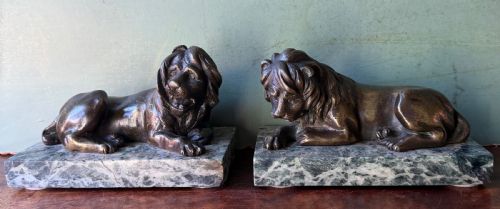


Regency Bronze Figure
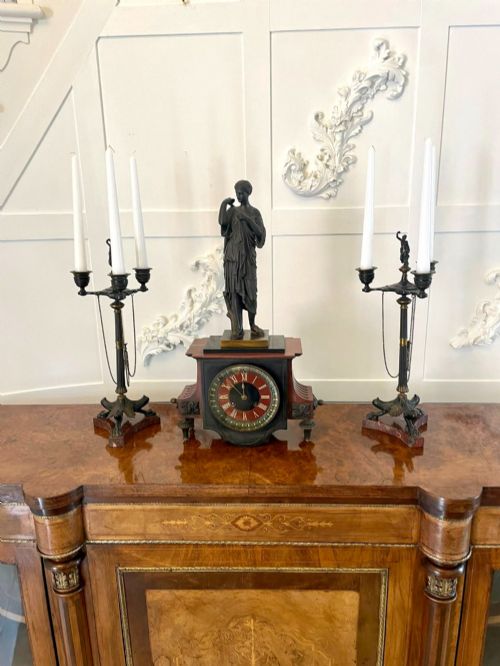
A regency bronze figure brings heavy neoclassical presence to a room, cast in dark metal and often mounted on marble.
Regency Bronze Figure
A regency bronze figure encompasses sculptural works, mantel clocks, and figural lamp bases created during the nineteenth century and subsequent revival periods. These pieces draw heavily on classical antiquity, French Empire taste, and Egyptian revival motifs.
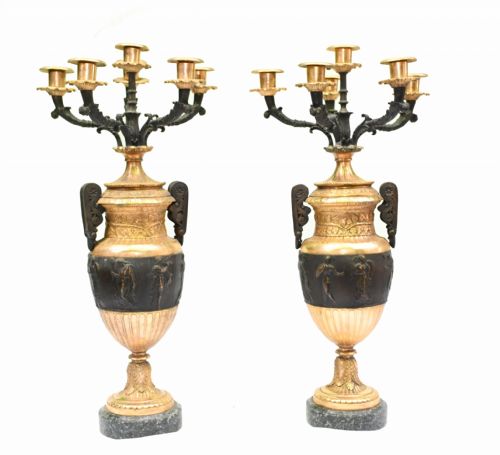
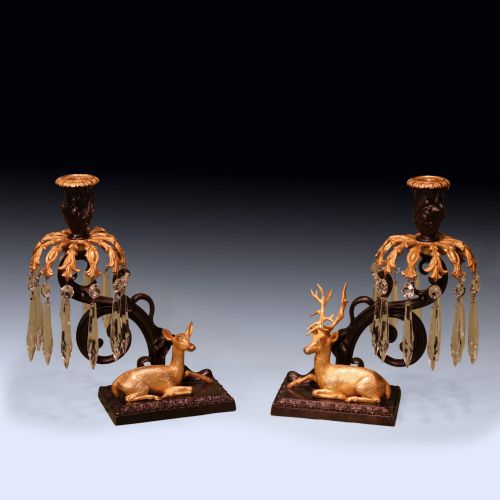
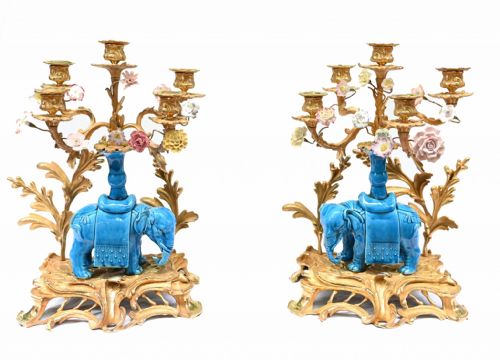
The most common forms encountered on this page include pairs of recumbent sphinxes, lions, poodles, and mythological subjects mounted upon marble plinth bases. Makers also translated these figures into functional items such as candelabra, candlesticks, and torcheres.
The aesthetic bridges the strict neoclassical discipline of the early nineteenth century with later Victorian interpretations and Grand Tour souvenirs. Collectors meet both patinated dark bronze and gleaming gilt bronze or ormolu across these varied domestic objects.
Materials and Construction
Foundry work relies on bronze, patinated bronze, and brass, frequently combined with contrasting elements of gilt bronze and ormolu. These metal components are often paired with veined marble bases, plaster, glass, and porcelain elements.
Regency Bronze Figure Retail Price Guide 2026
Typical asking prices for regency bronze figure among the pieces listed under this phrase on Sellingantiques today, from the lower quarter to the upper quarter. They describe what is for sale here now, not the wider market.
Materials documented across the inventory include bronze, patinated bronze, marble, ormolu, brass, porcelain, glass, and plaster.
Assessing Quality in Bronze Work
The crispness of the chasing distinguishes superior castings from softer, more generalized production. Skilled post-casting work preserves fine lines in hair, musculature, and architectural mounts without smoothing away original definition.
The harmony between the bronze figure and its mount determines the success of the composition. Dense, heavy marble bases and precise ormolu highlights indicate higher standards of workshop execution.
Pierre Philippe Thomire·Thomas Hope·Humphrey Hopper
The Regency Bronze Figure Glossary
- Ormolu
- Gilded bronze produced by applying an amalgam of gold and mercury to a metal base and heating it. This technique creates a rich golden surface found on many Regency decorative objects.
- Patinated bronze
- Metal treated with chemical solutions to produce a controlled dark surface colour. This finish highlights sculptural contours by creating contrast in recessed areas.
- Sphinx
- A mythical creature with a human head and a lion body, frequently utilised in Regency and Egyptian Revival decorative arts. These figures often appear as pairs supporting candelabra or serving as mantle ornaments.
- Torchere
- A tall ornamental stand or candlestick designed to hold a light source. In this collection, they appear as bronze figures or lamp standards.
- Neo-classical
- An artistic movement reviving the styles of ancient Greece and Rome. It dominates the design vocabulary of the nineteenth-century pieces shown here.
Regency Bronze Figure: Frequently Asked Questions
How do I clean a bronze figure?
Dust the surface gently with a soft, dry brush to prevent accumulation in recessed areas.
Avoid using water, chemical polishes, or abrasive cloths that can strip the original patina.
Are these figures solid bronze?
Most figural castings are hollow-cast to manage weight and metal usage during production.
They are frequently mounted onto solid marble plinths or weighted bases for stability.
What is the difference between bronze and ormolu?
Bronze is the copper alloy used to cast the primary sculptural body of the piece.
Ormolu refers specifically to the gilded bronze sections applied as decorative highlights.
Where should I place a heavy marble-mounted sculpture?
Position the piece on sturdy furniture capable of supporting concentrated weight.
Keep the sculpture away from direct heat sources and strong moisture fluctuations to protect the stone and metal.