





Regency Brass Trunk
These regency brass trunk examples combine wood, leather, and metal reinforcement for travel and storage across the nineteenth century.
Regency Brass Trunk
When you search for a regency brass trunk, you encounter sturdy storage chests designed for travel, domestic use, or campaign service. The evidence shows these pieces span the nineteenth century, incorporating Georgian, Regency, and Victorian styles.
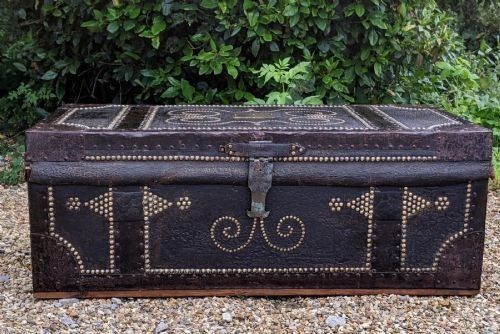
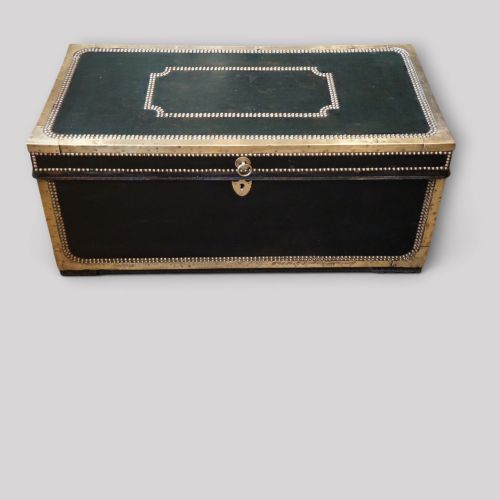
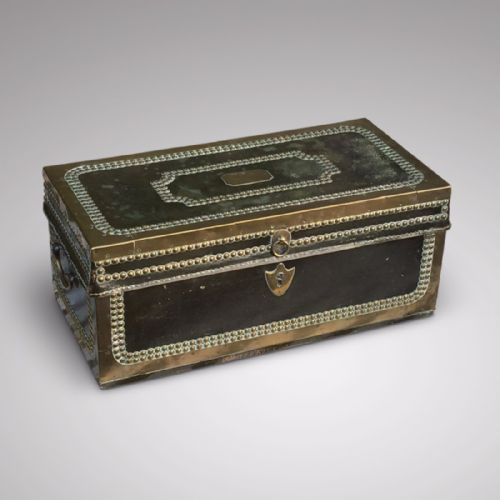
The versions most likely to meet you on this page include leather-covered and brass-bound trunks, camphor wood chests, and campaign cases. Many feature brass studding, metal corner mounts, and fitted interiors suited to early travel.
Makers and forms vary across the selection, ranging from small coaching trunks to large ottomans. The overarching category centres on durable wooden carcasses reinforced with metal and leather.
Materials and construction
The construction relies on a wooden carcass, frequently formed from mahogany, teak, or camphor wood, often covered in leather. Makers reinforced these boxes with iron and brass banding, corner braces, and heavy studding to withstand rigorous transport.
Brass mountings served a dual purpose of structural reinforcement and decoration, protecting vulnerable edges while securing the leather or wood panels. Interior linings of camphor wood provided practical protection for textiles during transit.
Regency Brass Trunk Retail Price Guide 2026
Typical asking prices for regency brass trunk among the pieces listed under this phrase on Sellingantiques today, from the lower quarter to the upper quarter. They describe what is for sale here now, not the wider market.
Several trunks bear initials like 'I.M', carrying the mysterious traces of their original nineteenth-century owners into modern rooms.
Judging quality in trunks
Quality separates through the selection of primary timbers, such as flame mahogany veneer or solid camphor wood, contrasted with simpler utility woods. The precision of the brass binding, corner work, and leather stitching dictates the tier of the piece.
Original hardware, including flush-fitting campaign handles and maker stamps, elevates a piece above standard utility items. The integration of functional compartments and the survival of original surface finishes indicate superior workshop output.
Samuel Pratt·Chapple & Sons·Haley & Milner·John Thwaites·Mark Bartley·Halliday & Rich
The Regency Brass Trunk Glossary
- Campaign case
- A portable chest or trunk designed for military officers on active service, featuring recessed handles and reinforced corners to endure frequent movement.
- Camphor wood
- An aromatic timber frequently utilised for nineteenth-century campaign trunks due to its natural insect-repellent properties.
- Fusee movement
- A clock mechanism utilising a conical pulley and chain to ensure even power delivery as the mainspring unwinds.
- Drop-dial clock
- A wall clock featuring a circular dial positioned above a lower case extension, common in nineteenth-century public and domestic spaces.
Regency Brass Trunk: Frequently Asked Questions
What are regency brass trunks?
These pieces are nineteenth-century storage chests constructed from timber and leather, reinforced with brass bands and studs.
They were built for domestic storage or travel, combining functional durability with decorative metalwork.
How were campaign trunks used?
Campaign trunks transported uniforms, documents, and personal belongings for officers on the move.
Their robust construction and recessed hardware allowed them to be packed tightly on animals or wagons.
How do I care for leather trunks?
Keep leather-covered trunks away from direct sunlight and excessive moisture to prevent the material from drying out.
Dust them gently with a dry cloth and avoid harsh cleaning products that might damage the surface.
Can I use these for storage?
These trunks provide sturdy internal space for blankets, linens, and household items.
Ensure the interior is clean and dry before storing textiles inside historic camphor or lined wood chests.
How do I identify the period?
Dating relies on construction methods, timber choices, and specific hardware styles recorded across the nineteenth century.
Maker stamps, brass binding patterns, and lock types help narrow down the decade of manufacture.