
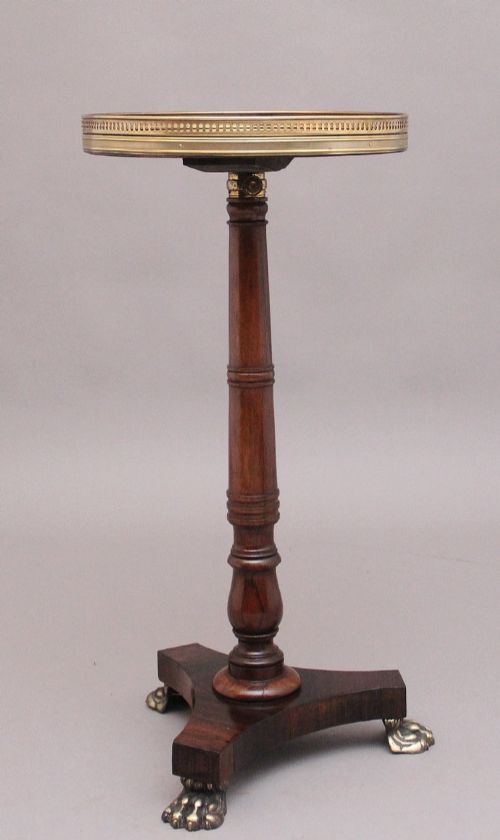

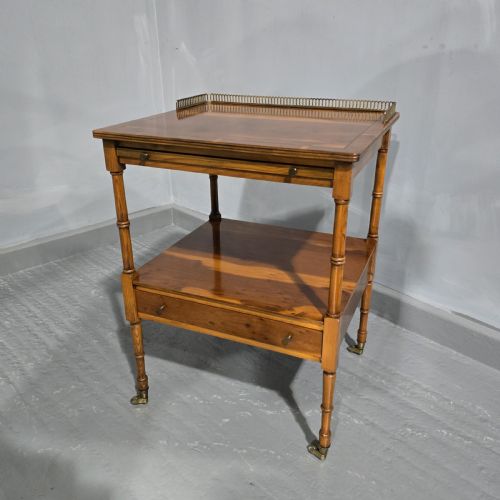


Regency Brass Gallery Table
A regency brass gallery table brings together rich timber and delicate metalwork, offering a refined surface suited to any principal room.
Regency Brass Gallery Table
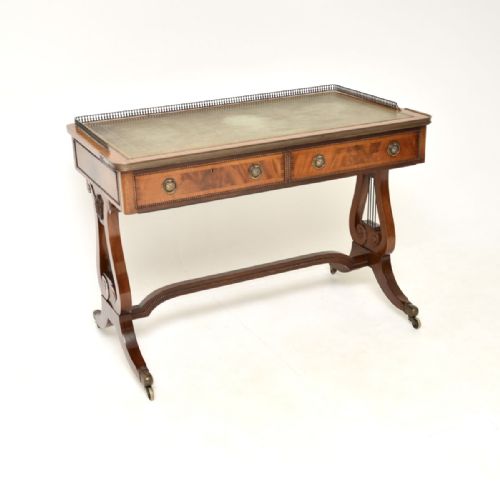
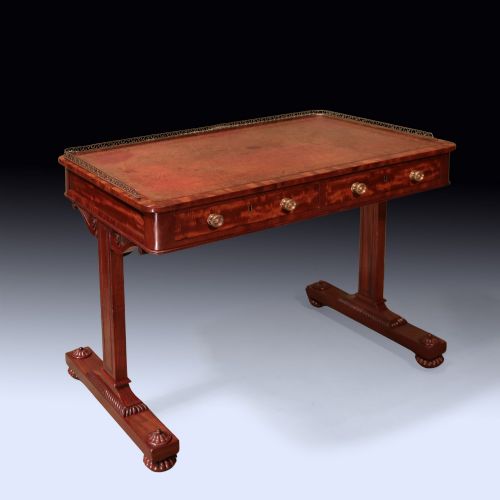
When you search for a regency brass gallery table, you are looking at small tables, desks, and serving pieces defined by an open metal rail around the top surface. These items span the Regency period itself alongside later revivals from the nineteenth and early twentieth centuries.
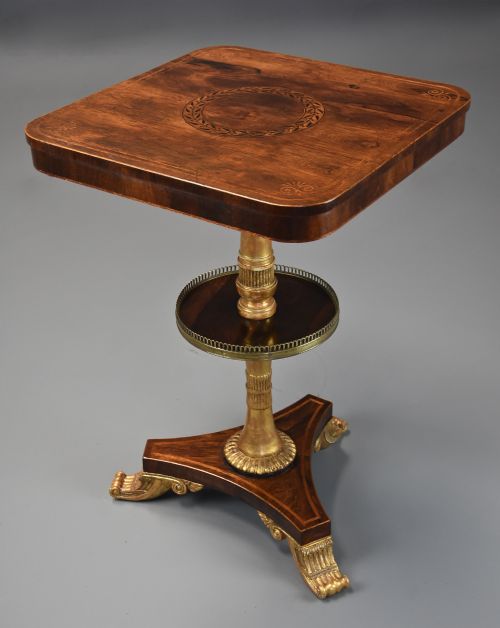
Mahogany and rosewood dominate the selection, often appearing as writing tables, occasional pieces, or sideboards equipped with brass galleries. You will also encounter work tables, games tables, and sideboards that incorporate this distinctive metal framing.
The form bridges utility and display, designed originally to keep small objects from rolling off while moving about a room. Today, these pieces function primarily as striking side tables or desks in traditional and contemporary interiors alike.
Materials and construction
Cabinetmakers relied on dense, dark timbers such as mahogany and rosewood, sometimes accented with satinwood, yew, or giltwood details. These woods were chosen for their deep grain and ability to take a high polish.
Cast or turned brass forms the characteristic gallery rail perched on the upper edge of the surface, fixed securely into the wood. Secondary materials like leather inserts appear on writing surfaces, while ormolu and inlay add decorative contrast.
Listings feature mahogany, rosewood, yew, and satinwood, paired with brass galleries across writing tables, sideboards, and occasional pieces.
Distinctions in quality
The refinement of the brass gallery itself sets higher tiers apart, showing crisp casting and secure fitting rather than simple wirework. Finer examples display thoughtful integration between the metal rail and the timber top.
Timber selection and secondary framing dictate the overall calibre of the piece. Dense, well-figured rosewood or mahogany with precise joinery distinguishes the finer workshops from later revival adaptations.
Gillows of Lancaster·Mack Williams and Gibton·John McLean·George Bullock·H Mower & Stephenson
The Regency Brass Gallery Table Glossary
- Brass gallery
- A low metal rail fitted around the perimeter of a table or sideboard top to prevent items from sliding off.
- Occasional table
- A small, movable table designed for a specific, transient use within a principal room.
- Bonheur du jour
- A light lady's writing desk featuring a small cabinet or set of shelves superstructure upon the main writing surface.
- Étagère
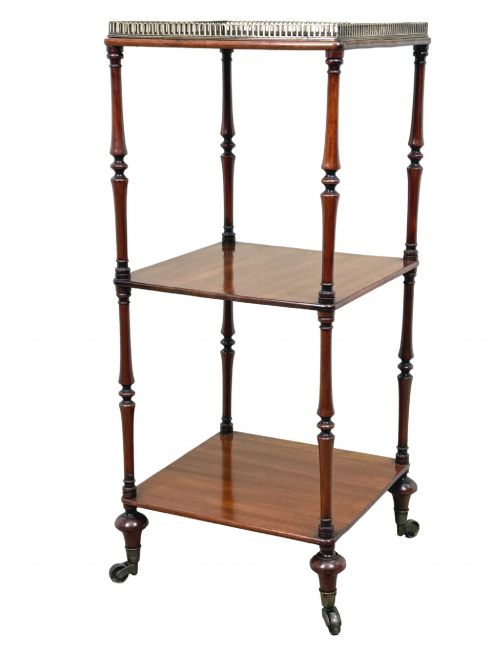
- An open piece of furniture consisting of multiple tiers or shelves for displaying small objects or books.
Regency Brass Gallery Table: Frequently Asked Questions
What is a brass gallery?
A brass gallery is a decorative and functional metal rail fitted around the edge of a table top, desk, or sideboard. Its original purpose was to stop small items from falling when the furniture was in use.
In modern rooms, the gallery adds a distinct metallic accent and structural definition to the silhouette of the timber top.
How do I style a table with a gallery?
These pieces work well as standalone lamp tables, desk surfaces, or bedside tables where the raised metal edge frames lamps or books. Keep surface styling minimal to allow the brass detail and timber grain to remain visible.
Pace the table away from heavy traffic areas so the proportions and delicate gallery can be appreciated without crowding.
How do I tell original Regency from later revivals?
Original pieces display period construction methods, timber ageing, and hand-cut joinery consistent with the early nineteenth century. Revival pieces from the Edwardian era or later often show different secondary woods and standardised fixings.
Examine the underside and drawer linings for tool marks and timber shrinkage that indicate genuine age.
Were these tables used for writing or display?
Many tables featuring brass galleries served multiple functions, acting as writing desks, work tables, or serving surfaces depending on their form. Drop-leaf and games tables added versatility for dining or card playing.
The inclusion of a gallery was practical for keeping inkstands and papers secure during use.