

Regency Brass Card Table
When you search for a regency brass card table, you discover a folding timber surface designed for nineteenth-century entertaining.
Regency Brass Card Table
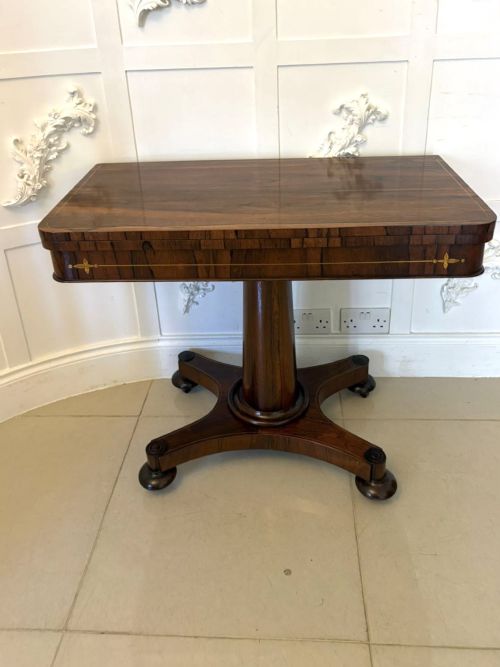
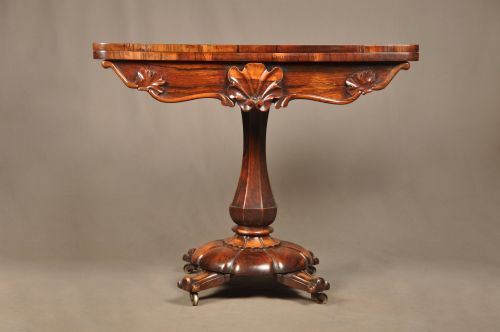
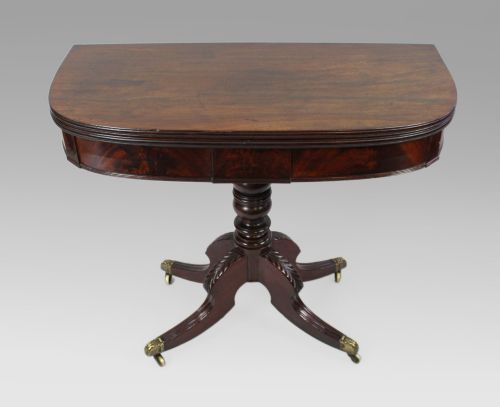
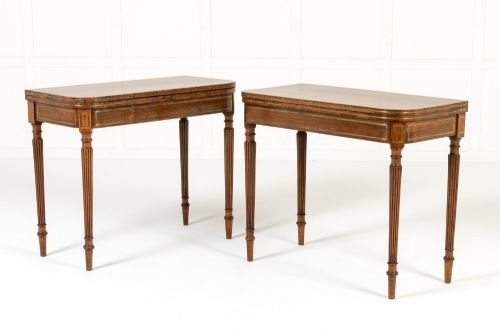
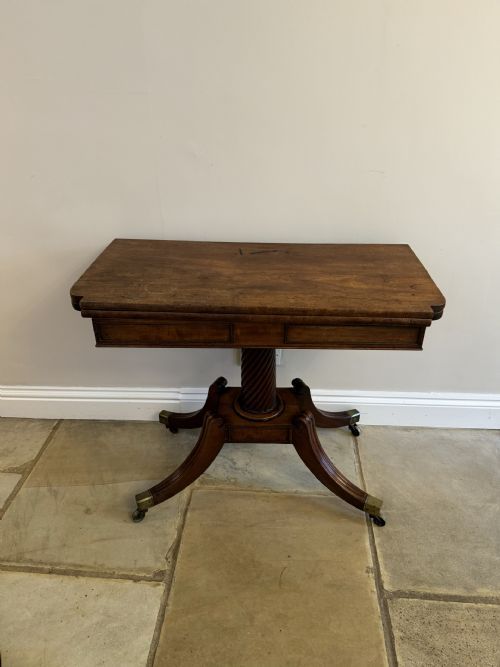
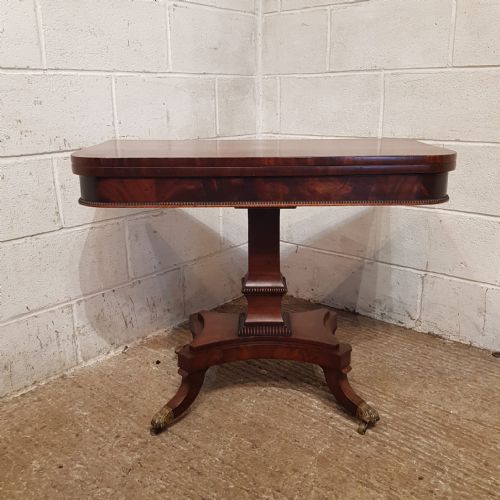
A regency brass card table is a multi-purpose furniture form built for parlor games and tea, featuring a hinged top that folds flat or swivels open to reveal a baize-lined playing surface. The selection spans the Regency, Georgian, and William IV eras, capturing forms that double as console or side tables when closed.
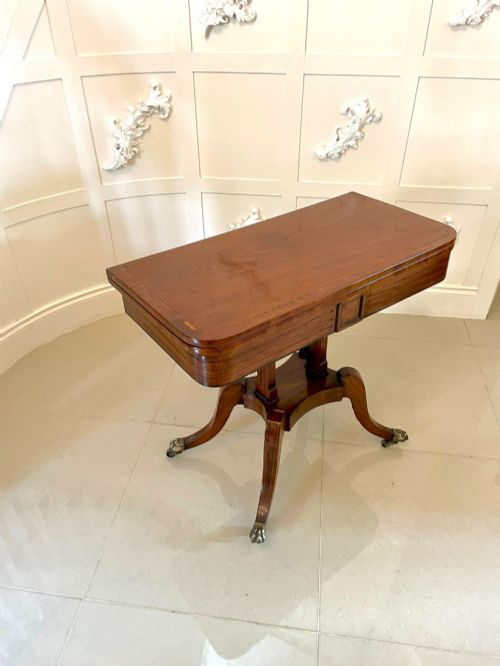
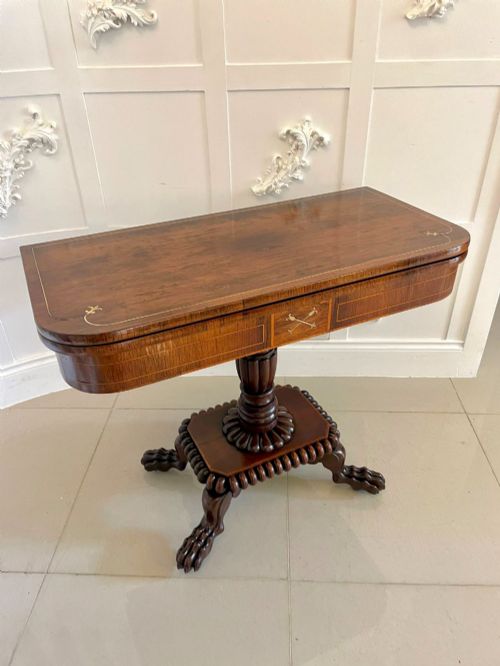
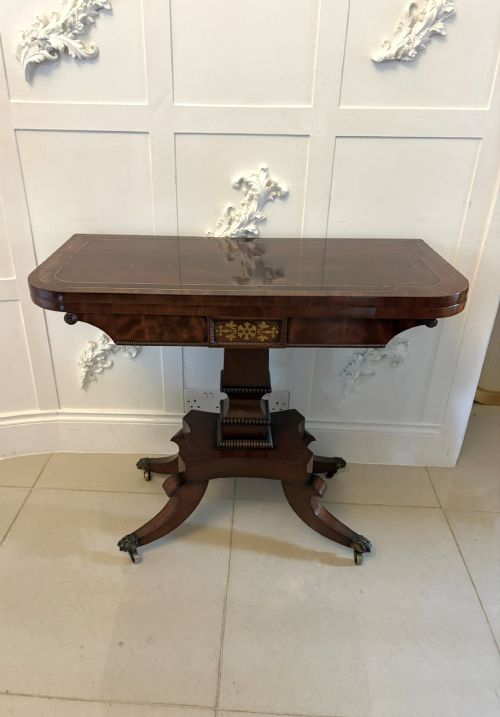
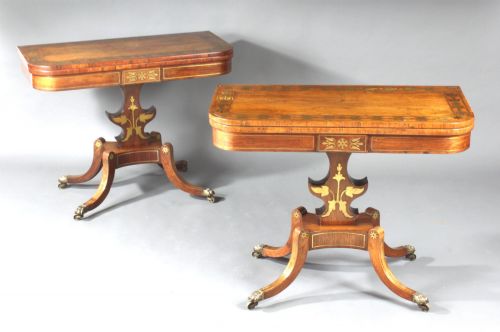
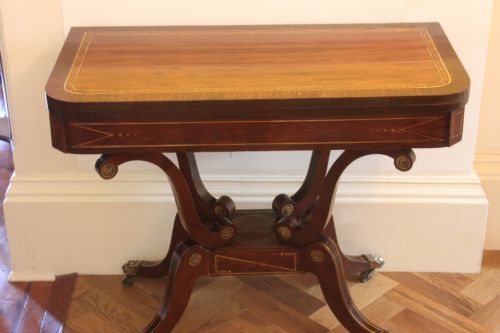
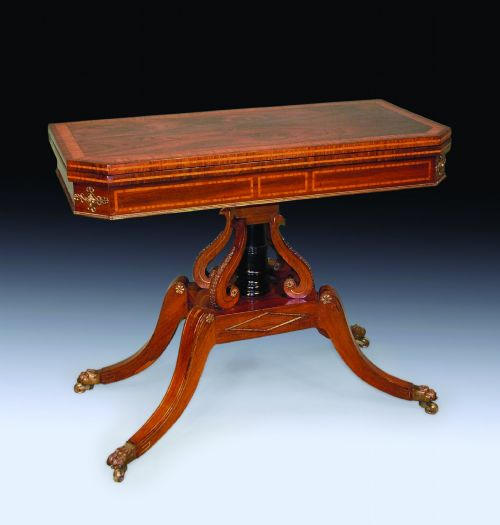
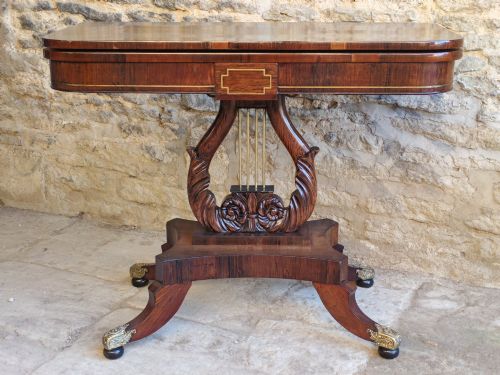
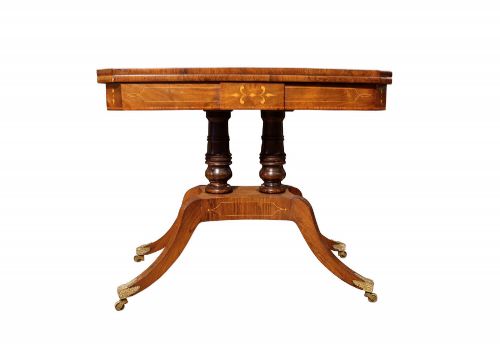
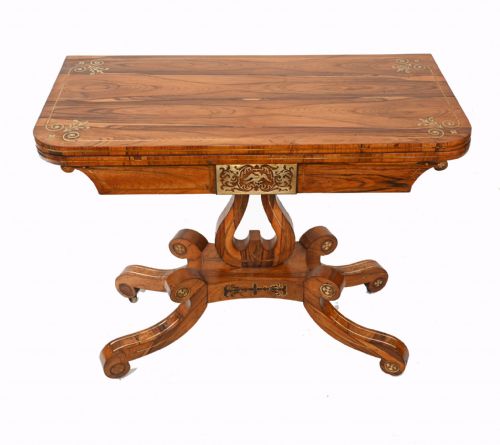
You will encounter mahogany and rosewood variants most frequently on this page, often decorated with delicate brass inlay or mounted with ormolu. These tables typically rest upon scroll pedestals, central pillars with splayed legs, or lion paw feet fitted with castors for easy movement around a drawing room.
How they were made
Cabinet makers constructed these tables using dense timbers like mahogany, rosewood, and satinwood, frequently applying fine veneers over a stable softwood or mahogany core. Artisans then routed intricate channels into the wood grain to inlay polished brass stringing, scrollwork, and classical motifs.
Gilded brass mounts, sabots, and castors were integrated to protect vulnerable timber extremities and enhance the decorative scheme. Folding mechanisms relied on pivot hinges or swing-out rear legs that supported the heavy weight of the turned leaf when opened.
Listings feature prominent use of rosewood and mahogany, frequently embellished with brass inlay, ormolu mounts, and satinwood banding.
What varies in quality
The distinction between ordinary and exceptional tables rests in the crispness of the brass inlay and the selection of figured wood veneers. Superior examples display perfectly flush metalwork embedded into richly grained rosewood or flame mahogany without noticeable gaps.
Carved details on pedestals and the structural integrity of the folding hinge mechanism also signal superior workshop production. Tables attributed to prominent makers often exhibit refined proportions and heavier cast bronze mounts rather than lightweight stamped brass.
George Bullock·Gillows
The Regency Brass Card Table Glossary
- Card table
- A small folding table specifically designed for playing card games in domestic interiors. They typically feature a baize-lined interior surface.
- Brass inlay
- Thin strips or cut-out patterns of brass embedded flush into the wooden surface of furniture for ornamentation. This technique was prevalent during the Regency period.
- Fold-over top
- A hinged wooden table top that doubles the surface area when opened out. The pivoting leaf usually rests on a swinging rear leg or a rotating frieze.
- Sabot
- A protective metal sleeve fitted to the foot of a furniture leg. They frequently appeared in gilded brass on Regency pedestal tables.
- Lyre base
- A furniture support shaped like an ancient Greek stringed musical instrument. Makers utilised this carved wooden form widely on pillar card tables.
Regency Brass Card Table: Frequently Asked Questions
What is a regency brass card table used for?
These tables served primarily as dual-purpose furniture for the home, functioning as console or side tables against a drawing room wall when folded closed. During evening gatherings, the hinged top opened to provide a stable baize-covered surface for card games or tea.
Their flexible design allowed nineteenth-century households to maximise living space without sacrificing utility or surface area. When not in use for leisure, they displayed decorative objects and porcelain.
How do I identify a regency period card table?
Authentic pieces from the Regency era typically display classical architectural influences, such as reeded edges, brass stringing, and heavy central pillar pedestals. Timber choices lean heavily toward dark figured mahogany or exotic rosewood with contrasting lightwood inlay.
Construction methods also provide clues, including hand-cut dovetails within the frieze drawer and traditional timber shrinkage patterns. Many examples incorporate brass lion paw feet fitted with early castors for mobility.
How do I care for rosewood and brass inlay?
Preserving these surfaces requires maintaining stable room humidity to prevent the underlying timber from shrinking and loosening the metal inlay. Regular dusting with a soft, dry cloth protects the polished finish from microscopic abrasion.
Avoid placing these tables in direct sunlight, which can fade rich rosewood and dry out old polish. Occasional application of appropriate wax feeds the timber without harming the flush brass elements.
What is the difference between George IV and Regency tables?
The Regency period technically spans the prince regent's rule, while the George IV era follows immediately after, though furniture styles overlap considerably. Tables from the later Georgian decades often exhibit heavier proportions, bolder carving, and more robust pedestal bases.
Earlier Regency designs tend to favour leaner silhouettes and more restrained brass inlay patterns. Both periods share a strong reliance on dark tropical hardwoods and sophisticated mechanical folding tops.