






Regency Ball Mirror
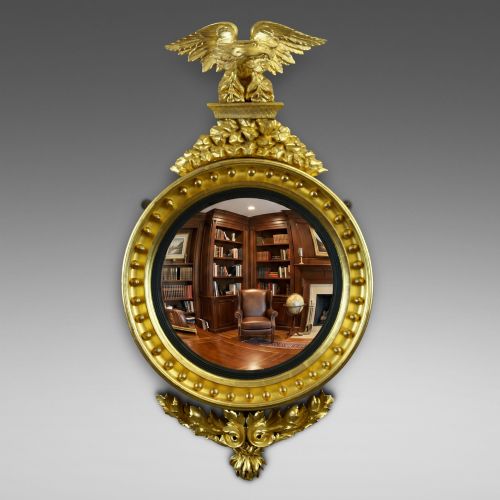
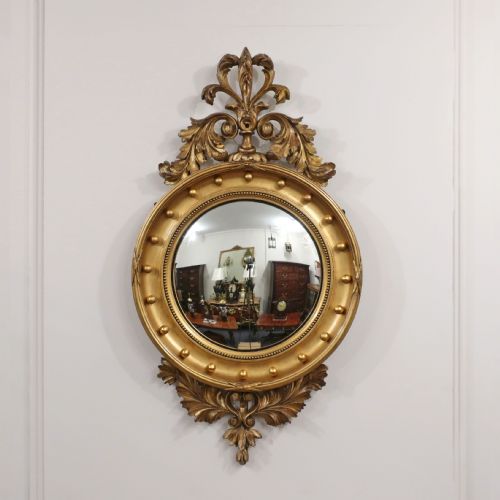
Regency ball mirror pieces bring bright, curved reflection and striking gilt frames into a room, drawing the eye instantly.
Regency Ball Mirror
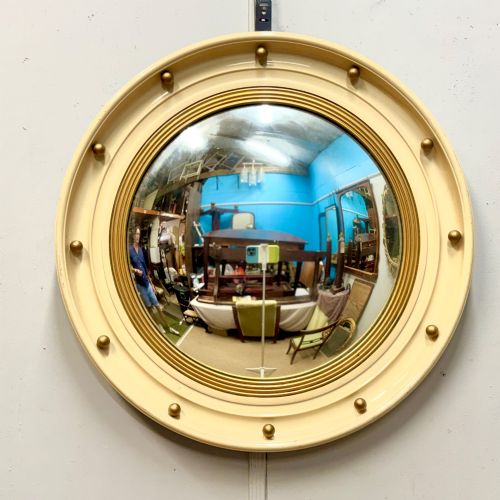
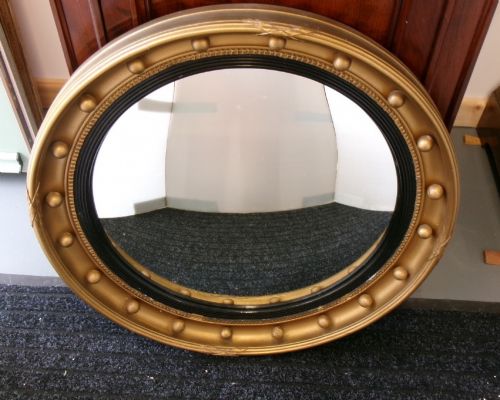
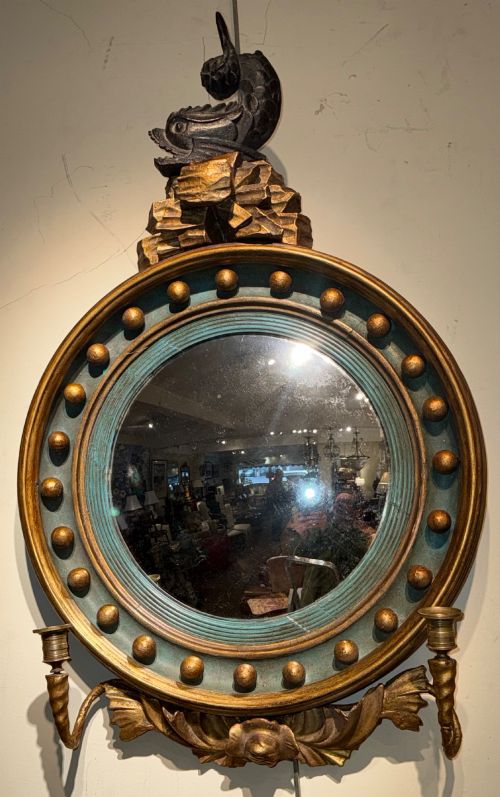
A regency ball mirror is a convex wall-hanging glass piece designed to capture and scatter light across an interior space. These circular or rectangular looking glasses appear in periods spanning the nineteenth century, the Victorian era, and into the early twentieth century.
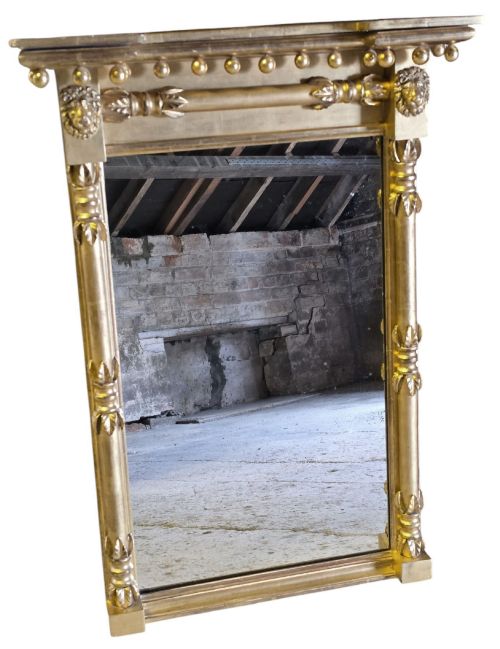
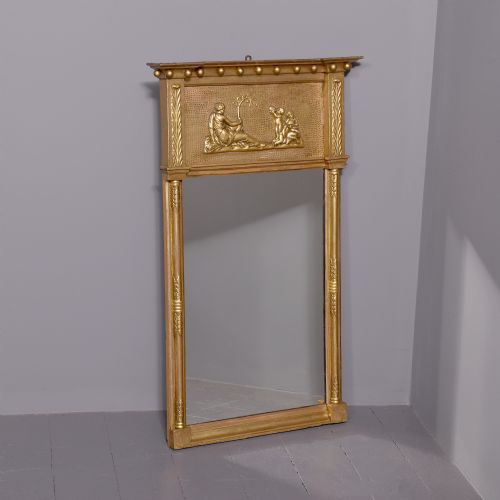
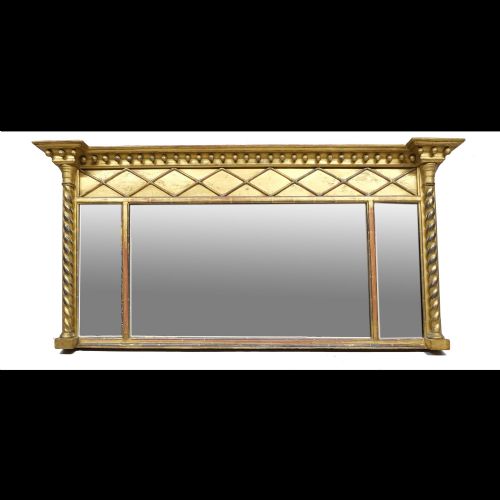
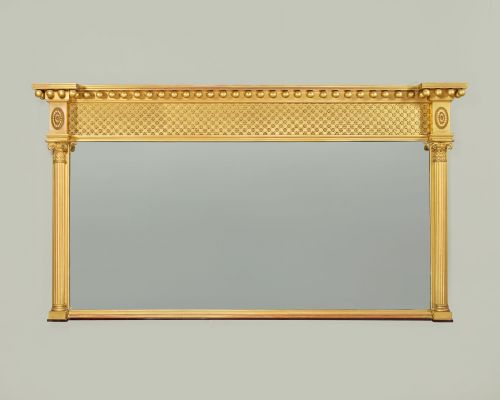
The convex form distorts the field of view into a wide, curved perspective, making them distinct from flat wall mirrors. Buyers frequently encounter giltwood convex mirrors, but rectangular overmantel formats and painted timber examples also populate the selection.
Distinctions in quality
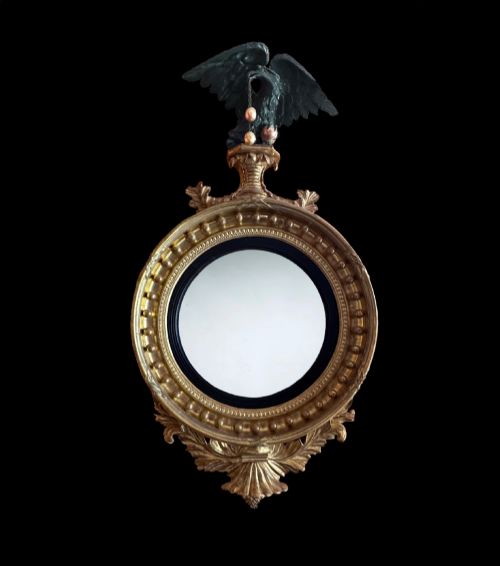
The clarity and depth of the gilt finish separate standard examples from finer works, alongside the crispness of carved details like lion masks or eagles. Heavier timber construction and well-preserved original mirror glass indicate superior craftsmanship.
Proportions play a significant role, as smaller convex pieces require precise framing to maintain balance while large overmantel mirrors demand sturdy structural integrity to support heavy glass panels.
Regency Ball Mirror Retail Price Guide 2026
Typical asking prices for regency ball mirror among the pieces listed under this phrase on Sellingantiques today, from the lower quarter to the upper quarter. They describe what is for sale here now, not the wider market.
Several mirrors feature small perched birds or fierce spread eagles keeping watch from the very top of the frame.
The Regency Ball Mirror Glossary
- Convex glass
- Curved mirror glass that bulges outward to create a wide-angle reflection of the room. This spherical shape gathers ambient light from multiple directions.
- Giltwood
- Timber carved and coated with a thin layer of gold leaf or gold paint. This finish creates a bright metallic sheen characteristic of the period.
- Ebonised slip
- A dark, black-painted inner moulding positioned between the main frame and the mirror glass. It provides a sharp visual border.
- Verre eglomise
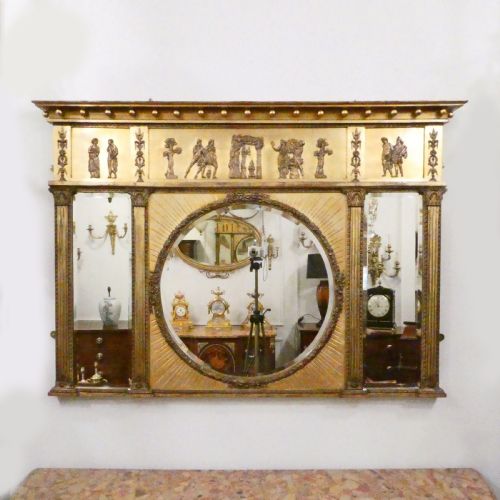
- A process of cold painting and gilding on the reverse side of glass panels. These decorative panels appear above the main mirror plate in certain overmantel designs.
- Overmantel mirror
- A wide looking glass designed specifically to hang above a fireplace mantel. These rectangular or triptych pieces often mirror the proportions of the hearth below.
Regency Ball Mirror: Frequently Asked Questions
Where should I hang a convex mirror?
These mirrors work best on focal walls in living rooms, hallways, or dining spaces where their wide-angle reflection can capture natural light from windows.
Because they bend and project the entire room back into the space, positioning them opposite a light source maximises their decorative impact.
How do I identify a true period piece?
Examine the construction methods visible on the reverse of the frame, alongside the ageing patterns within the mirror glass and the application of gesso beneath the gold leaf.
Period pieces from the nineteenth century show appropriate wear to the gilding and timber substrate that distinguishes them from later revival items.
What is the difference between a convex mirror and a pier mirror?
Convex mirrors feature round, bulging glass in circular frames designed for light distribution, whereas pier mirrors are typically tall and rectangular to fit between architectural windows.
While both serve as wall ornaments, their form and original placement within a room differ entirely.
How do I clean an antique gilt frame?
Dust the surface very gently with a dry, soft brush to remove loose particles without disturbing the delicate gold leaf or gesso layers.
Avoid using liquid cleaners or commercial polishes, as moisture and chemicals can strip the historic finish from the wood.