
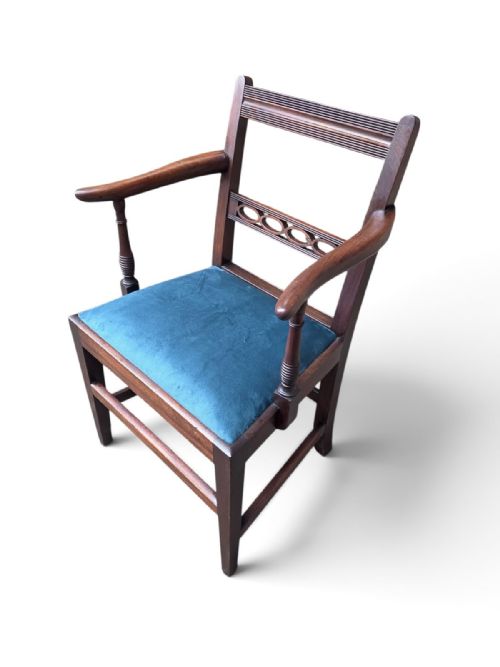
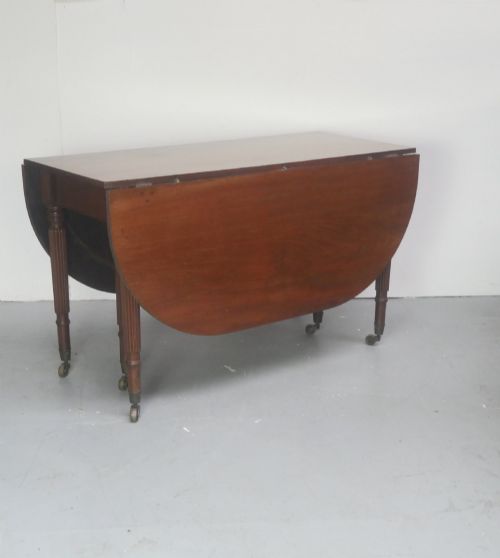
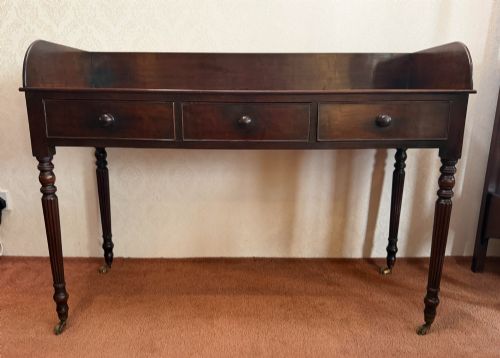
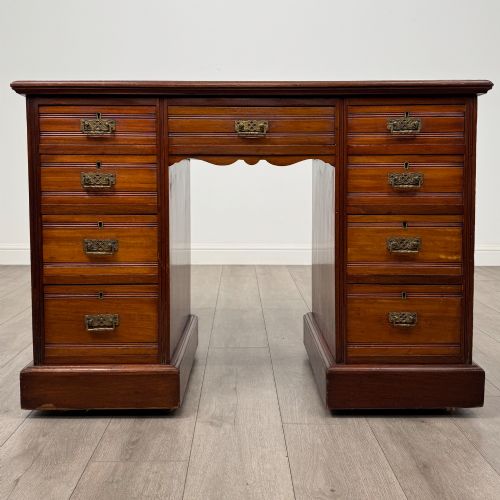

Reeded Mahogany Desk
A reeded mahogany desk brings architectural order to a room, offering the linear crispness of carved mouldings combined with the warm grain of 18th and 19th-century timber.
Reeded Mahogany Desk
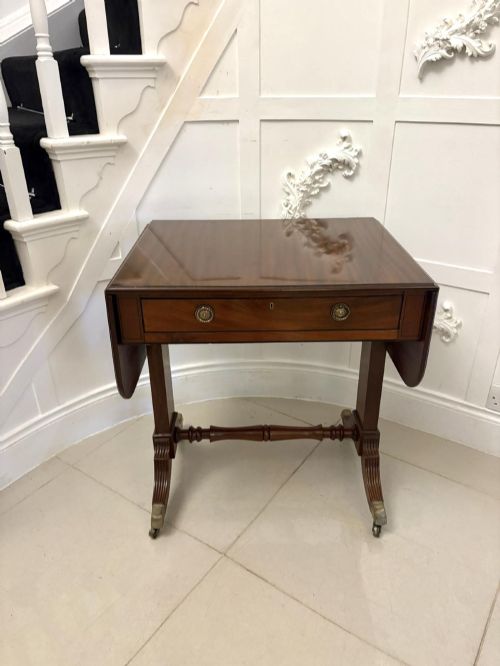
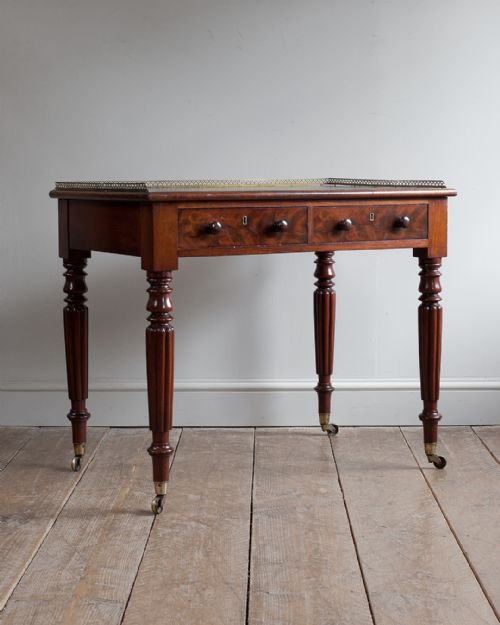
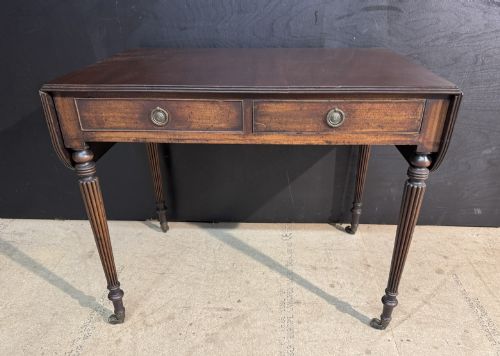
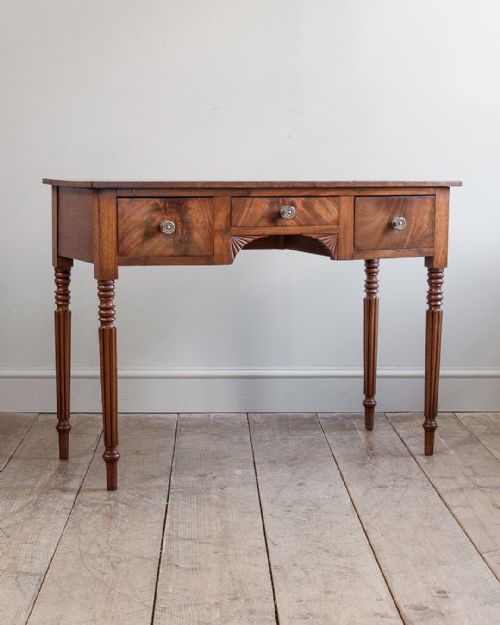
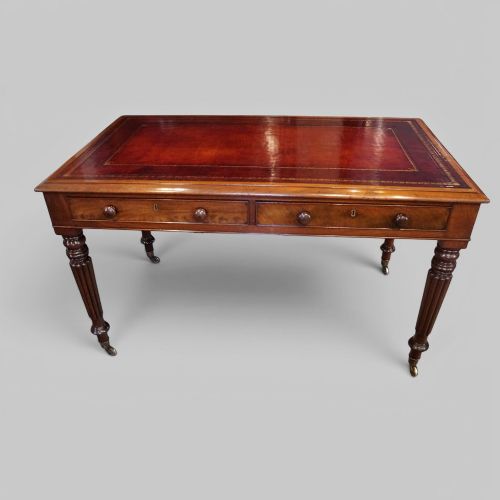
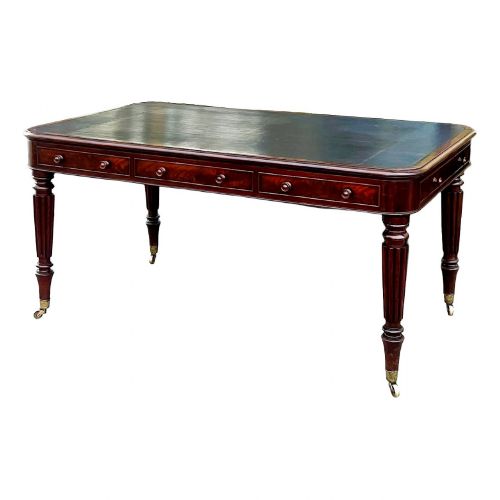
A reeded mahogany desk combines the deep, rich tones of tropical timber with parallel, concave mouldings known as reeding, which run vertically or horizontally along the legs, frames, or drawer fronts. When searching for a reeded mahogany desk, you encounter writing tables, partners tables, and library desks dating from the Georgian, Regency, and Victorian periods.
The forms span compact chamber tables made during the early 19th century and larger freestanding pieces designed for institutional or grand residential libraries. These pieces often feature turned or tapering legs carved with neat reeded channels that lift the heavy timber visually.
Makers working in the manner of Gillows of Lancaster frequently employed reeding to accent the structural uprights of writing furniture. Surviving examples demonstrate how cabinetmakers applied this classical detail to break up flat planes and add texture to functional workspaces.
Materials and construction methods
Cabinetmakers selected dense, figured mahogany for its stability and deep red-brown colour, frequently pairing the solid timber frames with veneers on larger writing surfaces. To achieve the characteristic reeded finish, craftsmen used specialised scratch stocks or moulding planes to cut parallel semicircular grooves directly into the solid wood of the legs or framing.
Working surfaces often incorporated inset panels of tooled leather, fabric, or velvet, bordered by blind-tooled gilt lines. Secondary structural timbers like oak or pine were utilised for drawer linings and internal framing, demonstrating traditional dovetail construction throughout.
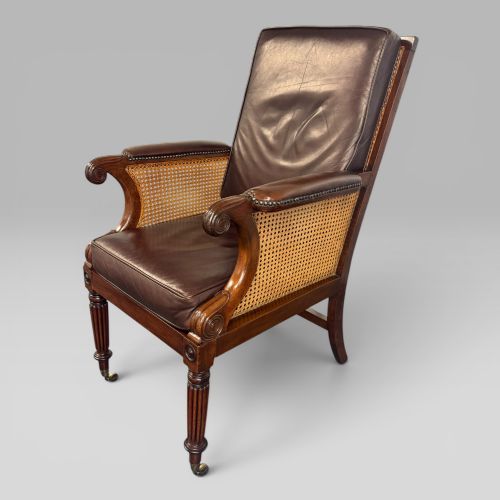
Several library desks retain original brass castors designed to roll silently across deep pile carpets during heated debates.
Assessing quality in period desks
The crispness of the carved reeding separates superior examples from lesser pieces; sharp, deeply cut grooves indicate confident toolwork by a skilled hand, whereas worn or shallow mouldings suggest blunt irons or excessive past sanding. The selection of the mahogany timber itself defines the tier of the piece, with richly figured flame or Cuban veneers commanding greater respect than plain, straight-grained stock.
Original brass hardware, such as brass castors and locks stamped by period makers, adds structural integrity and confirms the authenticity of the desk's components. Furthermore, the neatness of the proportions and the quality of internal drawer construction reveal the original workshop's commitment to utility and aesthetic balance.
Gillows of Lancaster·Gillow and Co
The Reeded Mahogany Desk Glossary
- Reeding
- Parallel convex mouldings carved into timber, resembling a bundle of rods placed side by side. This decorative technique appears frequently on the legs of Regency and Georgian writing tables.
- Partners desk
- A large double-sided writing table designed for two people to work opposite one another, featuring drawers and cupboards on both faces. These pieces were standard fixtures in grand Victorian and Georgian libraries.
- Mahogany
- A durable, reddish-brown tropical hardwood imported from the West Indies and Central America. It serves as the primary structural material for fine English furniture from the 18th century onward.
- Drum table
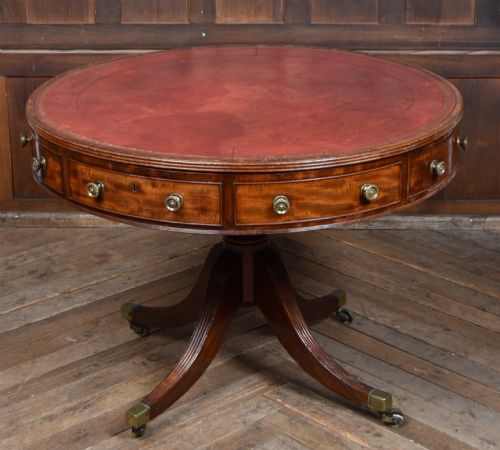
- A circular library table with a rotating or stationary top surrounded by a frieze of drawers. These freestanding pieces often stand on a central turned pillar supported by reeded sarked legs.
- Brass castor
- A small wheel fitted to the base of furniture legs to permit easy movement across carpets and floors. Period examples are cast in solid brass and frequently stamped with early patent marks.
Reeded Mahogany Desk: Frequently Asked Questions
How do I date a reeded mahogany desk?
Dating relies on examining the structural proportions, secondary timbers, and the style of the reeded legs. Earlier Georgian and Regency examples exhibit sharper carving and lighter framing, while Victorian pieces tend to be heavier and employ machine-sawn internal components.
Hardware offers further clues through the evolution of brass locks and castors. Original construction methods, such as hand-cut dovetails on the drawer sides, help confirm whether a desk originates from the late 18th or the mid-19th century.
Were these desks used in private homes?
These writing tables served primarily in the libraries, studies, and drawing rooms of large country houses and town residences. They provided a stable, organised surface for correspondence, estate management, and reading.
Smaller chamber tables functioned in private dressing rooms or bedrooms for personal writing. Freestanding library versions allowed owners to work away from the walls in the centre of the room.
How should I care for the leather top?
To maintain tooled leather or velvet writing surfaces, keep them away from direct sunlight and excessive heat sources that dry out the hide. Regular dusting with a soft, dry cloth prevents particulate accumulation in the crevices of the gold tooling.
Specialist leather dressings applied sparingly can nourish older surfaces without staining the surrounding mahogany timber. Avoid using household cleaning sprays or excessive moisture on the leather.