



Reeded Leg Lamp Table
A reeded leg lamp table brings refined linear detail to a corner, offering a stable surface for task lighting and small objects.
Reeded Leg Lamp Table
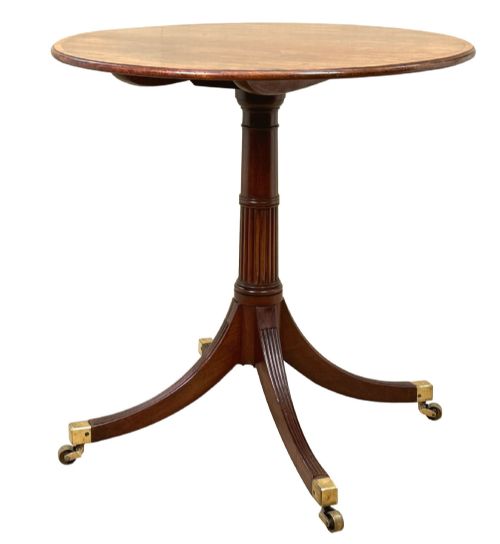
When you search for a reeded leg lamp table, you encounter compact occasional, side, and work tables designed for domestic utility and social spaces. These forms range from circular wine tables and demi-lune tea surfaces to two-tier lamp stands and drop-leaf work tables.
The material palette draws heavily on mahogany and walnut, occasionally supported by maple, oak, and brass fittings. Fabrication spans from the late eighteenth century through the Regency period and into Edwardian and later revivals.
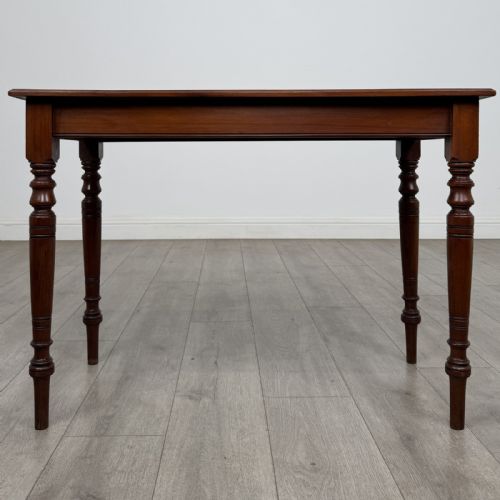
The defining characteristic across these examples is the carved or turned reeding on the upright supports, creating vertical parallel fluting that catches the light. You are most likely to meet mahogany pieces from the Regency and Georgian eras, alongside walnut side tables.
How they were made
Cabinetmakers utilised dense timbers like mahogany and walnut for structural stability and fine surface carving, turning solid stock on a lathe to form the characteristic vertical reeding on the legs. Tops were frequently constructed from figured veneer or solid boards joined with precision.
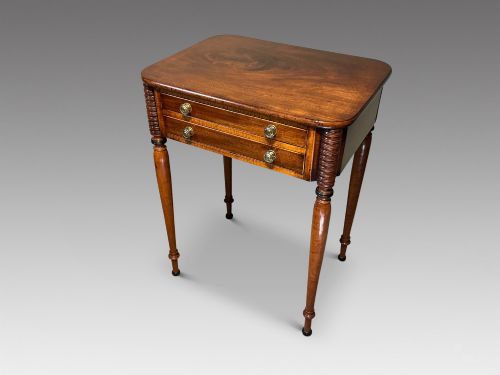
Secondary elements such as brass castors, hinges, and drawer pulls were integrated into work tables and Pembroke forms to facilitate movement and daily use. Joinery techniques relied on traditional mortise and tenon construction to ensure longevity under regular loads.
Reeded Leg Lamp Table Retail Price Guide 2026
Typical asking prices for reeded leg lamp table among the pieces listed under this phrase on Sellingantiques today, from the lower quarter to the upper quarter. They describe what is for sale here now, not the wider market.
Some work tables secretly stored your embroidery while happily moonlighting as a lamp stand.
What varies in quality
The refinement of the reeding itself separates standard workshop output from superior cabinet work, with crisp, evenly spaced fluting indicating skilled hand-carving rather than hurried machining. Timber selection also dictates grade, where rich grain figuring and well-matched mahogany veneers elevate the piece.
Proportion and structural integrity define the higher end of the range, ensuring the table remains balanced and sturdy despite its slender uprights. Original brass hardware and intact secondary timbers further distinguish exceptional examples.
Gillows
The Reeded Leg Lamp Table Glossary
- Reeding
- Parallel convex mouldings carved or turned into the surface of a leg or column. This decorative detail imitates classical drapery or architectural fluting.
- Demi-lune
- Half-moon shaped furniture designed to sit flush against a wall. These tables served various functions including tea and lamp placement.
- Pembroke table
- A small occasional table with hinged drop leaves on two opposing sides. They often feature a single drawer and were utilised for sewing or writing.
- Étagère
- An open piece of furniture with multiple tiers or shelves for displaying objects. These provide accessible surfaces for lamps and small decorative items.
- Work table
- A small domestic table fitted with drawers or fabric bags for sewing and needlework. These versatile pieces frequently double as lamp stands.
Reeded Leg Lamp Table: Frequently Asked Questions
What is a reeded leg lamp table used for?
These tables provide a stable, compact surface for holding reading lamps, decorative objects, and drinks in sitting rooms or hallways. Their modest footprint allows them to fit easily beside armchairs or in awkward corners.
Historically, many of these forms also served multiple domestic duties, functioning as tea tables, sewing work tables, or wine stands depending on the room.
How do I date a reeded leg table?
Dating relies on examining the timber species, construction methods, and the style of the turning on the legs. Finer, crisper reeding and dense mahogany often point towards Georgian and Regency periods.
Later Edwardian and twentieth-century revivals tend to use softer machinery marks or different secondary timbers underneath. Comparing the joinery inside drawers provides further clues to the era of manufacture.
Are these tables sturdy enough for daily use?
Solid mahogany and walnut construction gives these tables considerable durability for everyday tasks like holding a lamp or book. Their slender legs require sensible placement to avoid heavy impacts, but traditional joinery keeps them stable.
Routine care involves keeping them away from direct heat sources to prevent timber shrinkage and veneer lifting.
What is the difference between a side table and an occasional table?
Side tables traditionally stood against walls or beside seating to hold utilitarian objects, while occasional tables were designed to be moved around a room as needed. In modern usage, both terms frequently overlap for small movable furniture.
Both categories encompass the reeded leg designs found in Georgian and Regency periods.