



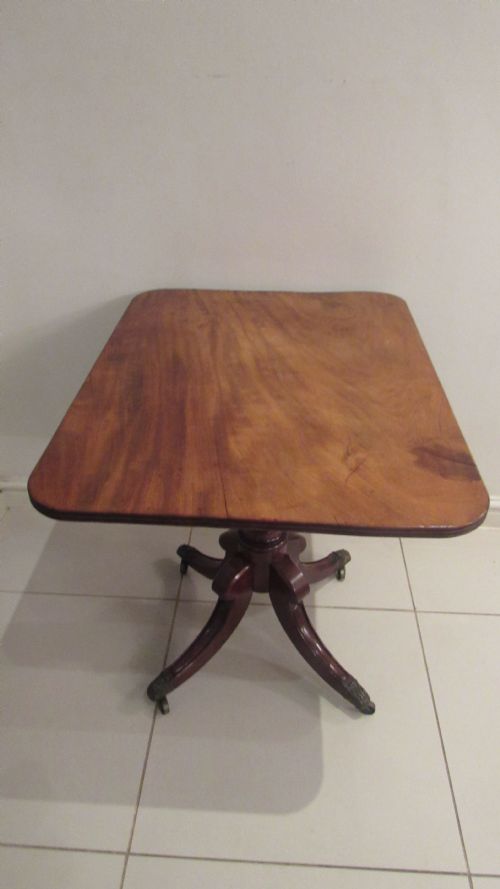


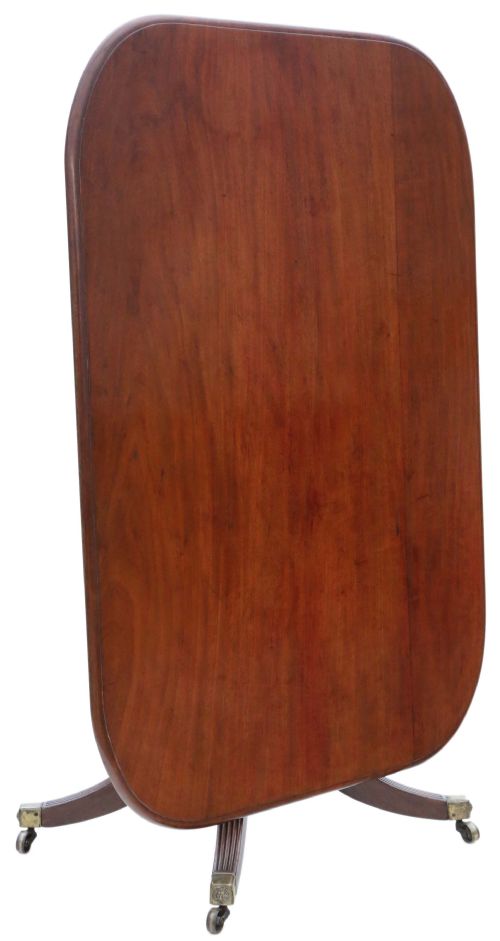


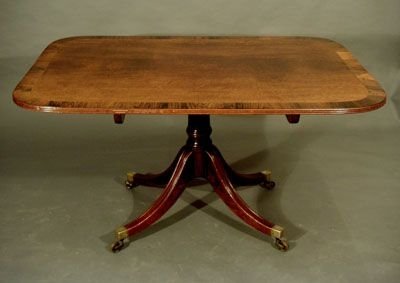

Georgian Quadruped Tilt Table
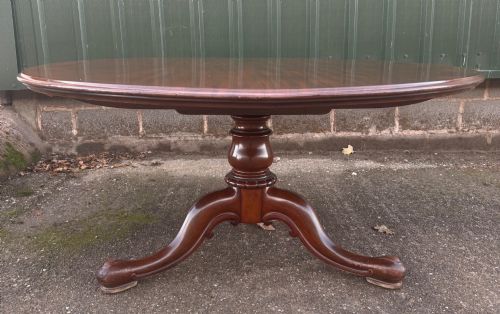
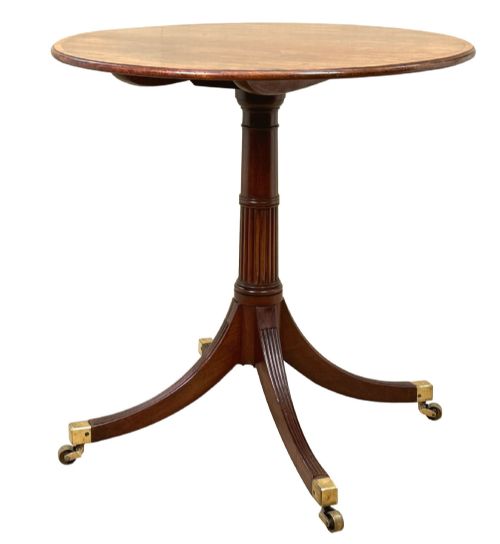
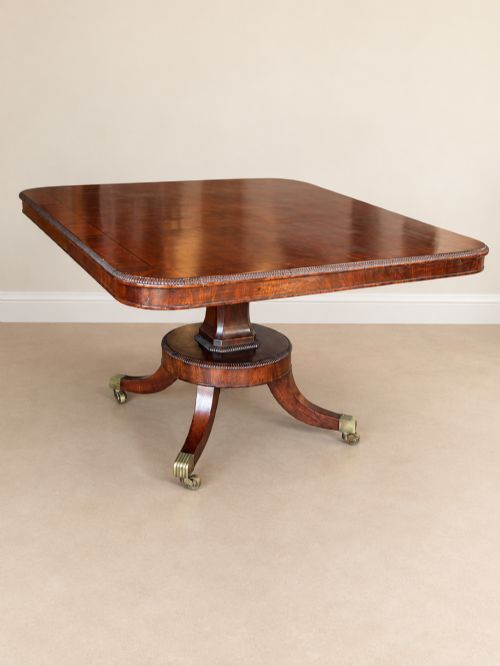
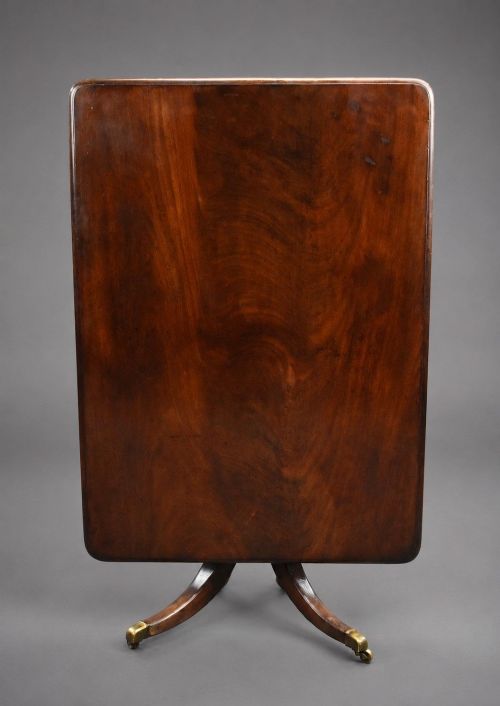
These georgian quadruped tilt table pieces are versatile dining and breakfast furniture designed to tilt aside when not in use.
Georgian Quadruped Tilt Table
When you search for a georgian quadruped tilt table, you are looking at substantial timber tables featuring a central pillar supported by four legs. The examples seen on this page span the Georgian, Regency, and George IV periods, extending into the early nineteenth century.
You will most frequently meet breakfast tables, dining tables, and occasional tables configured with snap tops or tilting mechanisms. These forms originate from the late eighteenth century and the early decades of the subsequent century.
The regional styles vary from standard Sheraton designs to pieces created in the manner of Edinburgh makers. Most pieces utilise rectangular or circular tops supported by brass fittings.
Construction and Materials
Cabinet makers constructed these tables primarily using solid and figured mahogany, often selecting Cuban mahogany for its rich grain. Workshops also incorporated exotic timbers such as rosewood, goncalo alves, and lacewood for banding and decorative contrast.
The tilting mechanism relies on a sturdy block and catch assembly beneath the top, allowing the surface to fold vertically against the pillar. Brass castors and fittings frequently complete the four-legged pedestal base to aid movement.
Georgian Quadruped Tilt Table Retail Price Guide 2026
Typical asking prices for georgian quadruped tilt table among the pieces listed under this phrase on Sellingantiques today, from the lower quarter to the upper quarter. They describe what is for sale here now, not the wider market.
Judging Quality
The distinction between ordinary and superior pieces lies in the choice of timber figure and the crispness of the pedestal carving. Figured mahogany tops with rich grain patterns command greater attention than plain boards.
Proportion and stability in the four-legged base dictate the structural integrity of the table. Well-executed banding in rosewood or lacewood indicates a higher grade of workshop production.
James Mein·William Trotter
The Georgian Quadruped Tilt Table Glossary
- Quadruped
- A pedestal base supported by four legs rather than three. This configuration provides increased stability for larger dining and breakfast surfaces.
- Tilt top
- A hinged table top that pivots to a vertical position. This mechanism allows the furniture to be stored compactly against a wall when not in use.
- Breakfast table
- A large occasional or dining table popular in the Georgian and Regency eras. These tables typically feature circular or rectangular tops on central pillars.
- Banding
- A thin strip of contrasting timber inlaid around the border of a table top. Cabinet makers used exotic woods like rosewood and lacewood for this decorative framing.
- Snap top
- A spring-loaded mechanism that locks a tilting table top securely in the horizontal position. It prevents accidental movement during everyday use.
Georgian Quadruped Tilt Table: Frequently Asked Questions
What is a georgian quadruped tilt table used for?
These tables served primarily as flexible dining or breakfast furniture in formal rooms. Their tilting tops allowed servants to clear space quickly after a meal.
Today, they function well as central display tables or occasional dining surfaces in larger reception rooms.
How do I distinguish Regency from George III pieces?
Regency pieces often display bolder use of exotic timbers like rosewood alongside mahogany, paired with heavier brass mounts. George III examples tend to favour cleaner lines and figured mahogany without extensive contrasting banding.
Both periods overlap considerably around the turn of the nineteenth century, sharing similar pedestal forms.
How do I care for a mahogany tilt top table?
Keep the timber away from direct heat sources and strong sunlight to prevent the polished surface from drying out or fading. Apply a traditional wax polish occasionally to nourish the wood grain.
Ensure the tilt mechanism is supported properly whenever you move or adjust the table top.
Why do some tables have brass castors?
Castors were fitted to the four feet of the pedestal base to make the heavy timber tables easier to reposition across carpets and floors. They also protected the ends of the legs from wear.
Most quality tables from this era retained their original brass fittings.