

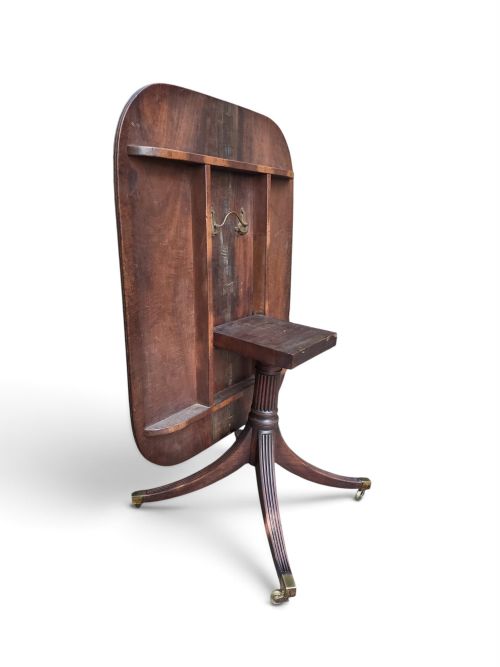
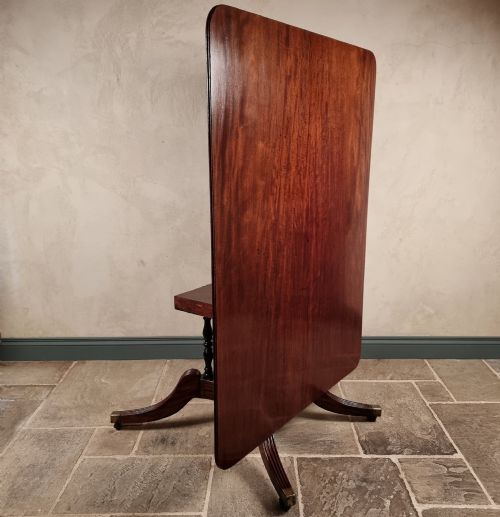


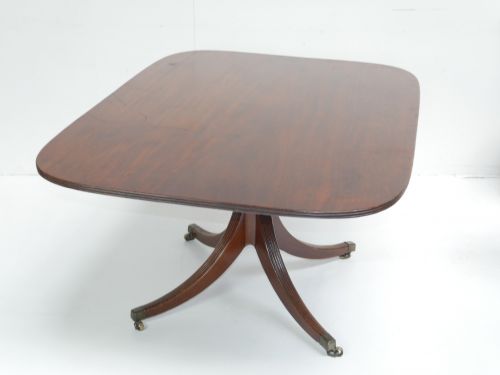


Reeded Leg Breakfast Table
A reeded leg breakfast table brings domestic dining heritage straight from the Georgian and Regency periods into modern rooms.
Reeded Leg Breakfast Table
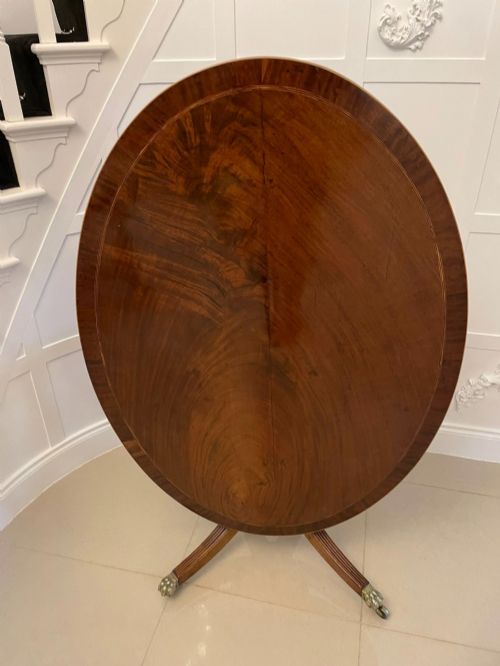
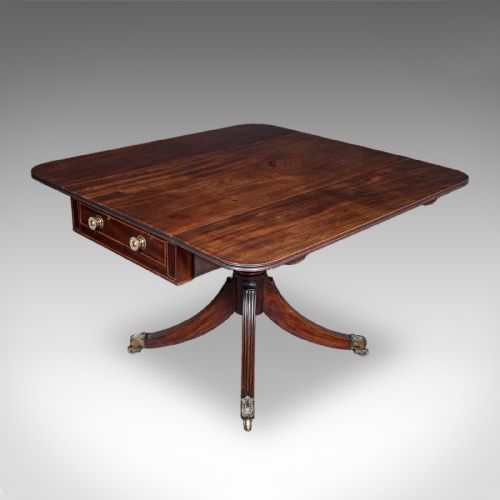
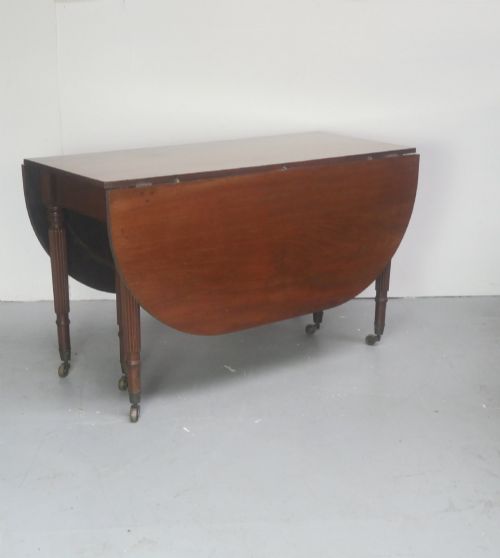
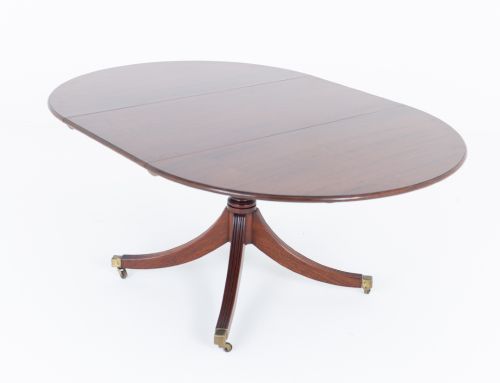
A reeded leg breakfast table sits within a selection spanning Georgian, Regency, and Victorian eras alongside later revival examples. These pieces function primarily as dining tables, centre tables, or tilt top tables designed for domestic utility.
Most entries here display figured mahogany, Cuban mahogany, or rosewood, frequently shaped as circular or drop leaf tables with pedestal bases. You will find items scaled for four or more seats, reflecting the traditional uses of supper and breakfast rooms.
Materials and construction
Makers utilised solid timbers and veneers including mahogany, rosewood, satinwood, and goncalo alves to construct these tables. Brass components often appear on castors or mounts.
Joinery methods encompass pedestals, drop leaf mechanisms, and tilt top actions that allow the surface to pivot or fold when not in use.
Reeded Leg Breakfast Table Retail Price Guide 2026
Typical asking prices for reeded leg breakfast table among the pieces listed under this phrase on Sellingantiques today, from the lower quarter to the upper quarter. They describe what is for sale here now, not the wider market.
Some tables tilt up so smoothly you half expect them to salute.
Evaluating the standard
The selection of timber grain, such as figured mahogany or crossbanding, dictates the visual depth of the top. Cabinetmakers exercised greater skill when choosing and matching these primary woods.
Structural integrity relies on the stability of the pedestal base, the precision of the tilt mechanism, and the crispness of the turned or carved reeding on the legs.
James Mein·Gillows·Duncan Phyfe
The Reeded Leg Breakfast Table Glossary
- Reeding
- Parallel convex moulding carved into furniture legs or columns. It provides a classical linear texture that contrasts with plain turned wood.
- Tilt top
- A tabletop mounted on a catch and pivot mechanism allowing the surface to fold vertically. This design enabled tables to stand against walls when rooms required clear floor space.
- Crossbanding
- A strip of veneer laid around the perimeter of a tabletop with the grain running perpendicular to the centre. It creates a defined visual border.
- Pembroke table
- A small rectangular drop leaf table with hinged flaps on opposite sides. These versatile pieces served multiple functions from breakfast to writing.
- Goncalo alves
- A dense exotic hardwood with striking contrasting figuring. Cabinetmakers utilised it for high status furniture during the nineteenth century.
Reeded Leg Breakfast Table: Frequently Asked Questions
How were breakfast tables used historically?
These tables served morning meals in private chambers or smaller dining spaces before large formal dining rooms became standard practice.
Their tilt top or drop leaf designs allowed households to clear the floor quickly for other daily activities.
What timber is most common?
Mahogany, including Cuban variants, dominates the surviving examples from the Georgian and Regency periods.
Cabinetmakers also utilised rosewood, satinwood, and goncalo alves for decorative contrast.
Are these tables suitable for daily dining?
Their sturdy pedestal construction and solid timber frames provide stable surfaces for everyday meals.
Drop leaf and tilt top versions offer flexibility for rooms with limited space.