
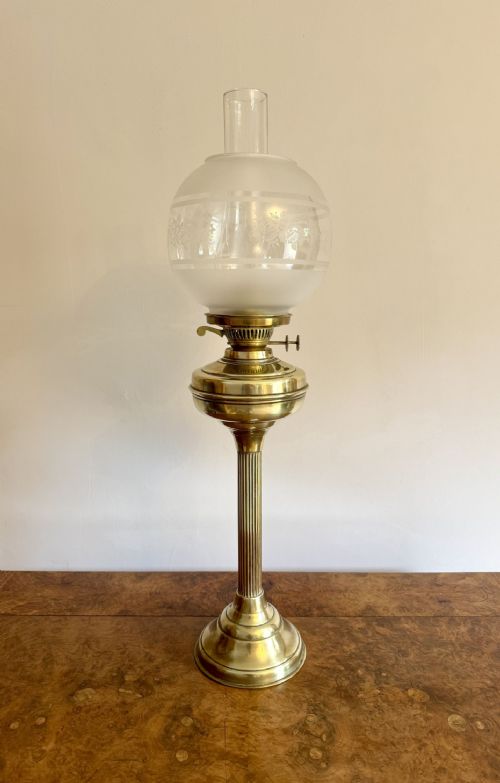

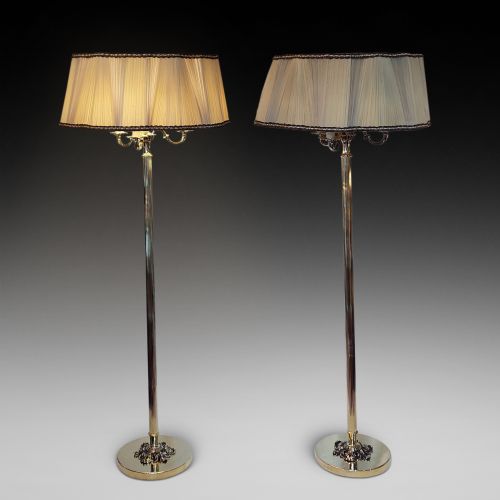


Reeded Brass Column Lamp
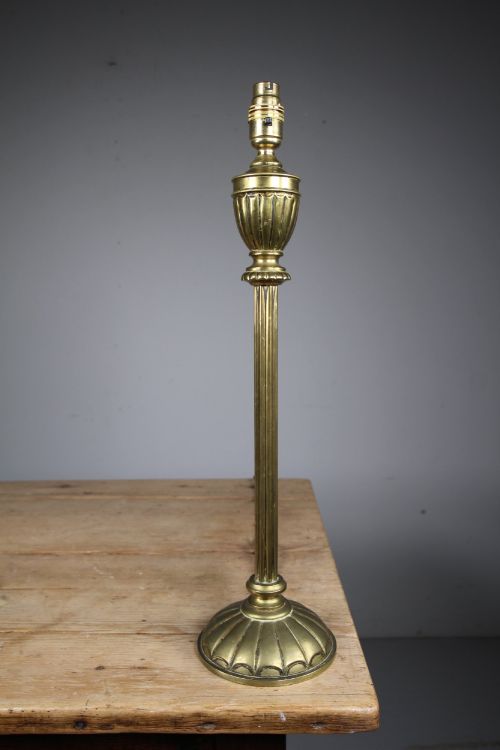
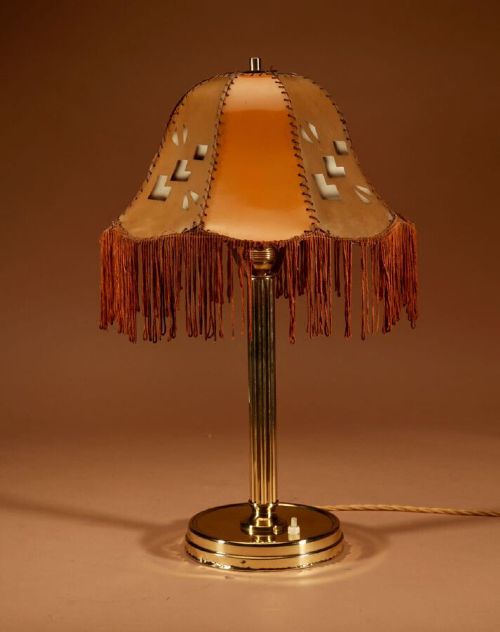
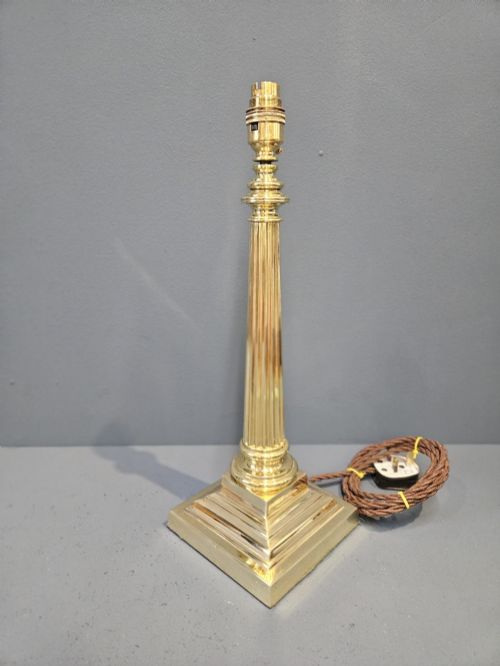
A reeded brass column lamp brings classical proportion and warm metallic light to a room, drawing the eye with its fluted shaft.

Reeded Brass Column Lamp
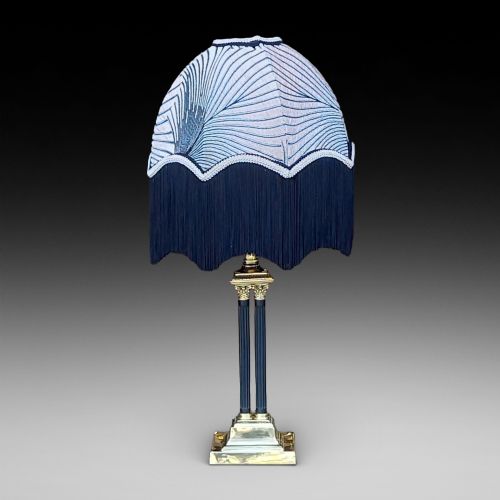
A reeded brass column lamp uses classical architectural orders, most often Corinthian or Doric capitals atop a slender fluted shaft, to anchor a lighting fixture. These pieces stand as table lamps or tall floor standard lamps, frequently originating as Victorian or Edwardian paraffin oil lamps before conversion to electricity.
The heavy weighted base ensures stability for the tall column, while the upper section accommodates burners, glass reservoirs, or modern lamp holders. Many examples emerge from the late nineteenth and early twentieth centuries, reflecting a sustained domestic appetite for classical revival design.
Occasional variations incorporate materials such as cut glass reservoirs or marble plinths alongside the primary brass structure. These additions elevate the decorative scheme while maintaining the core structural geometry of the fluted column.
Assessing quality and proportion
Superior examples demonstrate crisp casting definition in the acanthus leaves of a Corinthian capital and substantial wall thickness in the brass column. Finer pieces maintain correct architectural proportions without appearing overly heavy or compressed.
The presence of maker stamps on burners, such as Duplex or Young's, indicates higher grade manufacturing from established firms. Original components like cut glass fonts or weighted bases separate well-preserved specimens from altered stock.
Listings demonstrate that brass column lamps span the Victorian, Edwardian, and Art Deco periods, frequently appearing alongside glass and fabric elements.
The Reeded Brass Column Lamp Glossary
- Reeded
- A series of parallel convex mouldings closely resembling inverted fluting. This decorative surface treatment runs vertically along the brass column shaft.
- Corinthian column
- An architectural order featuring an ornate capital decorated with acanthus leaves. This style forms the decorative apex of many tall table and standard lamps.
- Duplex burner
- A twin-wick mechanism common in nineteenth-century oil lamps. Such burners generated brighter illumination and frequently bear maker identification on the thumb wheels.
- Standard lamp
- A tall freestanding floor lamp designed to illuminate a larger area of a room. These pieces often share the columnar brass construction found in smaller table versions.
- Pat tested
- Portable appliance testing verifying electrical safety. Converted antique lamps undergo this process to ensure safe modern operation.
Reeded Brass Column Lamp: Frequently Asked Questions
How do I date a brass column lamp?
Dating relies upon stylistic markers such as capital design, base weight, and burner mechanics. Victorian examples often display heavier cast components and oil reservoir fittings.
Later Edwardian and 1920s iterations tend toward sleeker profiles or slight variations in classical revival detailing. Component construction methods provide further clues to the period of manufacture.
Were these lamps originally electric?
Most nineteenth and early twentieth-century examples began life as paraffin or oil lamps before later conversion to electricity. Manufacturers adapted the original metal columns to house modern wiring and lamp holders.
This conversion process preserves the classical metalwork while updating the functionality for contemporary domestic interiors.
How do I care for antique brass?
Routine maintenance requires only gentle dusting with a soft, dry cloth to prevent the accumulation of grime. Aggressive metal polishes should be avoided to protect the aged patina built up over decades.
Preserving the surface finish maintains the authentic character developed since the Victorian or Edwardian era.
Can I use standard lampshades?
Most standard fittings accommodate a variety of shades provided the shade carrier matches the lamp holder type. Proportion remains the primary consideration when pairing a shade with a tall column.
Selecting a shade that complements the height and width of the brass base ensures visual balance within the room.