

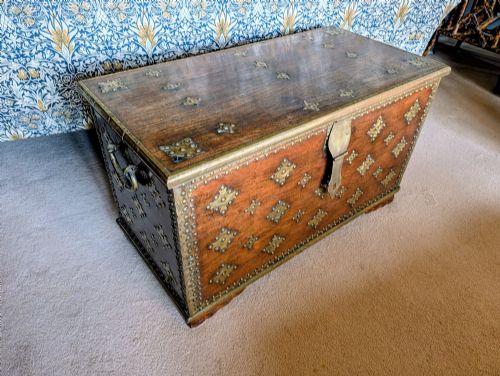


Reddish Brown Trunk
A reddish brown trunk offers robust storage and rich timber tone, bringing practical history and warmth straight into a room.
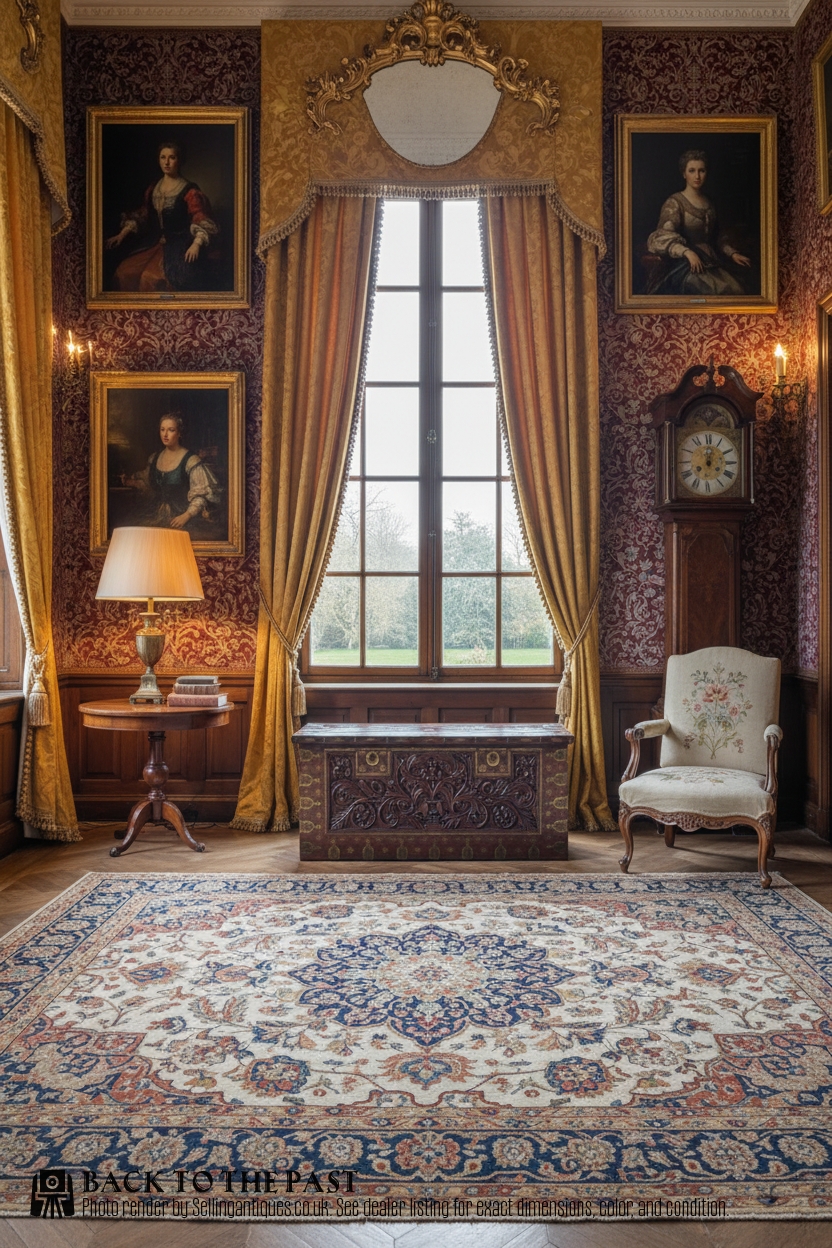
Reddish Brown Trunk
A reddish brown trunk encompasses sturdy storage chests, blanket boxes, and leather ottomans spanning the nineteenth and early twentieth centuries. These practical containers served travellers, farmers, and households alike for holding textiles, valuables, and personal effects.
The varieties seen on this page range from Colonial padouk and camphor wood chests to painted or plain pine strong boxes and Scottish kists. Regency leather ottomans and traditional Chinese boxes also appear alongside rustic country examples.
How they were made
Makers utilised dense timbers such as padouk, camphor wood, and pine to build these durable storage chests. Hardwoods provided resilience for distant travel, while regional pine served local domestic needs.
Construction frequently incorporated iron or brass hardware for reinforcement and handles, alongside leather upholstery for seating pieces. Surface finishes included original paintwork or polished timber, preserving the natural reddish brown grain.
Reddish Brown Trunk Retail Price Guide 2026
Typical asking prices for reddish brown trunk among the pieces listed under this phrase on Sellingantiques today, from the lower quarter to the upper quarter. They describe what is for sale here now, not the wider market.
The periods represented span the Regency era, the Victorian epoch, and the early twentieth century up to nineteen twenty.
What varies in quality
The standard of a reddish brown trunk rests upon the selection of timber and the integrity of its construction. Dense exotic hardwoods like padouk and camphor display superior grain depth compared to utilitarian pine.
Original surface treatments, such as early paint or patinated leather, elevate the character of a piece. Finer examples retain their original brass or iron mounts and stable structural joints.
The Reddish Brown Trunk Glossary
- Padouk wood
- A heavy, durable tropical timber known for its rich reddish brown colour and stability. It was frequently utilised for campaign furniture and export chests during the nineteenth century.
- Camphor wood
- An aromatic Asian timber prized for blanket boxes because its natural scent deters insects. It displays a warm reddish brown tone when polished.
- Kist
- A traditional Scottish and Northern European wooden storage chest or trunk. These boxes typically held linens and household valuables.
- Strong box
- A heavily reinforced chest designed for securing money and important documents. They often feature iron strapping and robust locks.
- Ottoman
- A low upholstered seat or footstool with a hollow interior for storage. Regency examples often utilised leather coverings.
Reddish Brown Trunk: Frequently Asked Questions
What were reddish brown trunks used for?
These chests served primarily for storing blankets, garments, and personal valuables in domestic settings. Many were also built for travel, protecting belongings during long sea voyages or overland journeys.
Over time, their robust construction made them dependable fixtures in hallways, bedrooms, and farmhouses. Today they continue to function as practical storage while adding historic character to modern interiors.
How do I care for a wooden trunk?
Keep wooden storage chests away from direct sunlight and sudden temperature shifts to protect the timber and original finishes. Dust them gently with a dry cloth and occasionally nourish bare wood with appropriate natural wax.
Avoid placing damp items directly inside antique boxes, particularly those lined with historic paper or unsealed timber. Good ventilation helps preserve the interior condition of camphor and pine.
How can I tell a nineteenth century trunk apart?
Nineteenth century pieces typically display construction methods such as hand-cut dovetails and forged iron or brass fittings. The timber often shows deep natural patina and wear consistent with age and utility.
Examining the underside, interior surfaces, and fixings reveals the age and origin of the box. Regional variations, such as Scottish kists or Colonial padouk chests, also point to specific manufacturing traditions.
Where should I place a trunk in my home?
A storage chest works exceptionally well at the foot of a bed for holding spare linens and pillows. They also serve effectively as coffee tables or window seats in living areas.
Their substantial presence anchors a room while offering concealed storage for clutter. Placing them in hallways provides a convenient spot for boots and everyday items.