



Red Woven Floor Mat
A red woven floor mat brings warmth and deep pattern to a room through centuries-old nomadic and village traditions.
Red Woven Floor Mat
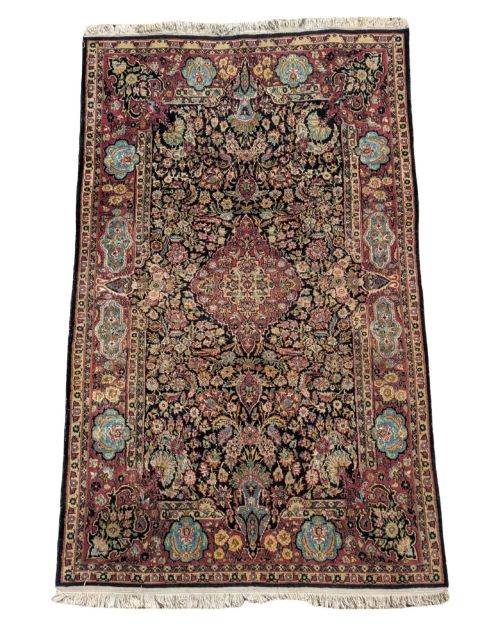
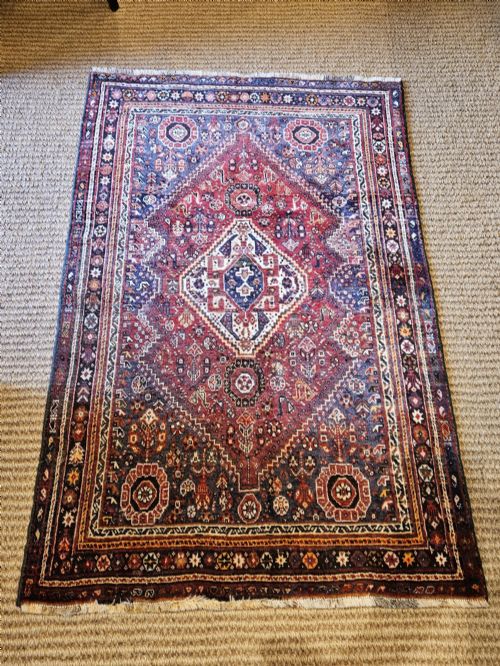
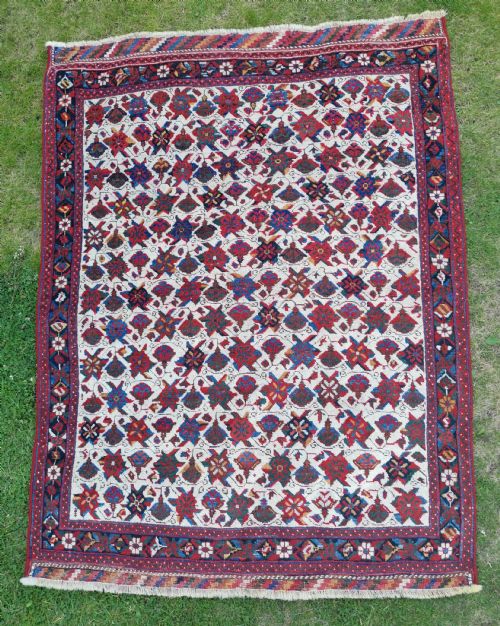
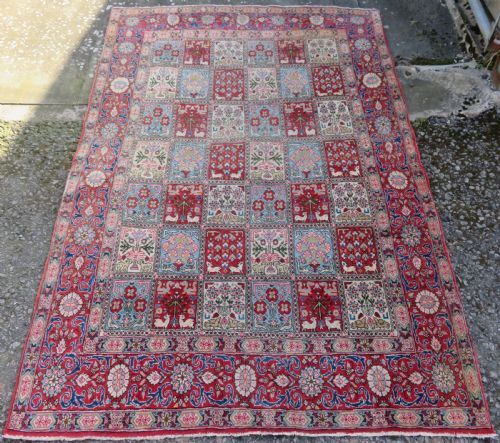
When searching for a red woven floor mat, buyers encounter a diverse selection of hand-knotted and flat-woven rugs originating from Persian, Caucasian, Turkmen, and Anatolian traditions. These textiles span from the late nineteenth century through the early twentieth century, encompassing village and tribal formats such as runners, saddlebags, and area rugs.
The pieces represented here predominantly utilise rich red, rust, and crimson tones derived from natural dyes, often contrasted against deep blues and ivories. Forms range from large carpets to compact square mats and prayer rugs, reflecting the distinct utilitarian and artistic heritage of their makers.
How they were made
Construction relies heavily on durable wool, occasionally accented with cotton foundations or silk highlights to add textural depth to the pile. Weavers utilised natural dyes to achieve lasting colour saturation across traditional geometric, floral, and gul motifs.
Techniques vary from dense pile knotting to flat-woven soumak and kilim structures, depending on the regional workshop or nomadic group responsible for the textile's creation.
Listings feature wool, cotton, and silk materials spanning the late nineteenth century to 1930.
What varies in quality
Quality in these floor coverings is determined by the tightness of the weave, the clarity of the design motifs, and the richness of the natural dye palette. Finer knot counts allow for intricate detailing in geometric guls and floral fields.
The preservation of original wool pile, structural integrity along the edges and kilim ends, and depth of colour distinguish exceptional village and tribal examples from standard utilitarian pieces.
The Red Woven Floor Mat Glossary
- Gul
- A repeating octagonal medallion motif frequently found in Turkmen and Baluch tribal rugs. This design element often serves as a clan identifier.
- Kilim
- A flat-woven carpet or rug produced without a pile. These pieces rely on tightly packed horizontal weft threads pulled closely over vertical warp threads.
- Soumak
- A flat-weaving technique involving wrapping weft threads over and under the warp to create a textured, braided surface on the face of the textile.
- Prayer rug
- A small mat featuring a mihrab or arch design indicating the direction of prayer. These textiles were traditionally used for daily devotions.
- Heratti
- A repeating floral pattern composed of a central rosette enclosed by leaves and flanked by fish-like motifs. This design is common in Persian weaving traditions.
Red Woven Floor Mat: Frequently Asked Questions
How do I clean an antique woven floor mat?
Gentle surface brushing and professional specialist cleaning are recommended to protect fragile natural wool fibres and historic dyes from moisture damage.
Avoid harsh chemical detergents and mechanical agitation, which can weaken the historical foundation of the weave over time.
Are these rugs suitable for high-traffic hallways?
Many of these sturdy wool and cotton constructions were originally made for demanding domestic or nomadic daily use, making them resilient underfoot.
Placing a proper underlay beneath the mat helps prevent slipping and reduces uneven wear in busy areas of the home.
How can I tell a tribal rug from a city piece?
Tribal and village rugs typically display geometric guls, asymmetrical styling, and robust wool textures reflecting nomadic life.
City carpets often exhibit finer, highly symmetrical floral compositions with cotton foundations and higher knot densities.
What causes the varied shades in natural red dyes?
Natural dyes react to mineral water content, wool quality, and atmospheric exposure over decades, creating subtle variations known as abrash.
These natural tonal shifts are a hallmark of traditional dyeing methods using organic materials rather than synthetic colourants.