
Vintage Nomadic Textile
When searching for a vintage nomadic textile, you discover woven and embroidered bags, horse covers and wall hangings made by tribal groups across Persia and Central Asia.
Vintage Nomadic Textile
A vintage nomadic textile encompasses utilitarian objects created by tribal groups and nomadic confederacies for daily domestic and transport use. These pieces range from storage bags and saddle covers to ceremonial hangings and infant cradles, originating largely from Persian, Afghan and Turkmen regions. When browsing this selection, you encounter items woven, knotted or embroidered by communities whose traditional way of life depended on pastoral migration.
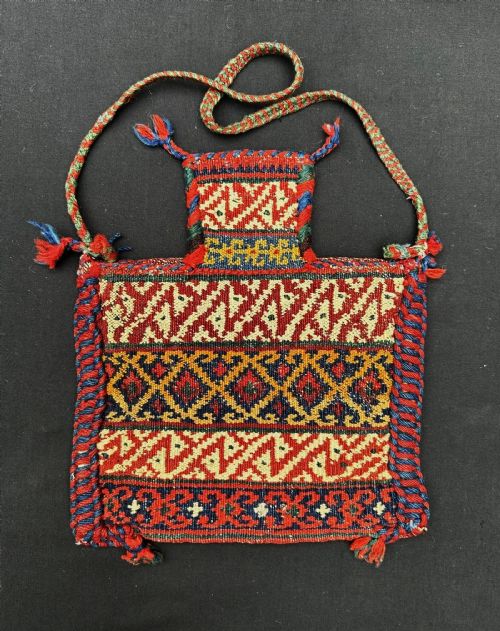
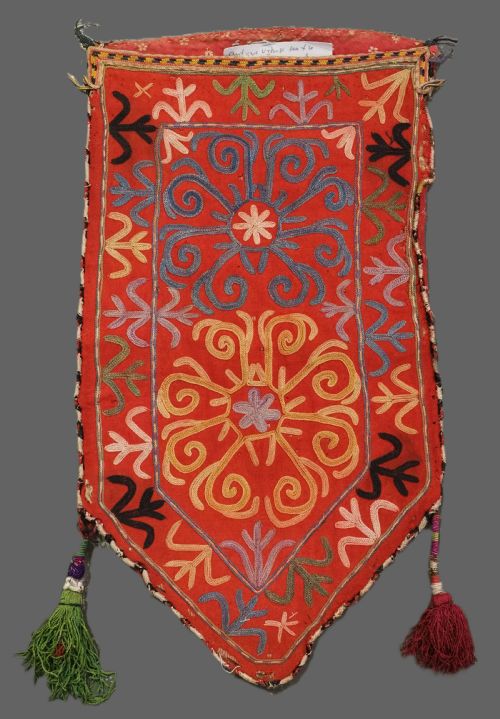
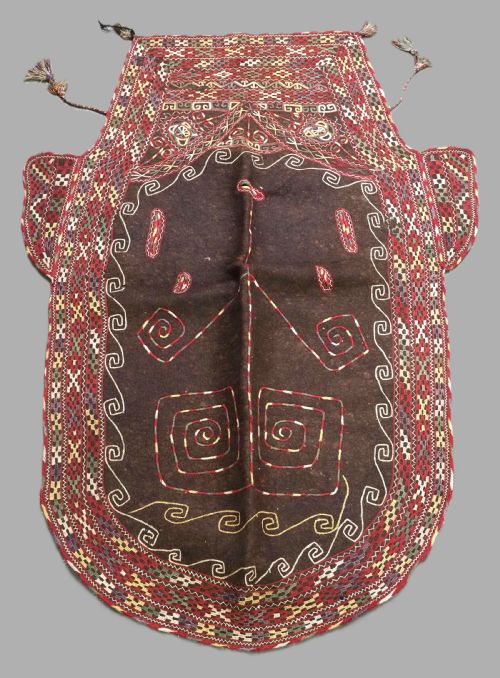
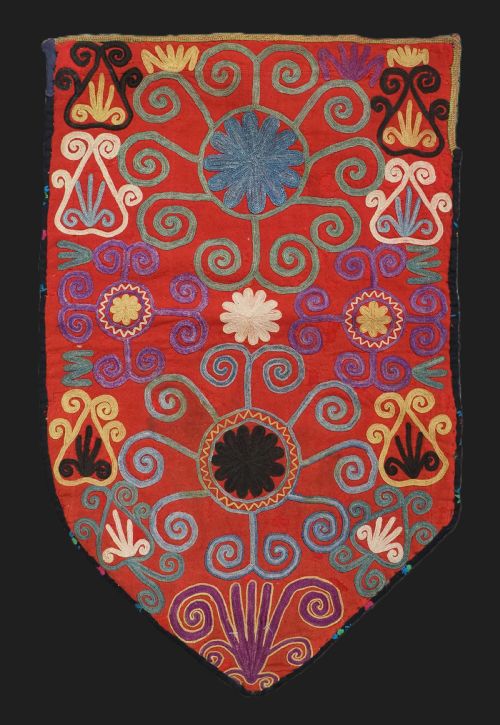
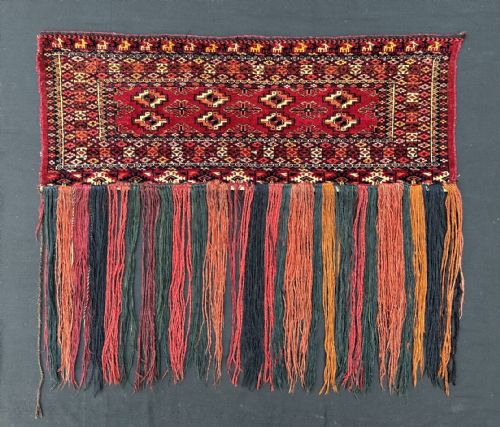
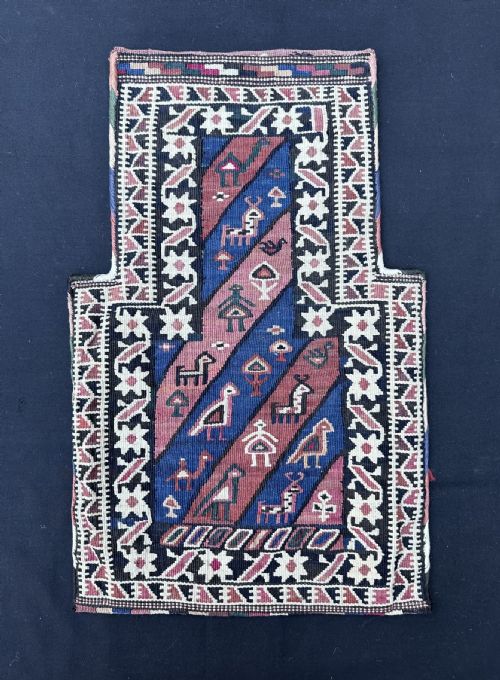
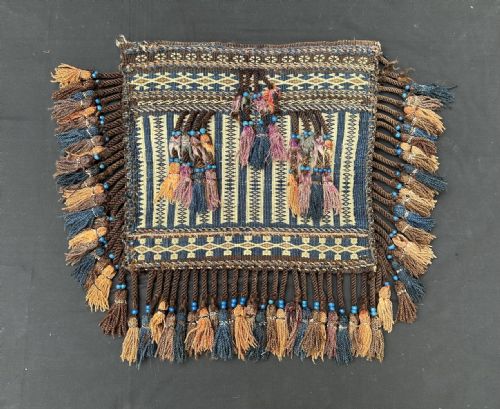
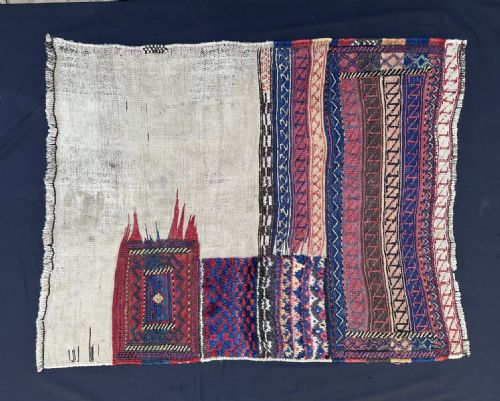
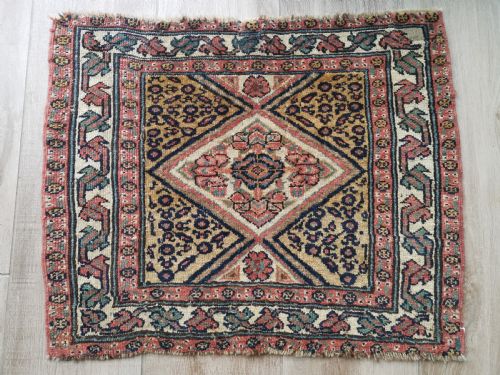
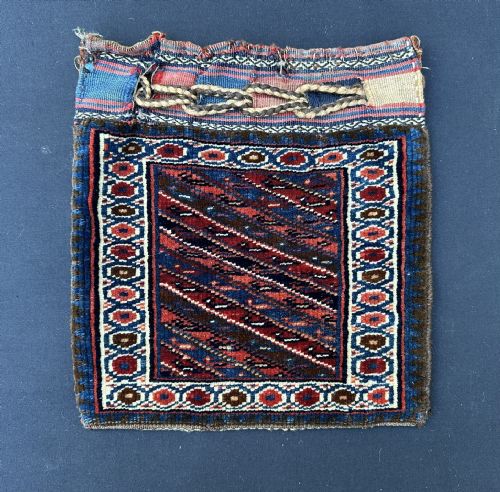
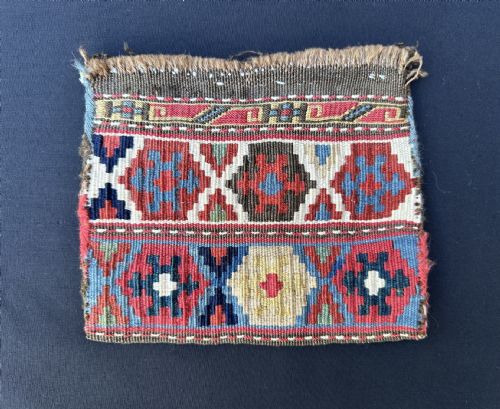
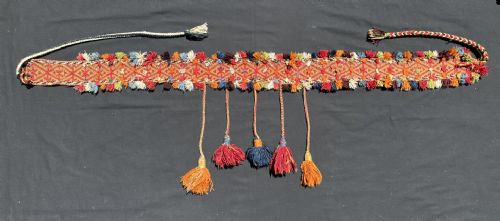
The objects seen here reflect specific regional identities, including Qashqa'i, Afshar, Baluch, Yomut and Uzbek Lakai makers. Each piece was constructed for a practical purpose within a nomadic household, whether to store salt, tobacco and bedding or to adorn horses during ceremonies and migrations. Survival and utility dictated the forms, yet makers applied distinct tribal motifs and colour combinations that identify their origin.
Materials and construction methods
Makers relied primarily on wool, hand-spun wool and cotton, supplementing them with felt and occasional silk highlights. Wool provided durability and warmth for items subjected to heavy use in transit and camp life, while cotton frequently served as a sturdy foundation structure. Felted wool and plain weave techniques offered protection against weather and wear for horse blankets and storage sacks.
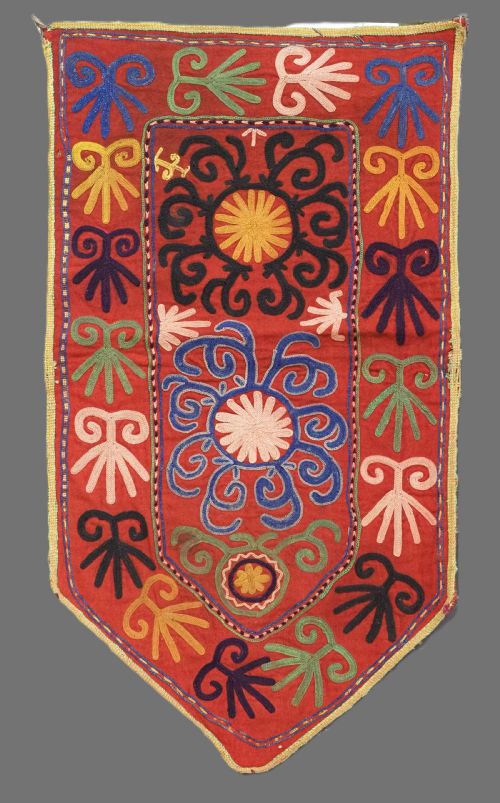
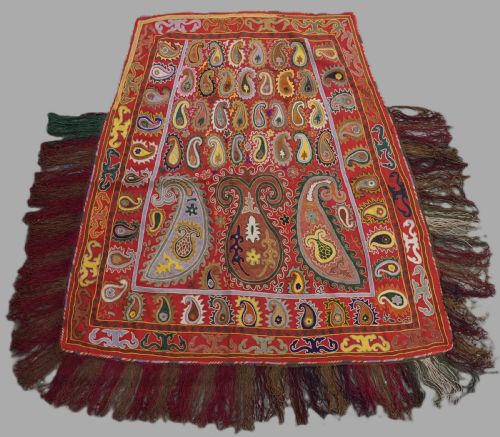
Colour came from natural dyes applied to animal fibres, yielding rich tones that age with considerable character. Embroidery forms a major category of construction, notably seen in the dense silk or wool stitching executed by Uzbek Lakai groups on felt and fabric panels. Artisans also utilised pile-weaving and flat-weaving methods to produce sturdy bag faces and trappings designed to endure decades of practical handling.
Nomadic weavers occasionally incorporated tiny protective amulets directly into the wool pile to guard livestock and infants from misfortune.
Determinants of quality
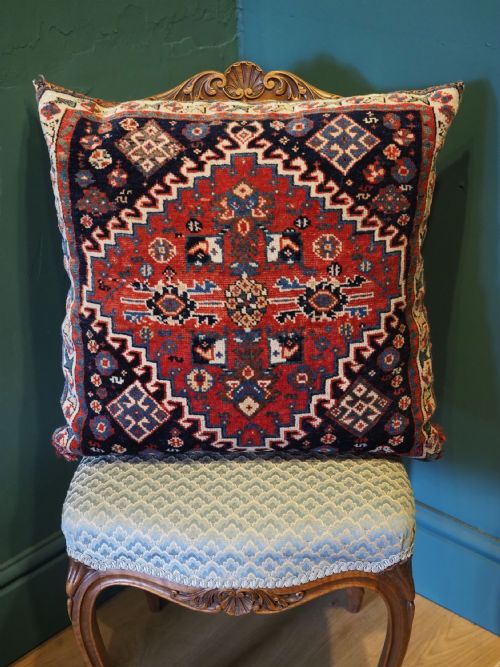
Quality in these textiles rests upon the integrity of the materials and the precision of the tribal weave or embroidery. Pieces featuring tightly spun wool, resilient natural dyes and intact original structures command attention because they retain their structural strength after a century or more of existence. Finer examples display meticulous knotting density or highly controlled, complex needlework that speaks to the artisan's skill.
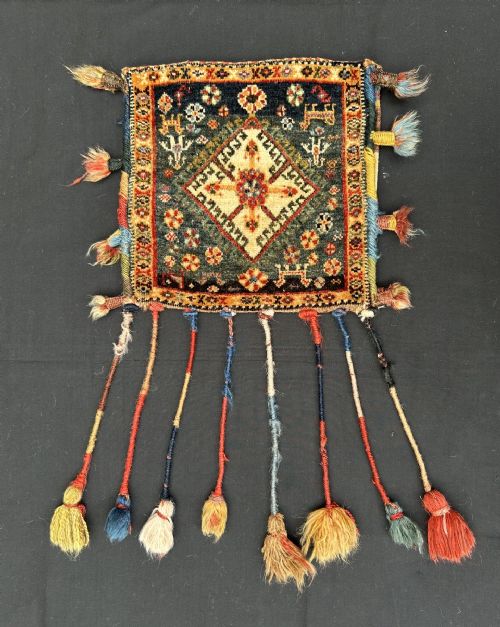
The visual strength of the design and the preservation of original borders, tassels and backs also elevate certain pieces. Items that keep their complete format, such as a torba with its plain weave reverse or a horse cover with original fringes, offer a more complete historical record. Conversely, heavy structural loss or coarse, uninspired execution distinguishes lower-tier examples from masterworks of tribal art.
The Vintage Nomadic Textile Glossary
- Asmalyk
- A large, pentagonal ceremonial horse trapping used by Turkmen tribes, traditionally hung on the flanks of a bride's camel during wedding processions. These decorative pieces display distinct tribal güls and geometric borders.
- Torba
- A small storage bag produced by Turkmen and other Central Asian groups, generally wider than it is tall. They were hung inside the yurt to hold household belongings and personal items.
- Ilgich
- A dowry embroidery piece created by Uzbek Lakai women, characterised by lively chain-stitch needlework on felt or fabric grounds. These panels served as wall hangings within the nomadic dwelling.
- Mafrash
- A rectangular storage bag face or complete container used in pairs for bedding and clothing transport on pack animals. They exhibit robust flat-woven or pile-knotted techniques designed for load-bearing durability.
Vintage Nomadic Textile: Frequently Asked Questions
How were these bags used?
Nomadic families utilised these woven and embroidered containers for packing, storing and transporting household possessions on camels, horses and donkeys. Salt, tobacco, bedding and personal items all had specific designated sacks within the tent.
Beyond simple storage, many pieces served ceremonial functions during weddings and tribal gatherings. Horse covers, asmalyks and bridal trappings demonstrated the wealth and artistic output of the family during public celebrations.
Where did these textiles originate?
The pieces originate from pastoral and nomadic groups inhabiting Persia, Central Asia, Afghanistan and the Caucasus. Regions such as Fars, Khorassan, Turkmenistan and Uzbekistan provided the grazing lands where these distinct tribal confederacies moved.
Each tribe, from the Yomut and Ersari Turkmen to the Qashqa'i and Baluch, maintained distinct visual traditions. Their location and migration routes directly influenced the materials, dyes and motifs visible in their weaving.
How do I care for a vintage textile?
Protect the textile from direct sunlight to prevent natural dyes from fading over time. Gentle vacuuming through a mesh screen helps remove dust without pulling loose wool fibres.
Avoid hanging heavy textiles by isolated points, as this strains the old foundation threads. Mounting them on a padded board distributes the weight evenly across the entire surface of the fabric.
How are tribal groups identified?
Tribal attribution relies on specific combinations of structure, knotting style, dye palette and repeating motifs known as güls. Weavers passed these design vocabularies down through generations within specific clans and confederacies.
Comparing structural elements like selvedges, end finishes and wool quality helps narrow down the geographic origin. Books and museum archives documenting nomadic weaving traditions provide the comparative material needed for accurate classification.