
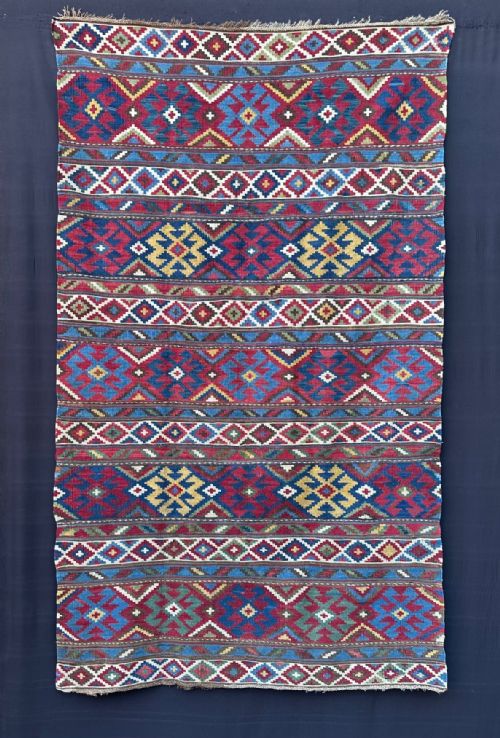

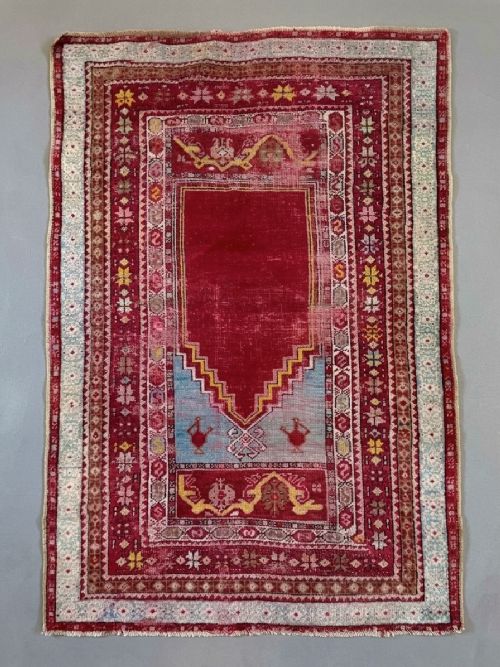




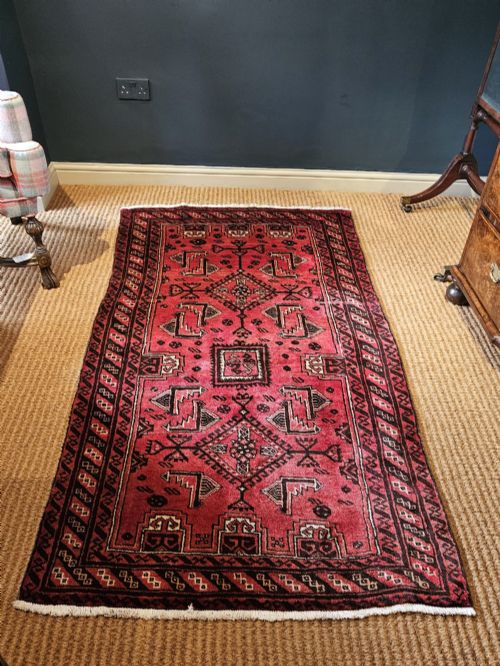
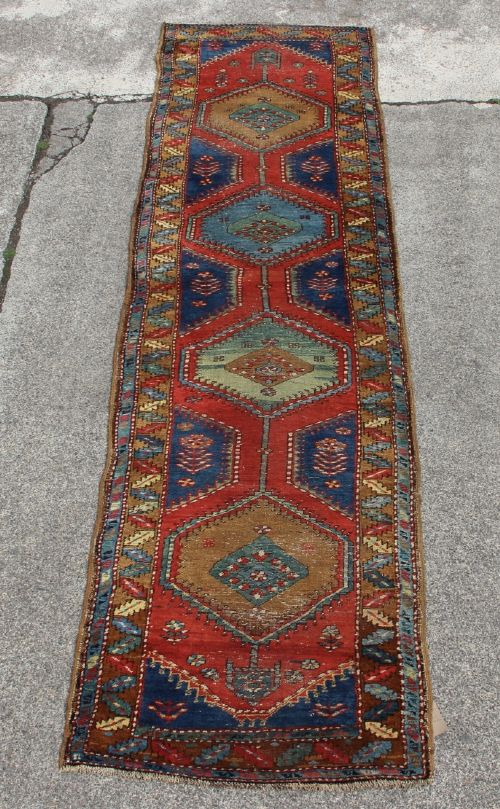

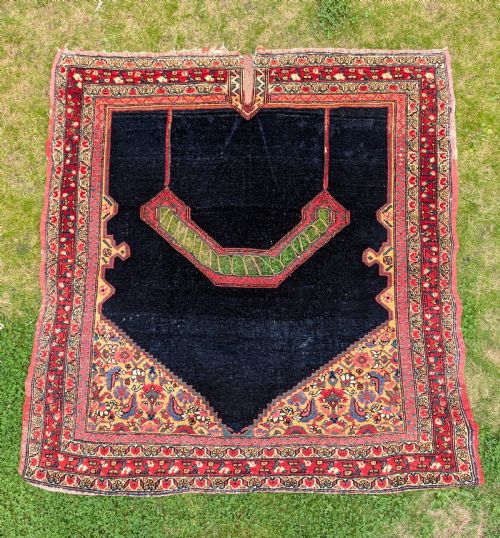


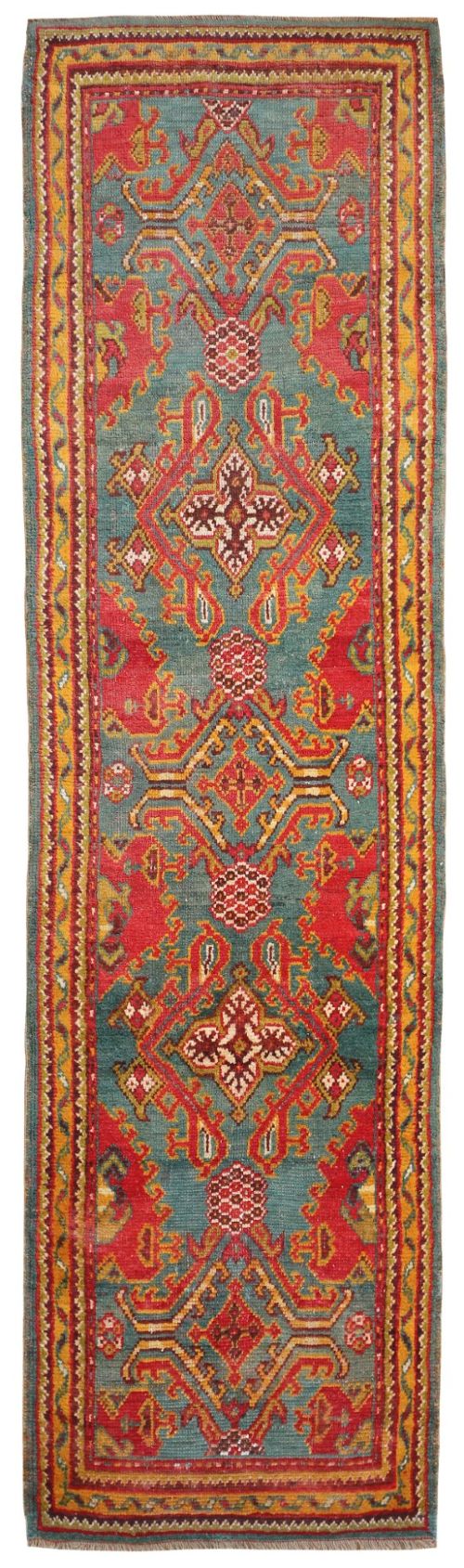
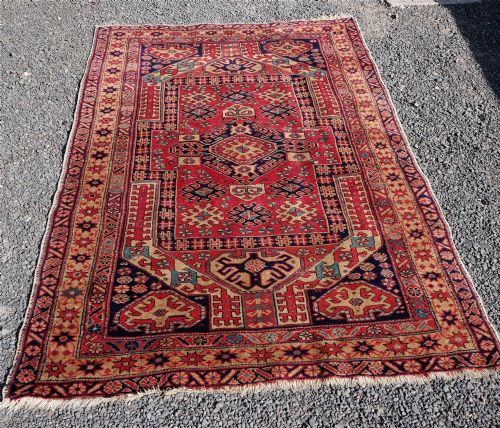
Red Wool Tribal Carpet
A red wool tribal carpet brings warmth and grounded history to a room through dense hand-knotted patterns.
Red Wool Tribal Carpet
A red wool tribal carpet embodies centuries of nomadic and village weaving traditions originating from Persia, the Caucasus, Anatolia, and Turkmenistan. When searching for a red wool tribal carpet, buyers encounter formats ranging from square area rugs and long hallway runners to specialised prayer rugs and saddle covers. The selection spans the late nineteenth century through to the early decades of the twentieth century, capturing distinct regional motifs.
The prevalent types include Persian tribal weaves from regions such as Bakhtiar, Afshar, and Heriz alongside Caucasian Kazak and Shirvan pieces. Turkmen main carpets and Baluch village rugs also appear frequently, characterised by deep madder red tones and symbolic geometric layouts. Each piece reflects the specific tribal heritage and local knotting practices of its maker.
Materials and construction
Makers utilised hand-spun wool and pure wool for the pile, dyed with rich red hues derived from local plants and insects. Cotton foundations or wool foundations provide the robust structural warp and weft supporting the dense pile.
Some ceremonial pieces incorporate felted wool or delicate silk thread details alongside standard cotton threads. Individual knots secure the wool yarns firmly to the foundational grid, resulting in a resilient textile designed for enduring utility.
Red Wool Tribal Carpet Retail Price Guide 2026
Typical asking prices for red wool tribal carpet among the pieces listed under this phrase on Sellingantiques today, from the lower quarter to the upper quarter. They describe what is for sale here now, not the wider market.
Listings feature wool, cotton, and silk threads spanning the nineteenth and early twentieth centuries from Persian, Caucasian, and Turkmen traditions.
Assessing quality and character
The standard of a weave depends upon the density of the knots and the precision of the geometric or floral layout. Finer wool selection yields a softer handle and a more luminous depth of colour across the surface.
The integrity of the original wool selvedges and the completeness of the ends distinguish well-preserved examples. Variations in regional dyes impart distinct tonal shifts that enhance the visual richness of the textile.
The Red Wool Tribal Carpet Glossary
- Mihrab
- A niche design symbolising a doorway or prayer focal point, commonly found in regional prayer rugs. This architectural motif guides the orientation of the textile.
- Runner
- A long, narrow carpet format designed specifically for hallways, corridors, or narrow passageways. These pieces balance length with manageable widths.
- Madder
- A natural red dye extracted from the roots of the Rubia plant, utilised extensively for traditional wool coloration. It produces deep, enduring crimson and russet tones.
- Selvedge
- The reinforced side edges of a carpet formed by wrapping lateral warp threads to prevent fraying. Sound selvedges indicate careful structural maintenance.
- Warp
- The stationary vertical threads stretched onto a loom that form the foundational skeleton of the rug. Weft threads intersect these to lock the knots in place.
Red Wool Tribal Carpet: Frequently Asked Questions
How do I clean an old wool rug?
Professional dusting and specialist immersion washing preserve the natural lanolin within the wool fibres. Harsh chemical detergents strip the pile of essential oils and alter the traditional dye colours.
Gentle surface vacuuming without a rotating brush bar removes embedded grit between the knots. Keeping the textile away from direct, harsh sunlight prevents premature fading of the madder reds.
Where were these carpets originally woven?
Nomadic tribes and settled villagers produced these textiles across Central Asia, Persia, the Caucasus, and Anatolia. Communities in regions such as Shirvan, Turkmenistan, and Kurdistan passed down specific design vocabularies through generations.
Local access to grazing sheep provided abundant wool supplies for daily production. Each geographic area developed distinct colour palettes and geometric symbols unique to its culture.
What underlay should I use?
A breathable, natural rubber mesh underlay prevents the rug from slipping on hardwood or carpeted floors. This protective layer also cushions the wool foundation against abrasive friction.
Selecting a quality underlay permits adequate air circulation beneath the dense pile. It distributes foot traffic evenly across the historic weave.
How can I identify regional styles?
Caucasian pieces typically display bold geometric medallions and stark primary colours. Persian and Turkmen carpets often feature intricate all-over repeating patterns in saturated madder red hues.
Examining the knotting structure, fringe finishing, and edge binding reveals clues regarding the place of origin. Specific motifs act as signatures for particular tribal groups.