


Red Wool Hall Carpet
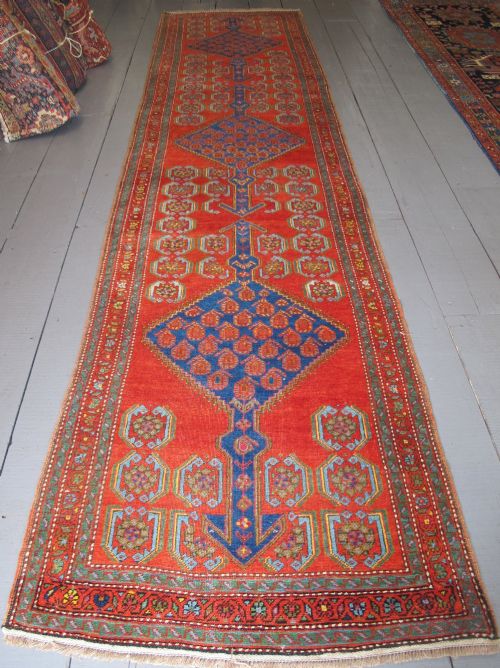
A red wool hall carpet provides a long, narrow run of floor covering tailored to narrow spaces.
Red Wool Hall Carpet
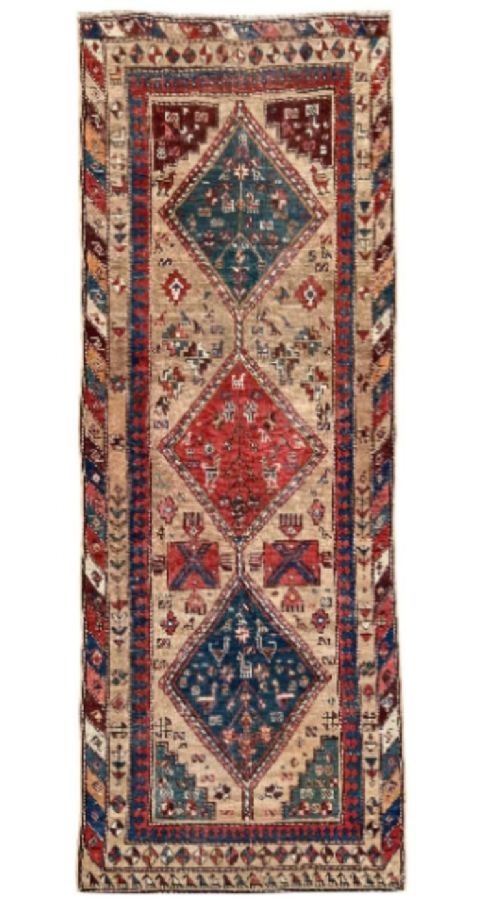
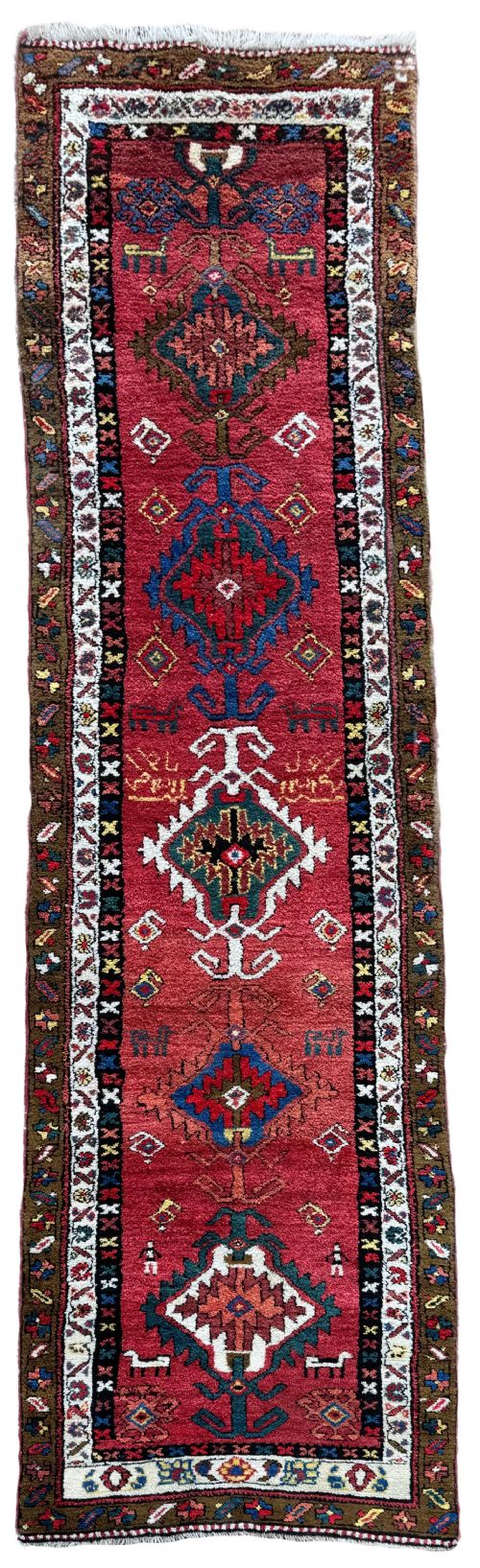
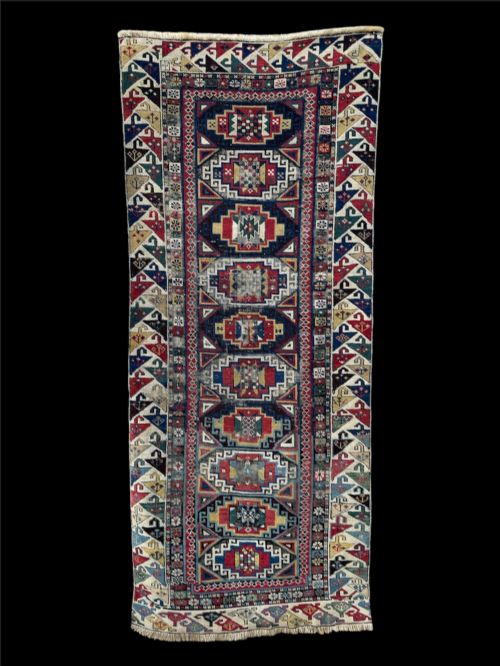
A red wool hall carpet is a runner or long rug designed specifically for corridors, halls, and landings. These pieces span periods from the mid-nineteenth century through to the mid-twentieth century, with notable representation from the Victorian era and the decades following. The pieces frequently originate from Persian and Caucasian weaving traditions, including regional styles such as Heriz, Kurdish, Shirvan, and Bakshaish.
The format is characteristically narrow and elongated, accommodating the linear proportions of corridors and stair halls. Surviving examples demonstrate a variety of tribal and traditional village designs, ranging from geometric Caucasian patterns to classical Persian medallion arrangements.
How They Were Made
Construction relies primarily on wool, often hand-spun and combined with cotton foundations to provide structural stability over long spans. Natural dyes impart the characteristic red grounds and contrasting secondary tones seen across the inventory.
Weaving techniques vary by origin, encompassing both Persian city and village workshops alongside Caucasian and tribal methods. The resulting textiles employ hand-knotted piles that withstand the heavy foot traffic typical of hallways.
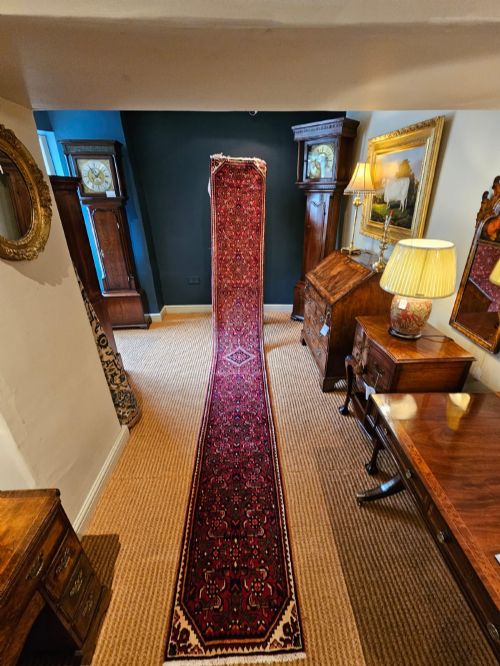
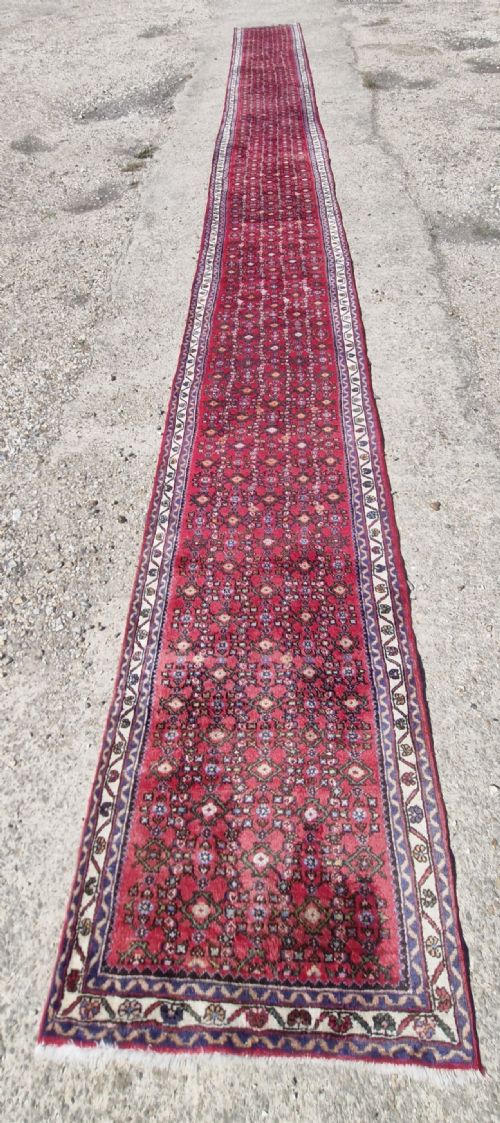
Some narrow runners stretch to extraordinary lengths of over ten metres, requiring a marathon effort to unroll.
What Varies in Quality
Quality in a red wool hall carpet rests upon the fineness of the knotting and the integrity of the materials. Hand-spun wool and well-fixed natural dyes yield greater depth of colour and longevity.
Proportion and design execution further distinguish individual runners. Pieces displaying balanced geometry, clear drawing, and disciplined border arrangements demonstrate superior weaving skill.
The Red Wool Hall Carpet Glossary
- Runner
- A long, narrow carpet format intended for corridors, hallways, and stairs. These pieces measure significantly longer than they are wide.
- Pile
- The vertical or diagonal loops of yarn that form the usable surface of a carpet. In these pieces, the pile is hand-knotted from wool.
- Natural Dye
- Colouring matter derived from plants, insects, or minerals rather than synthetic compounds. These dyes yield softer, more complex hues that age characteristically.
- Medallion
- A central ornamental motif placed in the field of a carpet. Such designs recur frequently in Persian weaving traditions.
- Boteh
- A stylised floral motif resembling a folded leaf, almond, or flame. This motif appears widely in Caucasian and Persian textiles.
Red Wool Hall Carpet: Frequently Asked Questions
Where should I place a long runner?
These carpets suit narrow transition spaces such as corridors, hallways, and entrance passages. Their proportions accommodate the linear nature of these areas while protecting flooring.
Ensure the space allows for adequate clearance along the edges. Measuring both length and width carefully prevents obstruction of doors.
How do I care for antique wool carpets?
Regular gentle vacuuming without a beater bar removes surface grit from the wool pile. Professional cleaning maintains the integrity of the natural dyes and fibres.
Keep the carpet away from prolonged direct sunlight to prevent fading. Rotating the piece periodically ensures even wear across the length.
What defines a Caucasian runner?
Caucasian carpets typically feature bold geometric motifs and striking primary colours. These regional pieces originate from areas such as Shirvan, Kazak, and Karabagh.
The designs often incorporate rectilinear medallions and stylised tribal symbols rather than elaborate floral curves.
How are nineteenth-century runners identified?
Dating relies on material characteristics, dye analysis, and structural conventions specific to the period. Hand-spun wool and traditional natural dye palettes offer key indicators.
Regional weaving structures and archaic design elements further assist in placing a piece within the nineteenth century.