


Red Wingback Armchair
A red wingback armchair brings warmth and high-backed enclosure to a room, drawing the eye instantly.
Red Wingback Armchair
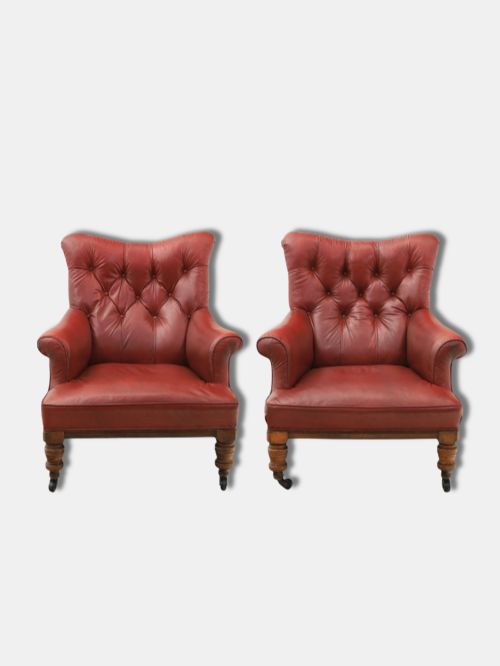
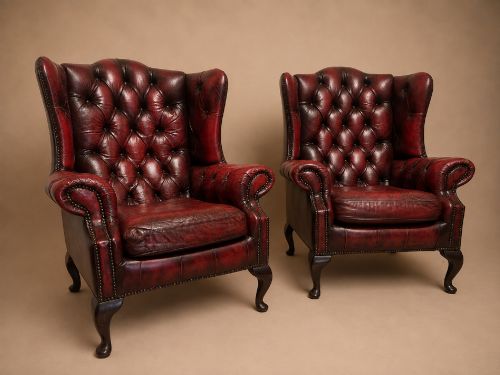
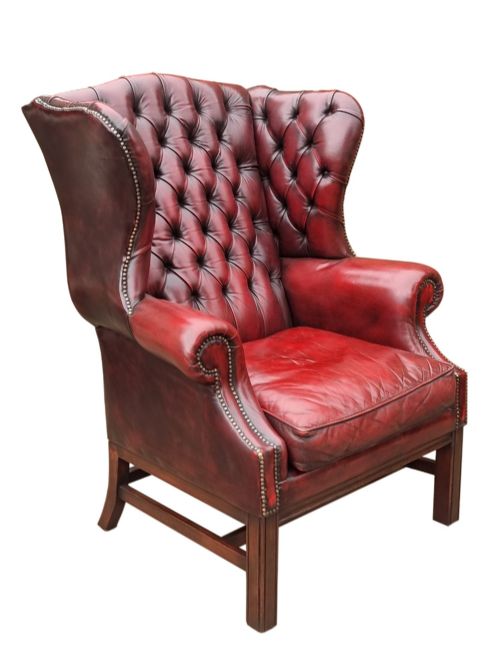
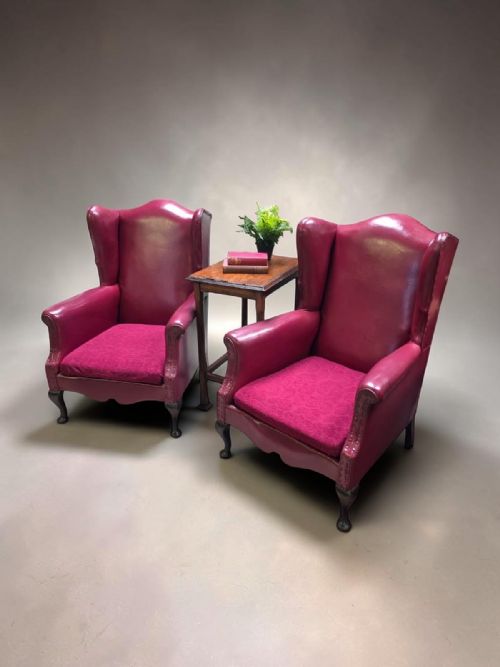
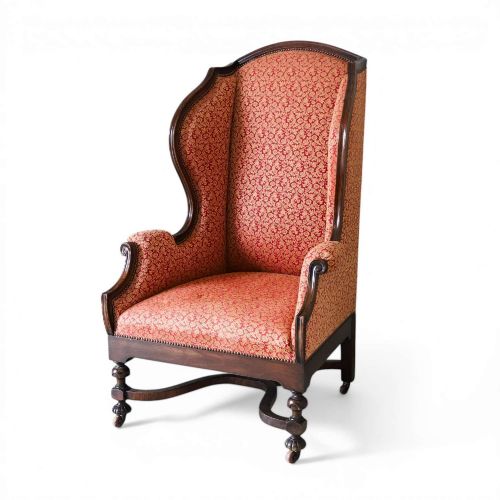
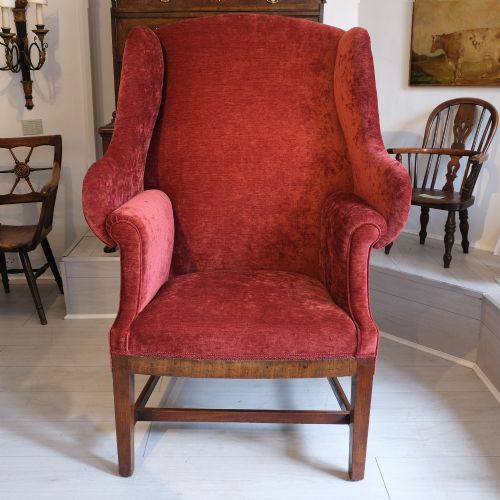
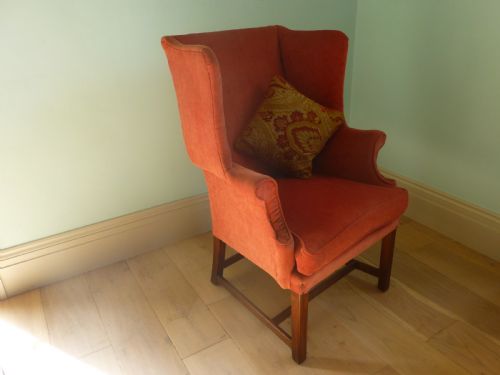
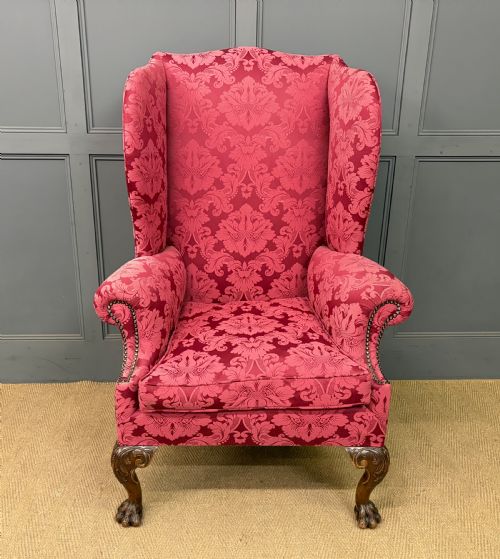
A red wingback armchair is a substantial seat designed to shield the occupant from drafts, featuring characteristic protective side panels on the upper frame. When buyers search for a red wingback armchair, they encounter examples spanning from the Georgian and 18th century through the Victorian era up to the 1920s and 1930s. These seating pieces appear frequently in rich leather, oxblood rexine, or deep red fabric upholstery.
The materials and framework beneath the textile vary widely according to the period of origin. Frames constructed from mahogany, walnut, oak, and timber support coverings in red damask, chenille twill, velvet, and leather. Certain pieces show revival influences, including George III style, Queen Anne style, and Carolean styling.
Most examples function as fireside or library seating, offering deep proportions and substantial padding. Pairs of chairs and matching footstools also appear across the selection, alongside individual reading chairs.
Construction and materials
The underlying structure relies on sturdy timbers such as mahogany, walnut, oak, and general hardwood frames, joined to withstand decades of sitting. Carved details occasionally appear on the wooden legs and arms, particularly in revival pieces.
Upholstery involves traditional stuffing techniques enclosed by fabrics ranging from leather and oxblood rexine to red damask, velvet, and chenille twill. Brass elements such as castors or tacks frequently finish the lower portions of Victorian and Georgian models.
Some mid-century examples arrive dressed in bright American Stars and Stripes fabric.
Measures of distinction
The integrity of the wooden frame and the retention of original timber components dictate the underlying worth of an armchair. Pieces that maintain their structural stability without extensive timber replacement stand apart from heavily altered examples.
The choice of covering and the execution of the upholstery dictate visual impact. Rich red leather, damask, or velvet applied with attention to proportion and traditional methods elevates the presence of the chair.
HOWARD AND SONS·John Reid And Sons
The Red Wingback Armchair Glossary
- Wingback
- An upholstered armchair with side panels designed to trap heat and block draughts. These protective extensions run from the armrests up to the high back.
- Rexine
- A leathercloth material utilised as an alternative to hide. This coated fabric appears on mid-century and 1920s utilitarian seating.
- Chenille twill
- A textured woven fabric offering a soft, velvety pile. This material provides warmth and depth to Victorian and later upholstery.
- Castor
- A small wheel attached to the base of furniture legs for mobility. Brass versions frequently support the feet of Victorian armchairs.
Red Wingback Armchair: Frequently Asked Questions
What is a red wingback armchair?
A red wingback armchair is a high-backed seat featuring protective side flaps designed originally to shield against draughts. They appear in shades of red ranging from oxblood leather to crimson damask.
These chairs serve as statement pieces in studies, libraries, and living rooms, combining substantial padding with traditional wooden frames.
How do I date an antique armchair?
Dating relies on examining the timber species, leg design, construction joints, and upholstery methods beneath the fabric. Georgian and 18th-century pieces often display hand-carved mahogany or walnut frames with distinct proportions.
Victorian and later 20th-century examples introduce machine-cut elements, brass castors, and alternative covering materials like rexine or chenille twill.
Where should I place this chair?
These armchairs suit fireside settings, reading corners, or central positions in a traditional study. Their high backs create a private enclosure suited for quiet relaxation.
Pairing a large wingback chair with a matching footstool or placing two chairs opposite one another creates a balanced seating arrangement.
Are these chairs comfortable for daily use?
Most pieces offer deep padding and supportive high backs intended for prolonged sitting. Their generous proportions accommodate reading and relaxing.
Upholstered surfaces in leather or thick fabric provide durable comfort that adapts well to regular household use.