
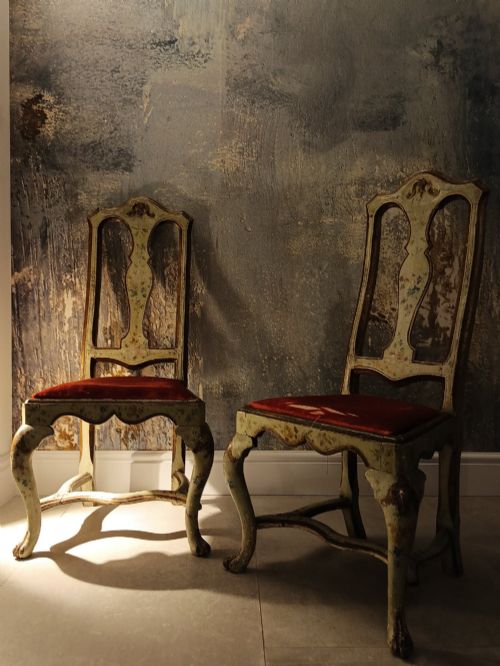
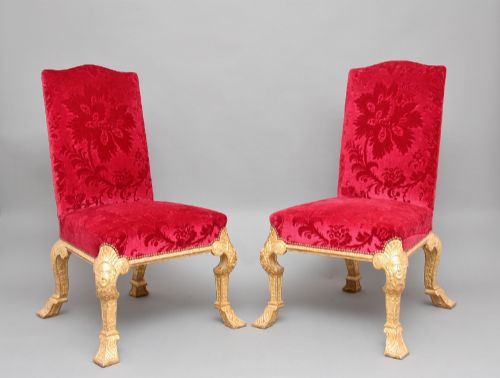


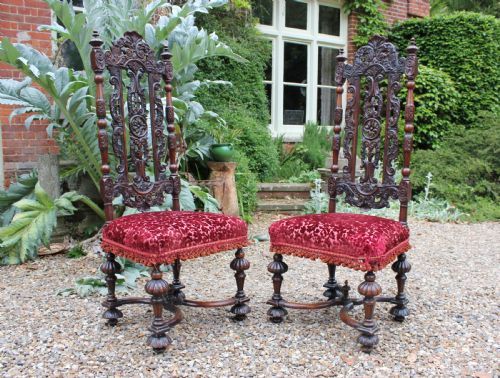


Red Velvet Hall Chair
A red velvet hall chair brings weight and theatrical colour to an entrance, grounding the space with rich historic presence.
Red Velvet Hall Chair
A red velvet hall chair combines structural timber framework with sumptuous crimson textile upholstery designed to impress visitors the moment they enter a home. These seating pieces function primarily as statement furniture in hallways, landings, and formal corridors rather than for long periods of seated comfort.
The options appearing on this page span several distinct eras, stretching from eighteenth-century examples to Victorian interpretations. Buyers frequently encounter side chairs and hall chairs fashioned in styles ranging from Italian Rococo and Dutch Baroque to Victorian Gothic and George I revival forms.
Makers historically produced these furnishings from robust timbers such as walnut, mahogany, oak, and beechwood, often integrating carved details. The application of giltwood or gesso frequently heightens the visual drama of the timber structures supporting the plush red velvet pads.
How they were made
Cabinetmakers constructed the wooden frames of these chairs using traditional joinery methods suited to heavy timbers like walnut, mahogany, and oak. Skilled artisans then shaped the structural elements through hand carving, producing intricate details associated with Baroque, Gothic Revival, and Rococo styles.
Surface ornamentation involved techniques such as gilding timber frames, applying gesso, or finishing the wood with paint and French polish. Upholsterers secured the crimson velvet textiles onto the seats and backs using traditional stuffing materials and fastening methods appropriate to each period.
Even a solitary hall chair commands an empty corridor, acting like an impeccably dressed butler standing at attention.
What varies in quality
The refinement of the hand carving on the wooden frame distinguishes superior examples from simpler production. Crisp execution in walnut, mahogany, or giltwood reveals the hand of a skilled artisan rather than mechanical replication.
The choice of materials and the integrity of the underlying structure dictate the lasting stability of the piece. Dense hardwoods and well-preserved textiles maintain their character far better than hurried replacements or degraded original elements.
George Morant
The Red Velvet Hall Chair Glossary
- Giltwood
- Timber that has been coated with a thin layer of gold leaf or gold paint. This finish creates a brilliant reflective surface popular in Baroque and Rococo designs.
- Gesso
- A plaster-like mixture applied to wood surfaces to prepare them for painting or gilding. It allows artisans to carve fine decorative relief details before applying gold leaf.
- Side Chair
- An upright chair without arms designed for general seating around a room or along a hallway wall. These pieces feature prominently among historic seating inventories.
- Baroque
- An ornate artistic style emphasising drama, exuberant detail, and grand scale. This aesthetic flourished across seventeenth and eighteenth-century Europe.
- Gothic Revival
- An architectural and decorative style drawing inspiration from medieval forms. Pieces in this idiom often display pointed arches and heavy timber construction.
Red Velvet Hall Chair: Frequently Asked Questions
Where should I place a red velvet hall chair?
These chairs suit entrance halls, grand landings, and reception rooms where their striking colour and historic form create a strong visual impact. They serve primarily as sculptural elements rather than everyday lounging seats.
Keep them away from direct sunlight to preserve the rich tone of the velvet textile and protect the polished wooden or gilt surfaces from fading.
Are these chairs comfortable for daily sitting?
Historic hall chairs were built to project status and provide upright seating for guests waiting briefly in an entrance hall. They generally feature firm padding and rigid backs rather than modern ergonomic comfort.
Their design prioritises architectural presence and historic craftsmanship over relaxed lounging.
How do I identify the period of a hall chair?
Dating relies on examining the timber species, joinery techniques, and stylistic vocabulary used in the frame. Characteristics like barley twist turnings, Gothic arches, or Baroque carving point directly to specific design eras.
Comparing the construction details against documented historical examples helps clarify the age of the piece.
How do I care for the velvet upholstery?
Gentle brushing with a soft bristle brush helps maintain the pile of the velvet and removes surface dust. Avoid harsh chemical cleaners or excessive moisture which can damage historic textile fibres.
Professional textile conservation advice proves invaluable when dealing with eighteenth or nineteenth-century fabric elements.