





Red Urn Floral Painting
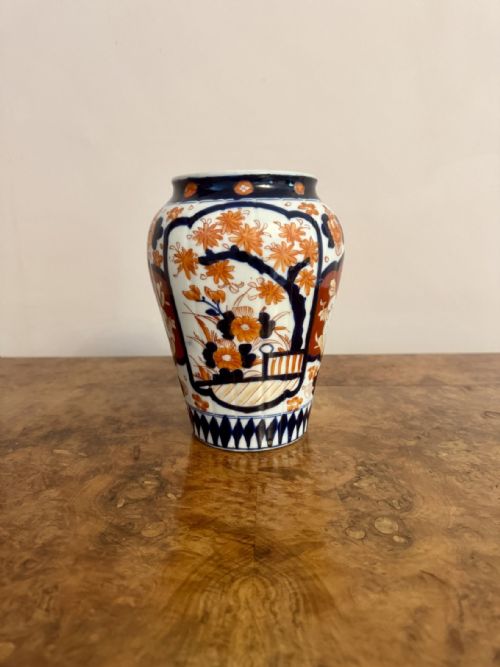
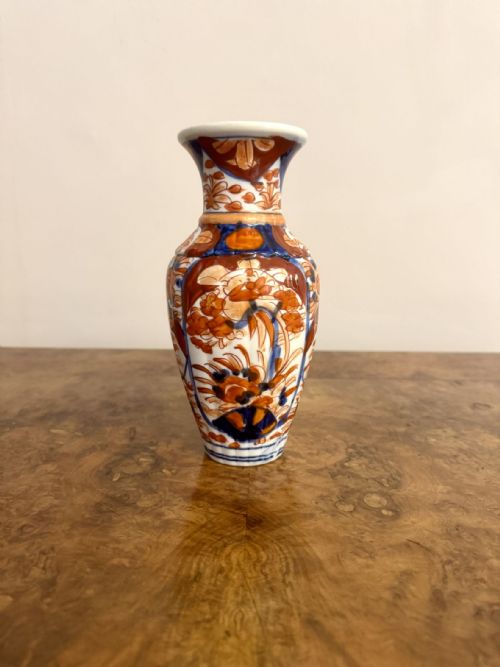
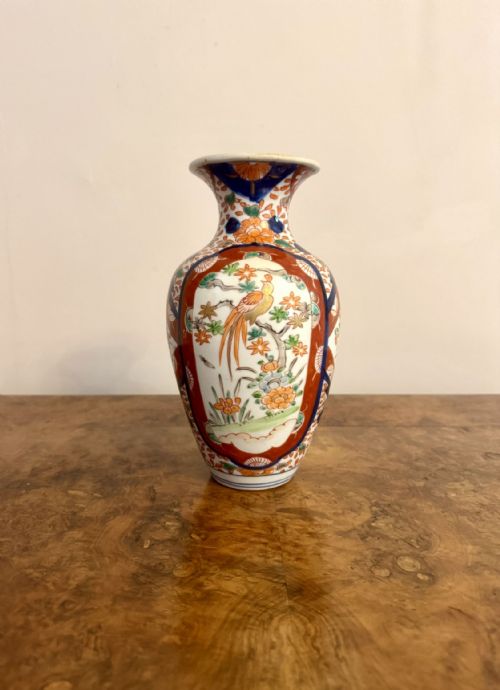
These red urn floral painting examples are Japanese Imari and Kutani vases that bring rich historic palettes and detailed botanical motifs into a room.
Red Urn Floral Painting
When you search for a red urn floral painting, you encounter Japanese Imari and Kutani vessels spanning the nineteenth century and the Edwardian era. The pieces on this page comprise vases, ginger jars, and lidded vessels shaped with fluted bodies or double gourd profiles.
Most examples originate from Japan during the Meiji period, characterised by robust porcelain forms and intricate surface decoration. You meet pairs of garniture vases alongside single large jars, all displaying the classic palette associated with these wares.
How they were made
Potters shaped porcelain bodies on the wheel or in moulds before applying underglaze cobalt and overglaze enamel colours. Artisans then integrated gold leaf and gilt highlights to enrich the botanical and floral patterns across the surface.
Kiln firing fixed the glaze and pigments, creating a durable finish that protects the detailed hand-painted designs. Workshops in centres like Arita produced these durable vessels for both domestic use and export.
Red Urn Floral Painting Retail Price Guide 2026
Typical asking prices for red urn floral painting among the pieces listed under this phrase on Sellingantiques today, from the lower quarter to the upper quarter. They describe what is for sale here now, not the wider market.
Double gourd vases resemble lucky gourds grown in Japanese gardens, thought to ward off evil spirits while holding your flowers.
What varies in quality
The precision of the hand-painted brushwork dictates the visual distinction of each vessel, separating standard production from finer output. Crisp lines in the floral and urn motifs alongside careful application of gold leaf indicate superior craftsmanship.
Proportion and form also determine the standing of a piece, with balanced double gourd profiles and well-fitted covers holding greater presence. The depth and vibrancy of the enamel glazes contribute further to the overall success of the decoration.
The Red Urn Floral Painting Glossary
- Imari
- A style of Japanese porcelain featuring a distinct palette of iron red, cobalt blue, and gilt. It originated in Hizen province and shipped through the port of Imari.
- Meiji Period
- The era of Japanese history lasting from 1868 to 1912, noted for a surge in decorative arts exported to Western markets. Pieces from this time often display confident brushwork and rich gilding.
- Garniture
- A set of three or more matching vases designed to sit together on a mantelpiece or sideboard. These matched groups provide a symmetrical display.
- Double Gourd
- A vase shape formed by two bulbous sections stacked vertically, resembling the traditional fruit. This profile allows for complex panelled decoration.
- Gilt
- A thin layer of gold applied to the surface of the porcelain to highlight specific decorative elements. It catches the light and adds contrast to the red and blue pigments.
Red Urn Floral Painting: Frequently Asked Questions
How do I clean an antique Imari vase?
Dust the porcelain gently with a soft, dry brush to prevent the accumulation of dirt on the textured enamel surface.
Avoid using water or chemical cleaners, as harsh substances can degrade the fragile gold leaf and overglaze pigments over time.
Where were these Japanese vases made?
The majority of these pieces originate from kilns in the Arita district of Japan, which served as the primary centre for porcelain production.
From there, items travelled to the port of Imari for shipment to international markets during the nineteenth and early twentieth centuries.
How can I tell the difference between Imari and Kutani?
Imari wares rely on a triad of cobalt blue, iron red, and gilt, often arranged in dense geometric and floral patterns.
Kutani pieces frequently emphasise pictorial scenes and a dominant red palette, though both styles share skilled hand-painted execution.
What is a ginger jar used for?
Ginger jars originally served as storage containers for spices, salt, and other valuable goods transported across long distances.
Later examples function purely as decorative covered vessels, adding height and colour to interior displays.