



Red Silk Ottoman
These red silk ottoman pieces offer rich textiles and seating, bringing tactile history and striking colour to any room.
Red Silk Ottoman
When you search for red silk ottoman, you encounter a varied collection ranging from deep button stools and bedding boxes to embroidered fragments, rugs, and panels. These items cross multiple centuries, spanning the seventeenth through the nineteenth centuries, and draw on diverse cultural traditions including Turkish, Greek island, and French design.
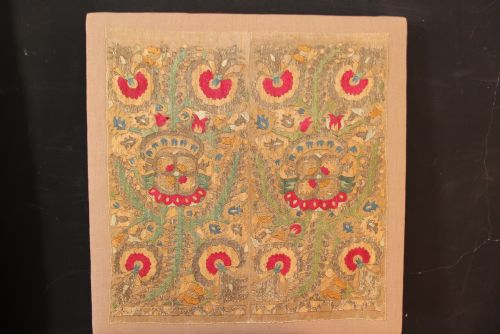
You are most likely to meet nineteenth-century Turkish rugs and embroidered fragments alongside eighteenth-century Greek island panels and occasional French stools. The selection bridges functional seating like the William IV burr walnut concave ottoman with decorative textile art such as framed panels, hand towel end panels, and gold-embroidered jackets.
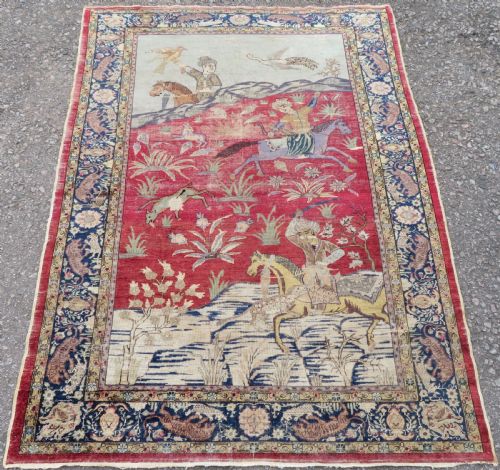
The regional origins shape the visual character, shifting from West Anatolian pictorial hunting scenes and Kayseri prayer rugs to Epirus hand towel ends and Skyros bedsheet borders. Alongside these Near Eastern and Greek works, occasional French pieces demonstrate deep button upholstery in red silk.
How they were made
The construction relies heavily on foundational textiles incorporating silk, linen, cotton, and velvet, often enriched with metallic thread. Wooden frames support upholstered forms like stools and bedding boxes, sometimes constructed in burr walnut or giltwood.
Needlework techniques define the decorative surfaces, featuring intricate embroidery on fragments, panels, and garments. Weaving methods produce pile rugs and flat textiles, while upholstery techniques create deep buttoned finishes on nineteenth-century seating.
Red Silk Ottoman Retail Price Guide 2026
Typical asking prices for red silk ottoman among the pieces listed under this phrase on Sellingantiques today, from the lower quarter to the upper quarter. They describe what is for sale here now, not the wider market.
What varies in quality
The refinement of the needlework and the complexity of the motifs separate the finer examples from simpler pieces. Rich colour saturation and the preservation of metallic thread or delicate silk pile determine the visual impact of each textile.
Structural integrity of the wooden frames and the original condition of the upholstery distinguish functional seating items. Completeness also matters, as intact rugs and panels retain more presence than fragmented borders and towel ends.
The Red Silk Ottoman Glossary
- Ottoman
- A piece of upholstered seating without a back or arms, or relating to the historical empire spanning parts of Southeastern Europe, Western Asia, and North Africa. Many listed textiles originate from this region and culture.
- Fragment
- A surviving portion of a larger textile or garment that has been preserved or mounted for display. These pieces show historical needlework techniques on a smaller scale.
- Bedsheet Border
- A decorative band of embroidery traditionally worked for domestic linens in the Greek islands. They display traditional regional patterns and stitching.
- Prayer Rug
- A small carpet featuring a mihrab design used for personal devotion. The Kayseri and Anatolian examples demonstrate traditional knotting and pictorial composition.
- Deep Button
- An upholstery technique where buttons are pulled deep into the padding to create a quilted, geometric pattern. This method appears on nineteenth-century French stools.
- Burr Walnut
- A timber harvested from the burl growth of a walnut tree, prized for its swirling grain patterns. It forms the cabinetwork on certain nineteenth-century seating pieces.
Red Silk Ottoman: Frequently Asked Questions
How do I clean an antique textile?
Historic textiles require delicate handling and professional conservation rather than standard washing.
Keep them away from direct sunlight to protect the silk and metallic threads from fading.
Can I use an antique stool for daily sitting?
Upholstered pieces from the nineteenth century generally support normal seating if the internal frame remains stable.
Heavier use is better suited to sturdier frames, while fragile fragments are best mounted and displayed on walls.
How do I tell an eighteenth century piece from a nineteenth century one?
Dating relies on stylistic motifs, textile weaves, and the specific characteristics of the regional embroidery.
Earlier eighteenth-century works often feature distinct island or Anatolian border patterns, while later nineteenth-century items show shifts in production methods and framing.
What is the difference between a rug and a textile panel?
Rugs are typically heavier, woven floor coverings with a dense pile designed for foot traffic.
Textile panels and fragments are lighter decorative hangings or mounted artworks meant purely for visual appreciation.