

Red Seat Dining Chairs
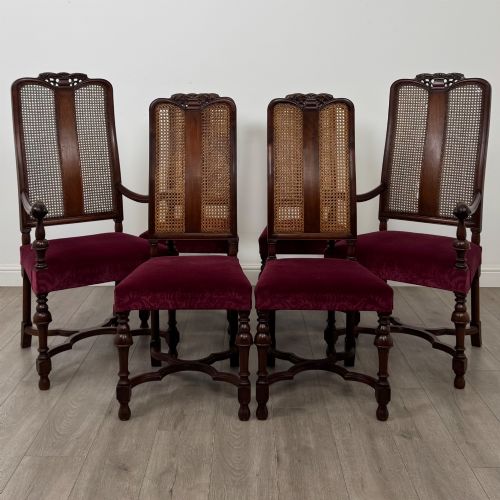
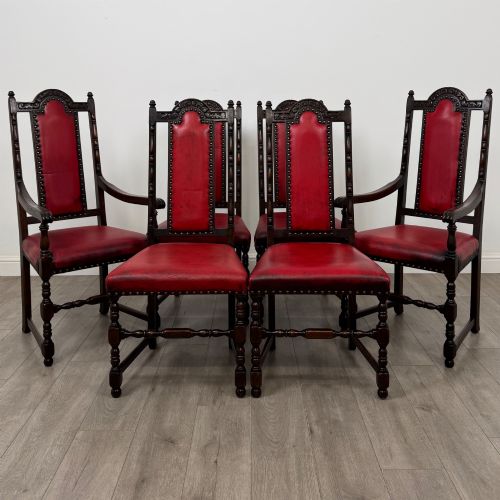
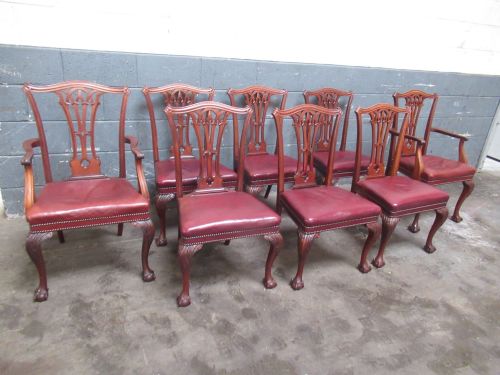
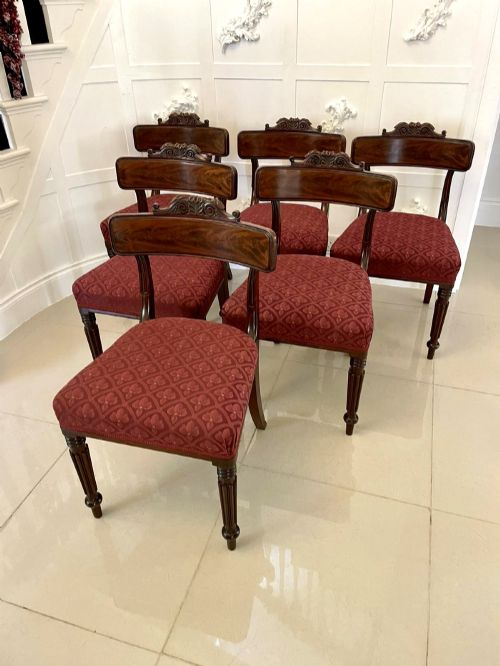
These red seat dining chairs bring warmth and formal presence to a room, offering sturdy frames and rich crimson upholstery.
Red Seat Dining Chairs
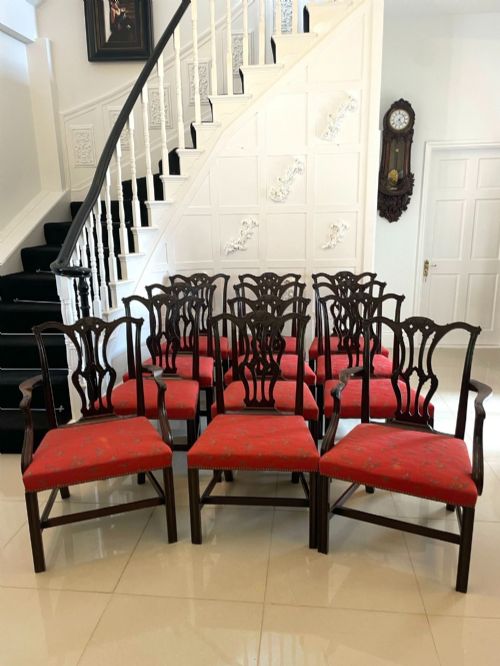
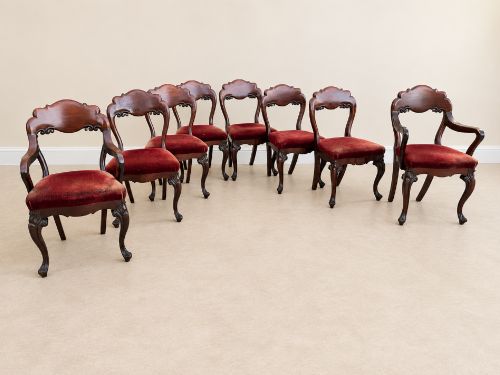
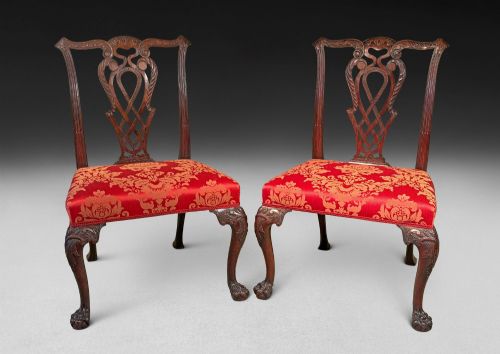
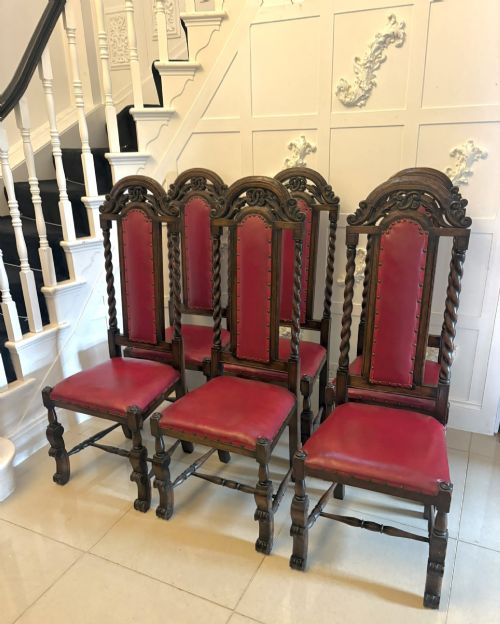
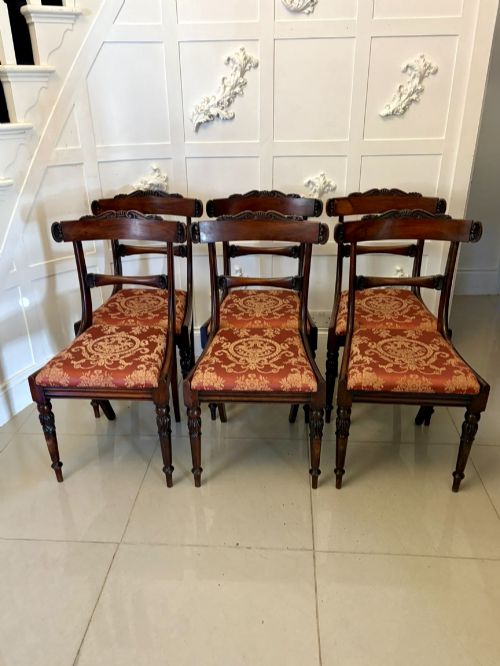
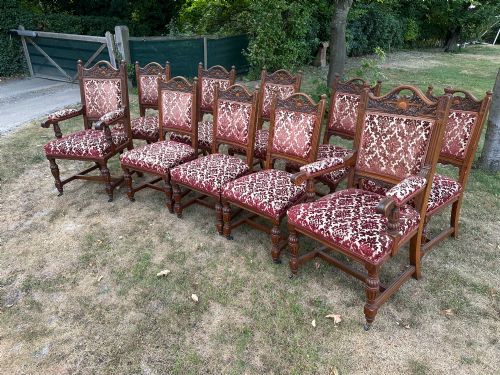
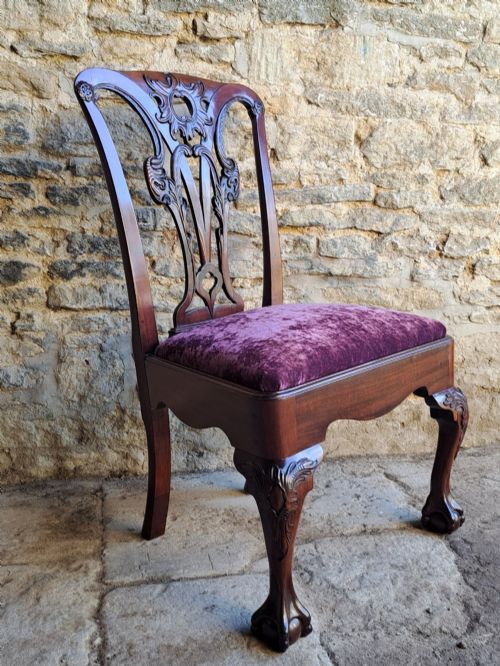
Red seat dining chairs appear across multiple centuries, ranging from early eighteenth-century walnut examples to Edwardian oak editions and later Victorian sets. A buyer searching this phrase encounters dining chairs, armchairs, and side chairs fashioned in styles like Regency, Chippendale, and William IV.
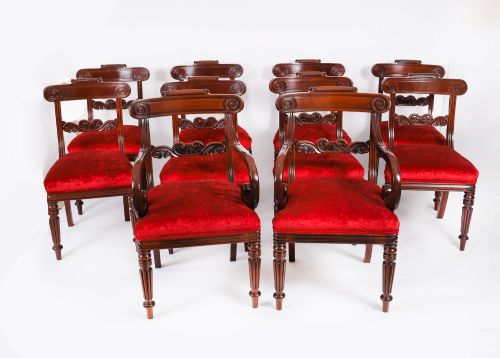
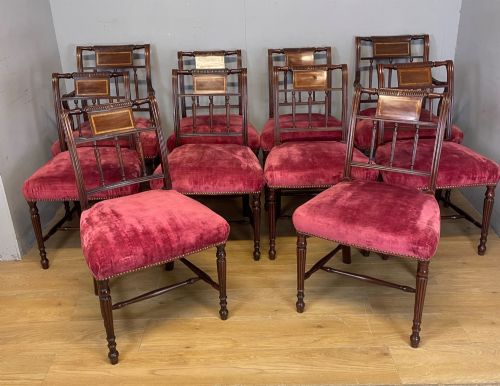
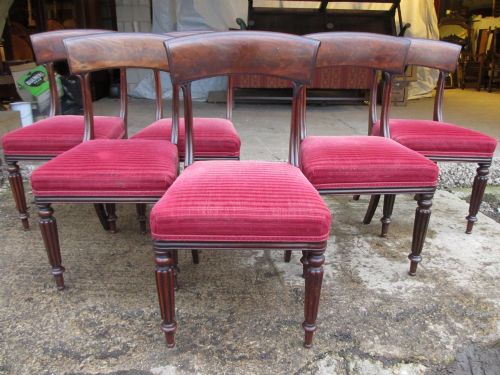
The versions most common on this page are larger sets of mahogany dining chairs from the nineteenth century, often retaining upholstered seats in leather, velvet, or fabric. These seating options combine practical utility with traditional British cabinetmaking forms.
Single pieces and smaller pairs also surface, spanning walnut and oak constructions with carved backs or shield-back profiles. The crimson seating inserts provide a consistent visual thread across varied eras of domestic seating.
Materials and Construction
Cabinetmakers relied heavily on dense hardwoods like mahogany, walnut, and oak to build durable chair frames that endure decades of use. Brass accents, inlay work, and turned or reeded legs appear frequently among the recorded pieces.
Upholstery methods involved textile coverings, button tufting, and leather pads fixed over supportive webbing and stuffing. Frames frequently utilise traditional joinery, including mortise and tenon joints to secure backrests and legs.
Several Victorian chairs feature hidden maker stamps pressed directly into the wooden seat rails.
Assessing Quality
The standard of carving and the crispness of detail in wooden elements separate standard workshop output from finer cabinet work. Original surface patination and timber selection dictate the visual depth of the frame.
The integrity of the frame construction and the quality of the upholstery materials determine the longevity and comfort of each chair. Matching sets that retain their original proportions command greater interest than assembled groups.
Gillows
The Red Seat Dining Chairs Glossary
- Carver
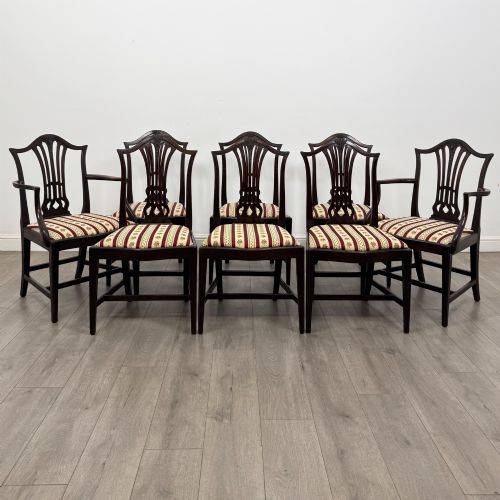
- An armchair designed to match a set of dining chairs, typically placed at the head of a table. These larger chairs often feature more elaborate arm supports.
- Shield Back
- A chair back design shaped like a heraldic shield, popularised in the eighteenth century by makers like Hepplewhite. This form offers a delicate silhouette while maintaining structural rigidity.
- Bar Back
- A horizontal cross-rail set across the back of a dining chair, sometimes carved or reeded. This style gained favour during the Regency and William IV periods.
- Overstuffed
- An upholstery technique where the fabric or leather covers the seat rails entirely, hiding the wooden frame beneath. This method provides a softer edge for dining comfort.
- Cross-Frame
- A structural form utilising intersecting stretchers or legs for added stability. It appears on various antique seating formats.
Red Seat Dining Chairs: Frequently Asked Questions
How do I clean antique leather seats?
Wipe the surface gently with a damp cloth using mild soap, avoiding excessive moisture. Apply a suitable leather conditioner periodically to keep the material supple.
Harsh chemical cleaners can strip the original finish and dry out old leather. Test any treatment on a hidden area first.
Are these chairs suitable for daily use?
Most antique dining chairs are built from sturdy hardwoods like mahogany and oak, making them robust enough for regular meals. Checking the joints and under-framing ensures they remain stable under daily weight.
Heavier individuals or frequent shifting may require professional tightening of loose frame joints. Protective pads on chair feet prevent unnecessary wear.
How can I date a mahogany dining chair?
Examine the timber grain, colour depth, and tool marks visible on the underside of the seat frame. Cabinetmaking styles, such as Regency brass inlay or Victorian balloon backs, offer clear chronological markers.
Machine-cut screws and modern adhesives indicate later replacement parts rather than original construction. Comparing leg profiles and stretcher placement helps narrow the period of origin.
Can mismatched chairs form a dining set?
Gathering single chairs or small pairs of a similar wood type creates an eclectic, traditional dining arrangement. Matching the approximate height and seat style maintains visual harmony around the table.
Keeping the upholstery uniform across different frames ties a diverse group together. Ensure the seat heights match comfortably with standard dining table clearances.