


Georgian Style Oak Chairs
Georgian style oak chairs are robust and honest seats built for everyday utility, offering a direct connection to centuries of domestic craft.
Georgian Style Oak Chairs
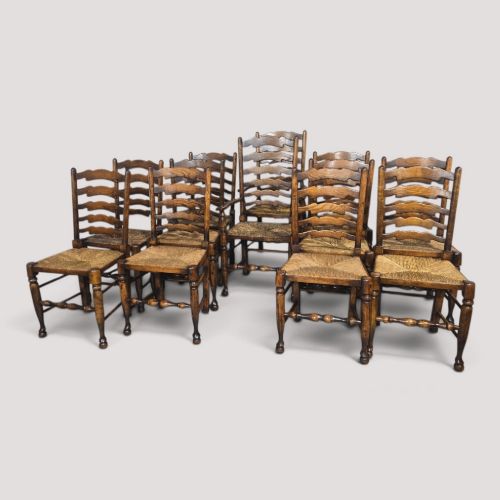
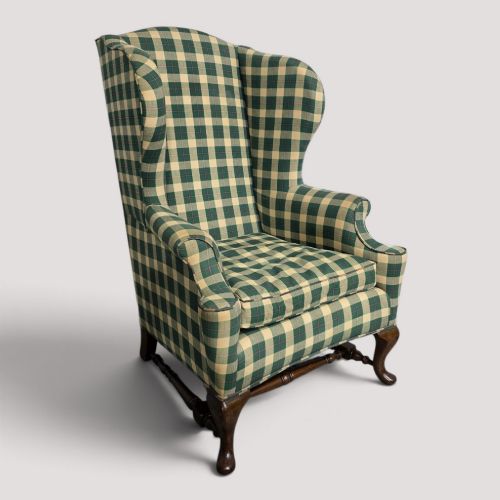
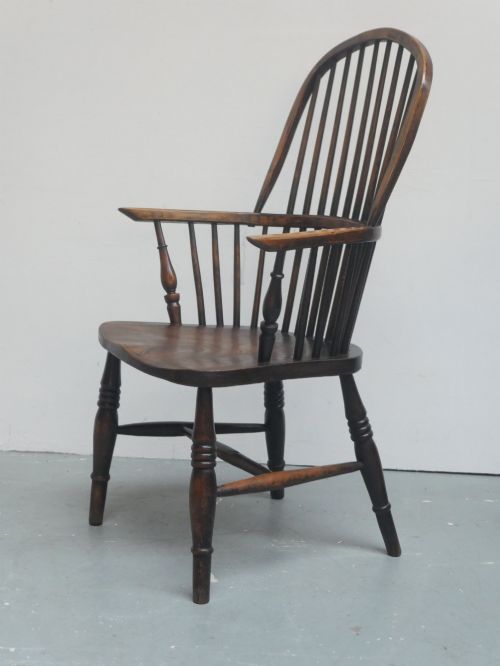
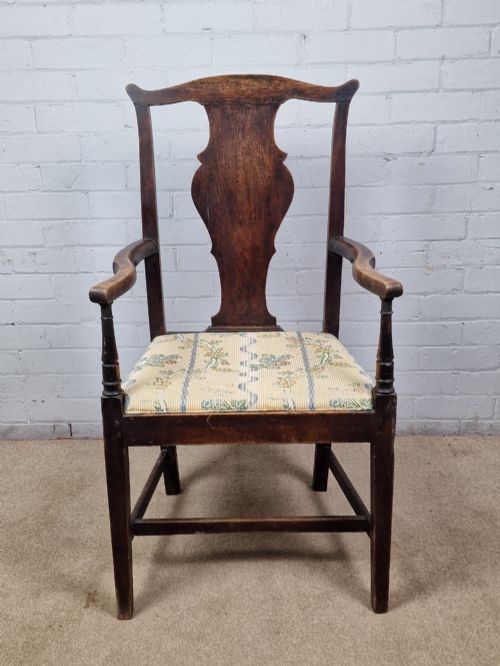
Georgian style oak chairs encompass a diverse group of practical seating, from sturdy armchairs and carvers to sets of dining chairs intended for regular use. Buyers seeking georgian style oak chairs encounter various regional forms, including spindlebacks, panel-backed windsors, and country Chippendale designs created across the eighteenth and nineteenth centuries.
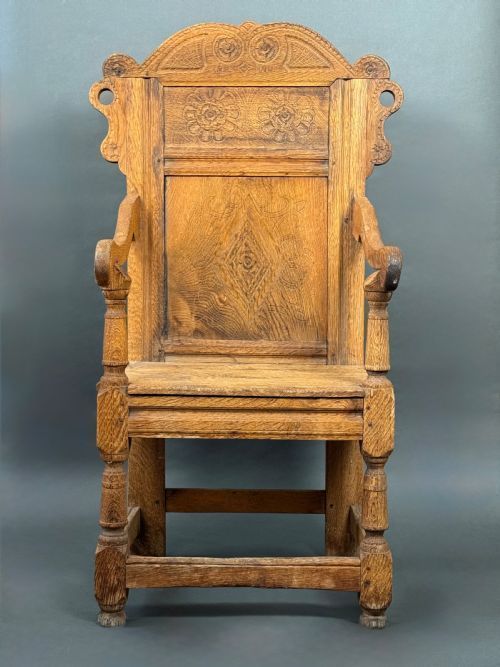
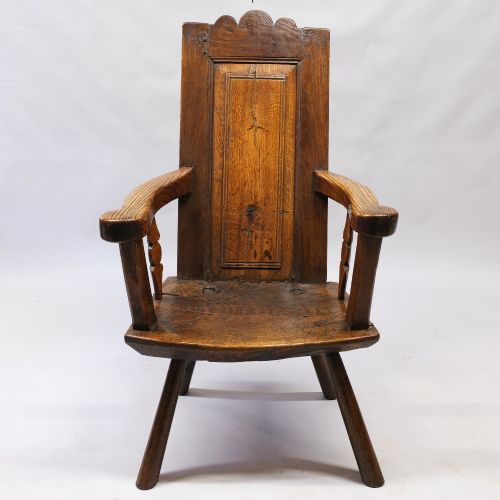
The selection frequently includes country variations such as Lancashire spindlebacks, wainscot armchairs, and hall chairs. Many pieces display vernacular traits rooted in English and Scottish rural traditions, utilising local timbers alongside oak frames.
Sets of dining chairs appear alongside individual armchairs, childs chairs, and commode chairs. The physical evidence spans from mid-eighteenth century originals to later nineteenth-century revivals and apprentice pieces.
Materials and construction
Makers built these chairs primarily using solid oak, frequently combining it with secondary woods like elm, ash, beech, and hardwood for seats and structural supports. Traditional joinery methods such as mortise and tenon ensure durability, while turned spindles and carved details shape the backs and legs.
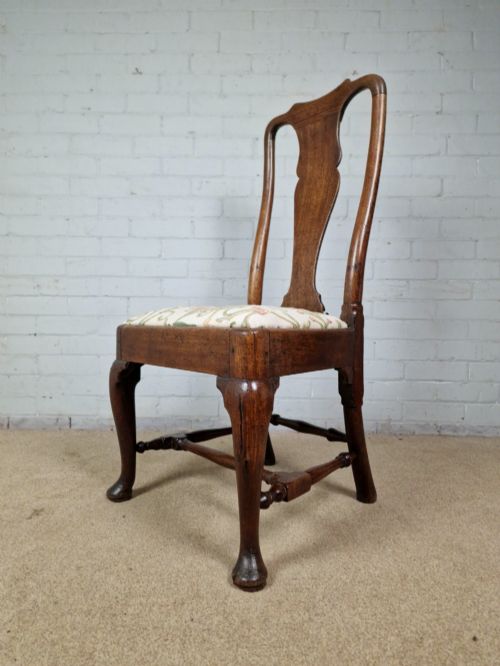
Seating areas vary between solid wood seats, rush bottoms, and upholstered pads covered in fabric, leather, or crewel work. Surface finishes range from natural polished oak to darker patinated tones developed through decades of handling.
The listings on this page span the 18th century, the 19th century, and 1900, incorporating styles from English Country Vernacular to Chippendale Revival.
Assessing craftsmanship
Quality in these chairs rests upon the integrity of the timber selection and the precision of the joinery rather than surface ornamentation alone. Superior examples maintain structural tightness in their stretchers and back posts, showing thoughtful integration of secondary woods like elm or ash.
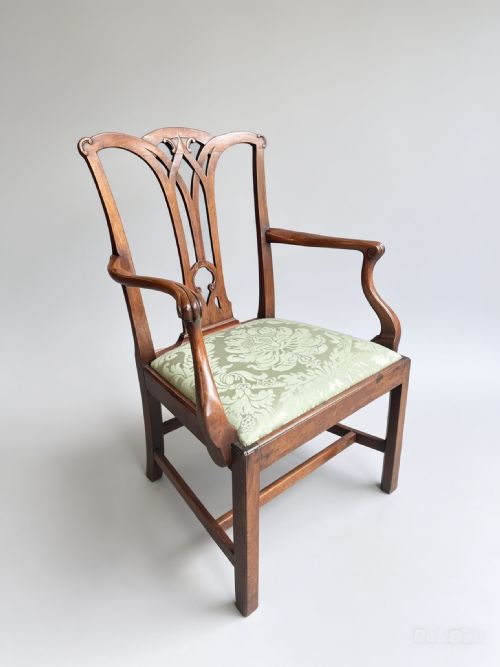
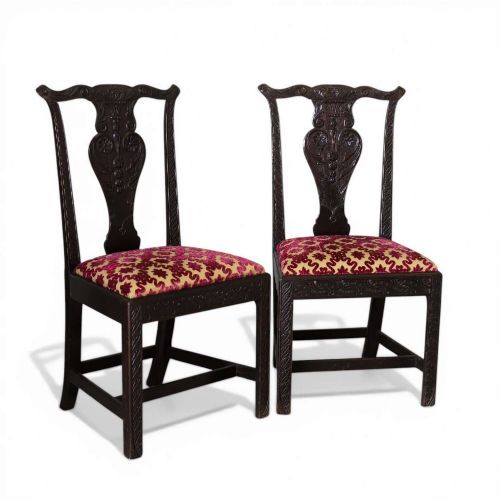
The depth and crispness of hand-carved elements, such as those found on Chippendale style splats or panel backs, distinguish finer workshops from simpler vernacular production. Well-preserved original surfaces and honest patination carry greater weight than heavy modern restoration.
Waring
The Georgian Style Oak Chairs Glossary
- Spindleback
- A chair construction featuring vertical turned wooden rods supporting the backrest. This vernacular form is common in regional English country seating.
- Wainscot armchair
- A heavy wooden armchair featuring a paneled backrest and solid arm supports. Such chairs represent earlier traditional craftsmanship preceding lighter eighteenth-century forms.
- Commode chair
- A specialised piece of furniture disguised as an armchair or seat, enclosing a chamber pot beneath the removable seat frame. These items combined domestic utility with formal appearance.
- Crewel work
- Embroidery executed in wool on a plain woven ground, often featuring floral or scroll patterns. It frequently appears as period upholstery on antique chair seats.
Georgian Style Oak Chairs: Frequently Asked Questions
How do I spot a true Georgian chair?
Authentic pieces from the period display traditional pegged joinery, heavy timber weight, and timber shrinkage appropriate to their age. Look for honest wear patterns and hand-worked surfaces rather than machine-cut precision.
Examine the secondary woods beneath the seat and behind the frame, as regional makers relied on locally available timber like elm, ash, and beech alongside the primary oak.
Were these chairs used for dining?
Many examples on this page served as dining chairs, particularly those appearing in sets of four, six, or eight. Sturdier single armchairs and carvers provided seating at the head of the table or by the hearth.
Country houses also utilised hall chairs and desk chairs for specific functional rooms, meaning dining was only one of several domestic applications.
How should I care for old oak furniture?
Protect the timber by keeping chairs away from direct heat sources and sudden humidity changes that cause wood to split. Regular dusting with a soft, dry cloth preserves the natural surface.
Avoid modern liquid polishes containing silicone, choosing instead a traditional beeswax applied sparingly to maintain the natural patina developed over generations.
What is a country Chippendale chair?
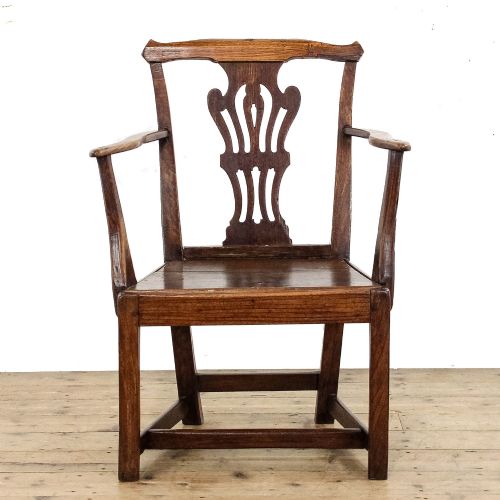
Country Chippendale chairs represent regional interpretations of fashionable London designs, adapted by local provincial cabinetmakers. They retain the characteristic pierced splat and square leg geometry while utilising simpler construction and native timbers.
These pieces bridge the gap between high-style urban furniture and practical rural utility, making them enduringly popular for country house interiors.